

Accessories are defined as the finishing components that determine how an outfit is read, not just how it looks. The role of accessories in outfits goes far beyond decoration. They supply structure, color, texture, and visual balance that clothing alone cannot deliver. A white button-down reads as boardroom-ready with a structured tote and gold hoops. The same shirt reads as weekend-casual with white sneakers and a canvas crossbody. The clothes did not change. The accessories did everything.
How do accessories transform basic outfits?
The most reliable styling formula starts with neutral basics and layers in 1–2 focal accessories for a refined, deliberate effect. Over-accessorizing creates competition among items, which dilutes the impact of each piece. The goal is contrast and intention, not volume.
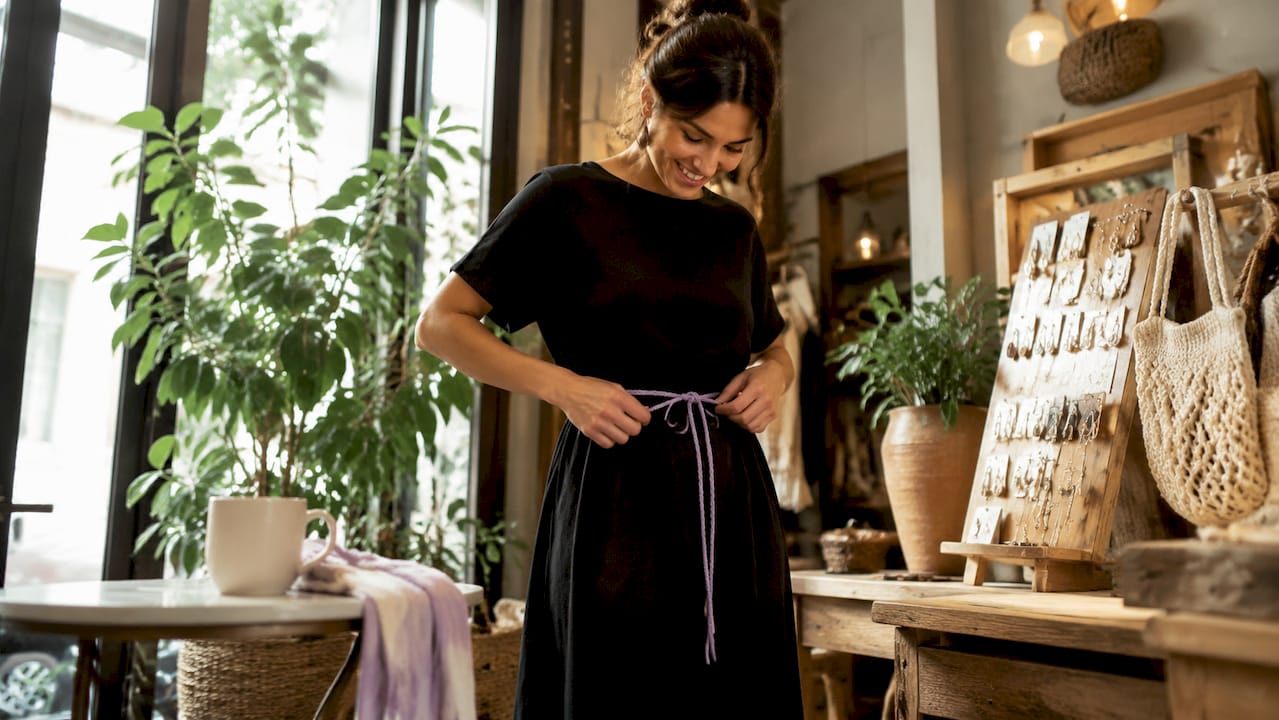
Consider what happens when you work with a simple black midi dress. Add a wide leather belt and you define the waist, shift the silhouette, and signal polish. Swap the belt for layered gold necklaces and a suede shoulder bag, and the same dress reads as evening-ready. The clothing is identical. The accessories carry the entire tonal shift.
Here is how specific accessories pair with common basics across different occasions:
| Basic Piece | Casual Setting | Work Setting | Evening Setting |
|---|---|---|---|
| White tee + jeans | Hoop earrings, canvas tote, white sneakers | Structured blazer, chain necklace, loafers | Statement earrings, clutch, strappy heels |
| Black midi dress | Denim jacket, flat sandals, crossbody bag | Belt, stud earrings, pointed-toe flats | Layered necklaces, heels, small evening bag |
| Neutral knit top | Baseball cap, sneakers, backpack | Silk scarf, trousers, leather tote | Gold cuffs, tailored trousers, block heels |
| Slip dress | Oversized sunglasses, mules, woven bag | Blazer, simple studs, structured bag | Bold earrings, strappy sandals, minaudière |
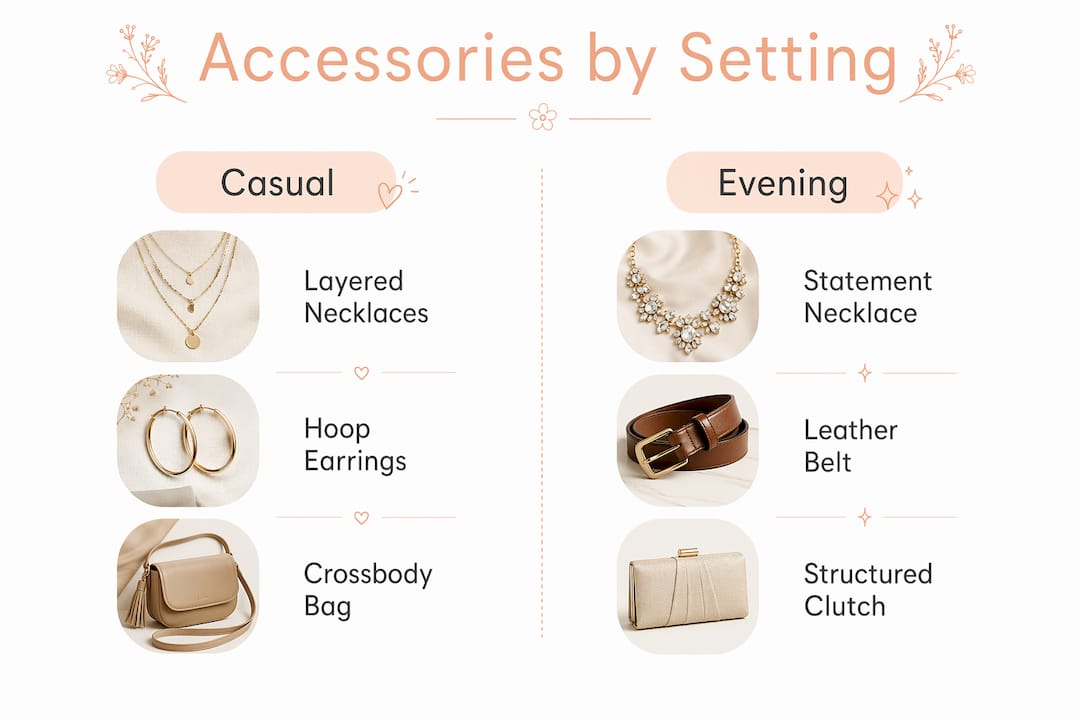
The most impactful accessories for basics include layered necklaces, classic belts, hoop earrings, structured handbags, and sunglasses. Each one redirects attention, adds dimension, or signals occasion. A classic scarf works the same way, shifting a simple look into something considered and complete.
Pro Tip: When dressing up with accessories for a transition from day to evening, swap one item at a time. Replace flats with heels, then add a statement earring. Two targeted changes beat a full outfit overhaul.
What is the visual hierarchy of accessorizing?
Effective accessorizing follows a visual hierarchy that starts at the face and moves outward. This order prevents clutter and creates a look that feels intentional rather than assembled at random.
The sequence works like this:
- Face-framing pieces first. Earrings, sunglasses, and hair accessories draw the eye upward and set the tone for the entire look.
- Hands and wrists second. Rings, bracelets, and watches add detail without competing with face-level statements.
- Carriers third. Bags communicate lifestyle and formality. A structured tote signals purpose. A beaded clutch signals occasion.
- Lifestyle signalers fourth. Shoes ground the outfit and define its energy. More on this in the next section.
- Finishing accents last. Belts, scarves, and layered necklaces add dimension once the primary pieces are in place.
This hierarchy matters because accessories focus visual attention on specific body areas, including the face, waist, hands, and feet. Where you place your accessories is where the eye travels. A bold belt draws attention to the waist. Chandelier earrings frame the face. Ankle-strap heels pull the eye downward. You are directing a visual story every time you get dressed.
Balancing statement pieces with subtle supporting accessories is the key to avoiding visual overload. Contrast in texture and structure adds depth without noise. A chunky chain necklace pairs well with delicate stud earrings. A structured leather bag grounds a flowy, soft-textured dress. The contrast creates dimension. Matching everything in the same weight and finish flattens the look.
Pro Tip: Mix one metal-toned piece with one organic-textured piece, such as a gold cuff with a woven bag, for an effortless contrast that reads as intentional and polished.
What are the most common accessorizing mistakes?
The biggest mistake in accessorizing is treating it as addition rather than curation. More pieces do not mean more style. Accessories refine rather than replace clothing, and minimalist use with well-chosen pieces creates a far more polished result than layering everything at once.
Here are the most common pitfalls and how to sidestep them:
- Wearing too many statement pieces at once. One statement item per look is the standard. Two is a risk. Three is a conflict. Let one piece lead and support it with quieter choices.
- Chasing trends without a personal filter. Chunky platform shoes or Y2K butterfly clips may be everywhere, but if they do not align with your existing wardrobe, they create friction rather than cohesion.
- Ignoring proportion. Petite frames get overwhelmed by oversized bags. Taller frames can carry bolder, larger pieces. Scale your accessories to your body and your clothing’s proportions.
- Treating accessories as an afterthought. Accessories are essential finishing tools, not decorative extras. Planning them into your outfit from the start produces a more cohesive result.
The most effective approach is building a signature accessory formula. A combination like gold hoops, a watch, and a structured tote creates a style shortcut you can rely on daily. Repeated use of signature accessories simplifies dressing decisions and builds a recognizable personal style. That consistency is what makes someone look “put together” without apparent effort.
Pro Tip: Write down three accessories you reach for most often. That list is your signature formula. Build outfits around it rather than starting from scratch each morning.
You can also cross-reference common wardrobe mistakes to see how accessory missteps fit into broader styling errors worth correcting.
How do shoes and bags define an outfit’s function?
Shoes are the most significant functional accessory in any outfit. Changing shoes from flats to heels instantly shifts an outfit’s appropriateness and energy without touching a single clothing item. A tailored trouser with white sneakers reads as creative-casual. The same trouser with pointed-toe kitten heels reads as polished professional. The shoe is doing the heavy lifting.
Bags work differently but with equal impact. They balance structure and personality while signaling intent. Consider these distinctions:
- A structured leather tote communicates organization, purpose, and professionalism.
- A suede shoulder bag with accent details signals creativity and personality.
- A woven straw bag reads as relaxed, warm-weather, and effortless.
- A mini crossbody signals mobility and a casual, off-duty mood.
Small adjustments in accessory choices provide high-impact outfit shifts suited to different settings without requiring new clothes. Swapping your everyday tote for a structured evening bag and trading sneakers for block heels can move the same outfit from a Saturday lunch to a Friday dinner. That kind of versatility is the practical argument for investing in quality accessories over quantity.
Comfort and practicality do not have to conflict with style. A block heel offers height and stability. A crossbody bag keeps your hands free without sacrificing polish. The best accessories serve both function and form. When you create outfits for every occasion, shoes and bags are the two variables that do the most work in shifting the register of a look.
Key takeaways
Accessories are not optional additions. They are the primary tools that define tone, direct visual attention, and adapt a single outfit across multiple occasions.
| Point | Details |
|---|---|
| Accessories define outfit tone | The same basic piece reads differently depending on which accessories you pair with it. |
| Visual hierarchy prevents clutter | Start with face-framing pieces, then hands, bags, shoes, and finishing accents in that order. |
| Signature formulas build consistency | Repeating a core set of accessories creates a recognizable personal style with less effort. |
| Shoes and bags carry the most functional weight | Swapping these two items shifts an outfit’s formality and setting more than any other change. |
| Restraint outperforms volume | One statement piece supported by subtle choices creates more impact than layering multiple bold items. |
Why restraint is the most underrated styling skill
I have spent years watching women get dressed for events, shoots, and everyday life. The pattern I keep seeing is the same: the women who look most polished are not the ones wearing the most accessories. They are the ones who made one clear decision and committed to it.
The idea that more accessories equal more style is the most persistent myth in fashion. What actually happens when you pile on pieces is that each one competes for attention, and the overall look loses its focal point. The outfit becomes noise instead of a statement.
What I find works best is treating accessories the way a good editor treats copy. You cut until only the essential pieces remain. A single pair of gold-plated earrings with a clean neckline and a structured bag is more memorable than six layered pieces fighting for dominance.
The other thing I have noticed is that scent functions as an invisible accessory. Scent as personal style is an underused concept, but the women who think about fragrance as part of their overall presentation tend to have a more complete and considered style identity.
My honest advice: pick one accessory you love, build the outfit around it, and leave the rest. That single act of intention will do more for your style than any trend you follow this season.
— Patrick
Find your signature pieces at Wildflowerwardrobe
The right accessories do not require a complete wardrobe overhaul. They require the right pieces.
Wildflowerwardrobe carries a curated selection of jewelry designed to work with your existing wardrobe, from layered necklaces and hoop earrings to statement sets that anchor a look. For bags, the Fame Multi Belt Strap Accent Shoulder Bag delivers structure and personality in one piece. Pair it with any basic from the women’s casual wear collection and you have a complete, considered outfit. Wildflowerwardrobe makes it straightforward to build your signature accessory formula without the guesswork.
FAQ
What is the role of accessories in outfits?
Accessories determine how an outfit is interpreted by serving as visual anchors that signal tone, formality, and personal style. They supply structure, color, and texture that clothing alone cannot achieve.
How do accessories enhance basic outfits?
Adding 1–2 focal accessories to neutral basics creates a refined, deliberate look. Items like hoop earrings, a structured bag, or a classic belt shift a simple outfit from flat to polished without new clothing.
How many accessories should you wear at once?
One statement piece supported by 1–2 subtle accessories is the most effective formula. Wearing multiple bold pieces at once creates visual competition and reduces the impact of each individual item.
What accessories have the most impact on an outfit?
Shoes and bags carry the most functional and visual weight in any outfit. Swapping either item can shift an outfit’s formality and setting more effectively than changing any other single element.
How do you build a signature accessory style?
Identify the 2–3 accessories you reach for most often and treat them as your formula. Consistent use of pieces like a gold watch, hoop earrings, or a structured tote creates a recognizable personal style that builds confidence over time.
0 comments