

Knitwear gets underestimated. Most women picture a chunky cable-knit reserved for cold weekends and call it a season. But the real role of knitwear in a classic wardrobe runs much deeper than that. Chosen well and styled with intention, knits become the most versatile category you own. They layer, they dress up, they travel. They soften structured pieces and anchor casual looks with quiet sophistication. This guide breaks down exactly how to select, wear, and maintain knitwear so it works for you across every occasion and every season.
Table of Contents
- Key Takeaways
- The foundational role of knitwear in classic wardrobes
- Styling knitwear with sophistication
- Caring for your knitwear properly
- Building your knitwear collection
- My honest take on knitwear and your wardrobe
- Discover knitwear at Wildflowerwardrobe
- FAQ
Key Takeaways
| Point | Details |
|---|---|
| Fiber quality is everything | Natural fibers like merino wool and cashmere outperform synthetics in durability, comfort, and longevity. |
| Fit balance defines elegance | Pair slim knits with wider bottoms or oversized knits with narrow silhouettes to look polished, not sloppy. |
| Storage makes or breaks quality | Folding knitwear flat preserves shape; hanging distorts shoulders and stretches fibers over time. |
| A small collection goes far | Five key knitwear pieces in neutral tones cover casual, office, and smart-casual dressing with ease. |
| Layering is a skill worth learning | Fine-gauge knits worn under tailored pieces add warmth without bulk, maintaining clean, classic lines. |
The foundational role of knitwear in classic wardrobes
If you want a classic wardrobe that genuinely works, start with your fibers. The importance of knitwear as a category is inseparable from the quality of materials it is made from. Natural fibers are not a luxury preference. They are a practical decision.
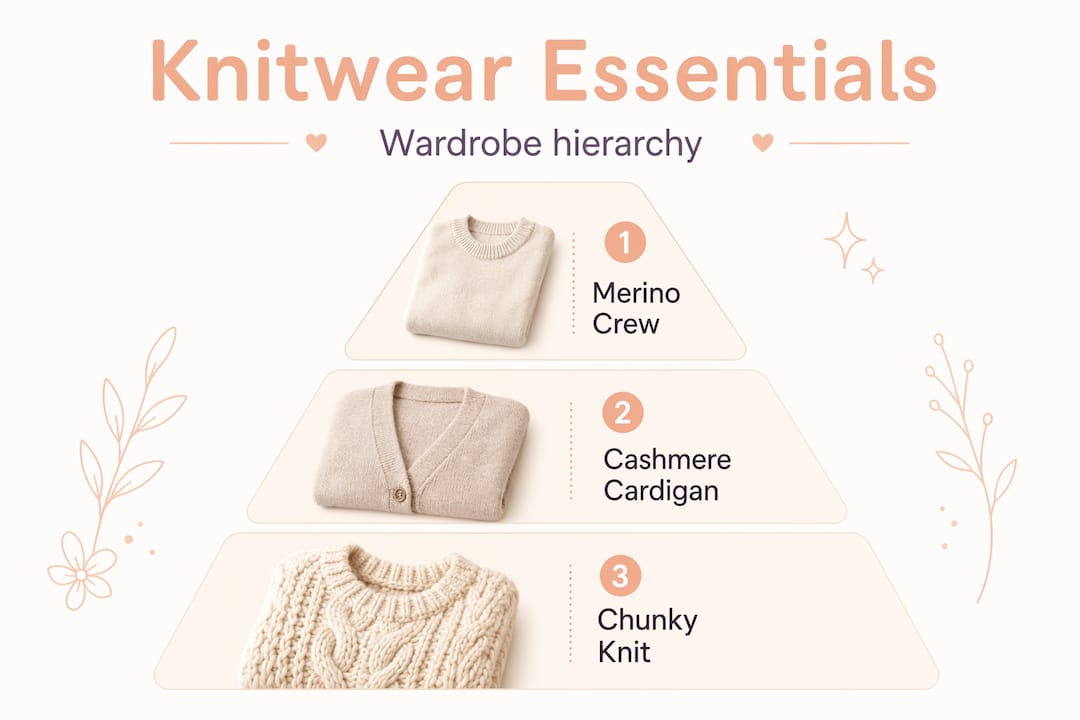
Merino wool and cashmere sit at the top of the hierarchy for good reason. Merino is breathable, odor resistant, and remarkably resilient for daily wear. It holds its shape well and resists pilling more effectively than cashmere. Cashmere, on the other hand, offers a level of softness and lightweight warmth that feels genuinely luxurious but demands more care and patience. Both belong in a serious wardrobe. The right choice depends on how often you plan to wear the piece.
Here are the four knitwear qualities worth prioritizing when you shop:
- Fiber content. Look for 100% merino, cashmere, or a high-percentage blend. Avoid acrylic-heavy blends that pill quickly and lose their shape after a few washes.
- Gauge. Fine-gauge knits sit flat under outerwear and work in professional settings. Chunky gauges read as casual and textural, ideal for weekend or layered looks.
- Construction. Check seams and edges. Well-constructed knitwear has clean finishes that resist unraveling, which is one reason quality knitwear keeps its shape and develops character over years where synthetics quickly lose form.
- Classic cut. Crew necks, turtlenecks, and simple cardigans outlast trend-driven shapes. Buy for longevity, not novelty.
Spending more on one excellent merino crew neck will serve your wardrobe better than buying three mediocre sweaters at the same combined price. That math holds up over years. If you are building your classic wardrobe staples, knitwear is where quality investment pays off most visibly.
Pro Tip: When comparing two knitwear pieces at different price points, stretch the fabric gently and release it. Quality natural fiber knit springs back. Synthetic blends often stay distorted.
Styling knitwear with sophistication
The way you wear knitwear matters as much as what you buy. Knitwear styling tips that actually work are grounded in a few simple principles, and once you understand them, getting dressed becomes noticeably easier.
Follow these four rules for styling knitwear elegantly in any season:
-
Apply the tight-loose rule. Slim-fit knits pair well with wide-leg trousers or A-line skirts. Oversized knits work best with straight-cut denim or slim trousers. This balance stops any outfit from reading as shapeless or oversized throughout.
-
Layer with fine-gauge knits. A thin merino or cashmere worn under a blazer adds warmth without disrupting the jacket’s clean silhouette. Fine-gauge knits are ideal under suiting precisely because they do not create bulk at the shoulders or chest.
-
Use texture contrast deliberately. French and Italian style traditions built their reputation on pairing soft knits against crisp cotton shirts, structured denim, or leather skirts. That contrast of textures creates visual interest without relying on busy patterns. A simple merino turtleneck next to a tailored blazer says more than most outfits ever will.
-
Think seasonlessly. A lightweight cotton knit works in spring and summer. A fine merino layers beautifully in fall. Knitwear is not winter-only. Once you accept that, your wardrobe opens up significantly.
Pro Tip: When layering a fine knit under a jacket, tuck it in at the front only. That partial tuck creates an effortless, structured look without the stiffness of a fully tucked shirt.
Mastering how to wear knitwear elegantly also means respecting proportions in your accessories. A delicate chain necklace over a fine-knit turtleneck reads polished and modern. A bold scarf over a chunky knit can overwhelm the look unless your bottom half is kept minimal. Learn to see knitwear as a background that either needs accessories to complete it or does not need them at all.
Caring for your knitwear properly
None of the quality or styling advice above matters if your knitwear falls apart after a season. Proper care is how your investment pays off over years instead of months.
The most common and most damaging mistake is hanging knitwear. The weight of the garment pulls the fibers downward, creating shoulder bumps and distorting the overall shape. Fold knitwear flat for storage, and use acid-free tissue paper between layers if you are storing multiple pieces stacked together. That tissue reduces friction, which is one of the leading causes of pilling.
Here is how to handle the most common knitwear care challenges:
- Pilling. It is a natural result of fiber friction and occurs mostly in the first wears, especially in high-movement areas like underarms and cuffs. Use a fabric shaver to remove pills without damaging the surrounding fibers. Washing garments inside out reduces surface abrasion significantly.
- Washing. Hand wash or use a delicate machine cycle with cold water and a gentle detergent. Never wring. Press excess water out by rolling the knit in a clean towel, then lay flat to dry on a clean surface.
- Rotation. Wearing the same knit daily accelerates fiber fatigue. Rotating between pieces gives fibers time to recover, which noticeably extends garment life.
| Care Habit | Right Approach | Wrong Approach |
|---|---|---|
| Storage | Fold flat with tissue between layers | Hang on a hanger |
| Washing | Hand wash cold, lay flat to dry | Machine wash warm, tumble dry |
| Pilling | Remove with fabric shaver | Pull pills by hand |
| Wear frequency | Rotate between pieces | Wear the same piece daily |
| Drying | Flat dry on a clean towel | Hang while wet |
Pro Tip: After washing a knit flat, gently reshape it to its original dimensions before it dries. Knitwear dries in whatever shape you leave it in, so five seconds of reshaping saves a lot of frustration later.
Building your knitwear collection
Now for the part that makes everything practical. The benefits of a classic wardrobe built around knitwear come down to a small, intentional collection of pieces that genuinely earn their space. You do not need ten sweaters. You need the right five.
Knitwear is the backbone of a timeless wardrobe, but only when pieces are selected for fit, texture, and specific purpose. Here are the five to prioritize:
- Fine crew neck. The most versatile knit you will own. Works under blazers, over collared shirts, and on its own with tailored trousers.
- Turtleneck. Elegant without effort. Pair with straight jeans and loafers for a weekend look or under a structured coat for winter dressing.
- Cardigan. A longer cardigan over a slip dress reads office-ready or dinner-appropriate depending on the shoes and bag.
- Chunky knit. One is enough. Keep it in a neutral tone for maximum wearability.
- Knit dress. An often overlooked classic wardrobe essential. A ribbed knit dress in navy or camel covers casual Fridays, dinners out, and everything in between.
Color is the multiplier. The more neutral your knitwear palette, the more combinations you unlock. Think camel, navy, cream, charcoal, and soft gray. These tones pair with almost everything else you own and they photograph well without looking try-hard.
| Occasion | Knitwear Piece | How to style it |
|---|---|---|
| Casual weekend | Chunky knit | Straight-cut jeans, ankle boots, a crossbody bag |
| Office | Fine crew neck | Tailored trousers, blazer, clean loafers |
| Smart-casual | Cardigan | Midi skirt or wide-leg pants, simple flats |
| Evening out | Knit dress | Statement earrings, heeled boots, structured clutch |
| Transitional season | Lightweight turtleneck | Under a trench coat with straight-leg denim |
If you want a starting point for building this collection, a look at wardrobe essentials for women shows how knitwear anchors dozens of outfit combinations with minimal effort. Accessories are where the real magic happens. A few well-chosen pieces, like a classic scarf or layered jewelry, transform the same knit into an entirely different outfit. See how classic scarves transform a simple knit into something that reads much more considered.
My honest take on knitwear and your wardrobe
I spent years overcomplicating my wardrobe. Prints, statement pieces, trend purchases I never wore twice. The turning point came when I stripped everything back and started rebuilding around quality knitwear.
What I discovered is that a fine merino crew neck in camel does more styling work than almost anything else I own. It communicates effortlessness. It makes a pair of wide-leg trousers look intentional. It makes jeans look polished. That kind of versatility is impossible to manufacture with trendy pieces.
The mistake I see most often is people buying knitwear in the wrong proportions, either sizing down because they want it to look “fitted” or sizing up hoping for a cool oversized effect without understanding how to balance the rest of the outfit. Fit is everything. A slightly relaxed fit in the right natural fiber will always look more sophisticated than a tight synthetic version.
My other hard-earned lesson: do not underestimate the cardigan. It gets dismissed as frumpy or old-fashioned, but a well-cut cardigan over a slip dress or belted over tailored trousers is genuinely one of the most elegant things you can wear. It is also the piece most likely to be complimented by strangers.
Quality over quantity is not a slogan. It is the actual strategy that makes getting dressed feel good every single day.
— Patrick
Discover knitwear at Wildflowerwardrobe
Ready to build your knitwear collection around pieces that actually last? Wildflowerwardrobe has done the curation work for you.

Wildflowerwardrobe brings together classic knitwear essentials in quality fabrics and timeless cuts, from fine crew necks and cozy turtlenecks to knit dresses that move between occasions without missing a beat. Every piece is chosen with real wearability in mind. You will also find complementary jewelry to complete your knitwear looks, because the right accessories are what make a classic outfit feel truly yours. Visit Wildflowerwardrobe to explore the full collection and start building a wardrobe you actually want to wear.
FAQ
What is the role of knitwear in a classic wardrobe?
Knitwear provides versatile layering, year-round comfort, and sophisticated texture that anchor classic wardrobe outfits across casual, office, and smart-casual occasions. Quality natural fiber knits in neutral tones are among the most functional pieces a woman can own.
What fibers are best for classic wardrobe knitwear?
Merino wool and cashmere are the top choices for classic wardrobe knitwear. Merino is more durable and pill-resistant for daily wear, while cashmere offers superior softness and lightweight warmth with slightly higher maintenance requirements.
How do you style knitwear without looking sloppy?
Apply the tight-loose rule: slim knits pair with wider bottoms, and oversized knits work with slim or straight-cut trousers. Keeping proportions balanced and accessorizing simply is what separates polished knitwear dressing from casual wear.
How should you store knitwear to keep it in good shape?
Always fold knitwear flat rather than hanging it. Hanging causes shoulder distortion and fiber stretching over time. Storing folded pieces with acid-free tissue between layers reduces friction and prevents pilling.
How many knitwear pieces does a classic wardrobe need?
Five well-chosen pieces cover most occasions: a fine crew neck, a turtleneck, a cardigan, one chunky knit, and a knit dress. Kept in a neutral color palette, these pieces combine and layer in dozens of ways without wardrobe fatigue.
Recommended
- How to invest in classic wardrobe staples that last – Wildflower Wardrobe
- How classic scarves transform and elevate your wardrobe – Wildflower Wardrobe
- Build a trend-proof wardrobe with the right checklist – Wildflower Wardrobe
- Everyday wardrobe essentials women need for stylish versatility – Wildflower Wardrobe
0 comments