

A single scarf can do what most accessories only dream about: it adds warmth, frames your face, introduces color and texture, and completely shifts the mood of your outfit without a single trip to the fitting room. Scarves function as both finishers and practical layers in classic fashion, and yet most women only ever wear them one way. This guide breaks down the full power of the classic scarf, from its luxury origins to modern styling techniques, so you can stop treating it as a cold-weather backup and start using it as the cornerstone accessory it truly is.
Table of Contents
- Why scarves are essential in classic fashion
- Scarves as finishers and practical layers
- How to style scarves beyond the neck
- Modular upgrading: The modern method for scarf styling
- Choosing the right scarf: Material, season, and intention
- Why most women overlook the true power of classic scarves
- Unlock your signature look with timeless accessories
- Frequently asked questions
Key Takeaways
| Point | Details |
|---|---|
| Scarves refresh classics | A scarf instantly modernizes any classic outfit with color, pattern, and dimension. |
| Versatility matters | Scarves are not just neckwear—they add polish when styled on bags, waists, or as hair accessories. |
| Material and placement intrigue | Silk, wool, and cashmere each suit different seasons and styling intentions. |
| Avoid dated placements | Neck-only or tightly under-chin scarf styling can look harsh—explore more modern placements for a contemporary twist. |
| Modular upgrading is key | Update your style by changing one variable at a time, keeping your look fresh with minimal effort. |
Why scarves are essential in classic fashion
Few accessories carry the kind of pedigree a scarf does. Long before capsule wardrobes and influencer style guides existed, the scarf was already doing the heavy lifting in elegant, thoughtful dressing. It crossed every class and culture, showing up equally in Parisian street style and the wardrobes of royalty.
The most iconic example is the Hermès carré. Launched in 1937, this 90x90 cm silk square became a symbol of luxurious, enduring style with “endless creative ways” of wearing it, from the neck to the bag handle to the wrist. What made it a legend was not just the craftsmanship but the concept: one piece, infinite possibilities. That idea has never gone out of style.
Today, the scarf sits at the intersection of accessibility and luxury. You can find beautifully crafted options at every price point, and the styling techniques that work on a Hermès silk work just as well on a well-chosen vintage find. It’s one of the few classic wardrobe staples that genuinely earns its place every season.
“The scarf is the one accessory that can finish a look, start a conversation, and protect you from the cold simultaneously.”
Here is a quick breakdown of what makes scarves unique compared to other classic accessories:
| Accessory | Placement options | Seasonal flexibility | Price range | Outfit impact |
|---|---|---|---|---|
| Scarf | 6+ locations | Year-round | Low to high | Very high |
| Belt | 1 to 2 locations | Moderate | Moderate | Medium |
| Hat | 1 location | Seasonal | Moderate | High |
| Statement necklace | 1 location | Year-round | Low to high | High |
A few things that make the classic scarf impossible to replace:
- Versatility: It works on the neck, bag, wrist, hair, and waist.
- Texture play: A silk scarf adds softness; a wool one adds weight and richness.
- Color bridge: A scarf can tie together two separate tones in your outfit.
- Investment value: Quality scarves last decades with proper care.
Scarves as finishers and practical layers
Think about the last time you put on a polished outfit and felt like something was missing. Chances are, a scarf would have solved the problem instantly. That is exactly what it means for a scarf to act as a “finisher.” It completes the visual story of your look without demanding attention the way a bold necklace or structured handbag does.
Classic scarves add warmth, frame the face, and introduce color and texture to an otherwise complete outfit without requiring you to overhaul your wardrobe. That is a powerful tool to have. One gray coat can look entirely different depending on whether you add a jewel-toned silk scarf or a chunky cream knit one. Same coat. Two completely different moods.
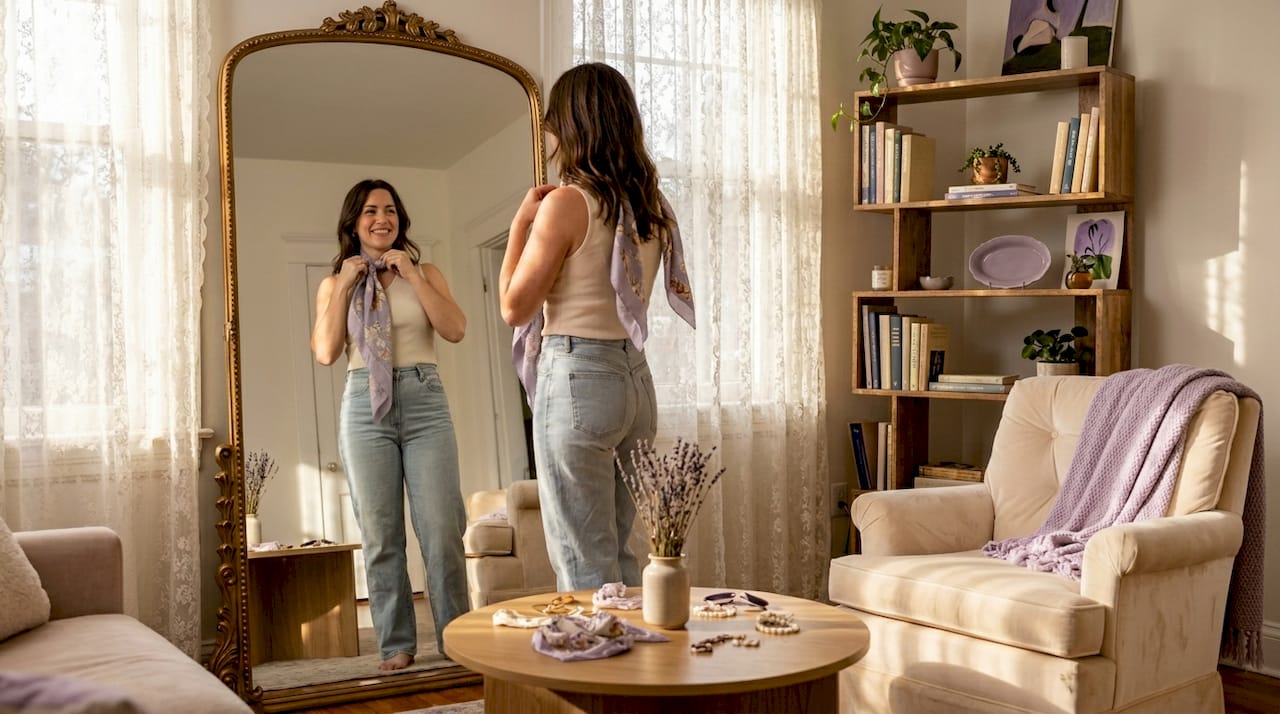
The practical side matters too. A lightweight silk scarf over the shoulders during a breezy evening out adds a layer of warmth without the bulk of a jacket. A loosely draped wool scarf in autumn handles that tricky in-between weather before you are ready to commit to full winter mode.
| Function | Best scarf type | Best placement | Season |
|---|---|---|---|
| Warmth layer | Wool or cashmere | Neck, wrapped | Fall, winter |
| Color accent | Silk, printed | Loose neck drape | Spring, summer |
| Texture finisher | Velvet, chunky knit | Draped over shoulders | Fall |
| Outfit bridge | Printed silk or cotton | Bag handle, belt | Year-round |
When choosing your scarf, think about where you will be viewed from. A statement clothing choice only works if it looks great from every angle, and scarves are no different.
Pro Tip: Before leaving the house, check your scarf from the front, the side, and even in a mirror at an angle. The back of a loosely knotted scarf can look messy if you are not intentional about it. Tuck, adjust, or switch your tying method to ensure it looks polished from every direction.
Some easy ways to make sure your scarf always looks its best:
- Choose scarf dimensions based on your frame. Petite frames look better with smaller squares or narrower wraps; taller women can carry oversized wraps effortlessly.
- Match the weight of the scarf to the weight of your outfit. Heavy knitwear with a chunky scarf can overwhelm; pair it with something lighter.
- Use a small pin or brooch to keep placement consistent throughout the day.
- Consider your neckline. A V-neck works beautifully with a loosely knotted scarf; a crewneck pairs better with a headband or bag-tied option.
A trend-proof wardrobe always includes at least one well-chosen scarf for each season, not because trends demand it, but because good style always will.
How to style scarves beyond the neck
Here is the honest truth: if you are only wearing your scarves around your neck, you are leaving most of their value untouched. The neck-only approach reads as conservative at best and stiff at worst, especially with a formal knot. The real magic happens when you treat your scarf as a flexible styling tool across your entire outfit.
Tying a scarf under the chin can read as dated if the knot or placement is wrong. That does not mean you can never wear it that way, but it does mean intentionality matters. A slightly loose, casually draped chin knot on the right silk scarf can look effortlessly chic. A tight, rigid bow on a thick wool scarf can feel like a throwback to an era you were not trying to revisit.
Styling silk scarves beyond the neck is one of the most versatile upgrades you can make to your daily dressing practice. Here are six modern ways to wear your scarf right now:
- Bag handle wrap: Loop a narrow silk scarf around the handle of a structured handbag. It adds color, protects leather handles, and makes a basic bag look curated.
- Belt or waist wrap: Thread a long scarf through your belt loops or tie it around a high-waisted skirt. This works especially well with printed scarves over neutral separates.
- Headband: Fold a square scarf into a long strip and tie it over your hair for a retro-modern look. Works beautifully with a low bun or relaxed waves.
- Ponytail wrap: Tie a scarf around a ponytail instead of a hair tie. Add a slight bow at the end for polish, or wrap it tightly for a sleeker look.
- Hat accent: Tuck a small scarf into the band of a wide-brim hat. This is one of the easiest ways to make a plain hat look intentional and styled.
- Shoulder drape: Let a lightweight scarf fall loosely over one shoulder over a monochrome outfit for an editorial feel.
“The most confident styling choice is usually the unexpected one. A scarf tied to a bag tells people you pay attention to the details that most skip.”
Pro Tip: For a timeless, effortless look, try tying a small silk scarf through your belt loops or around your bag handle instead of defaulting to the neck. It reads as more intentional and modern, and it keeps your neckline open and clean.
If you are ready to take your accessorizing to a bolder level, the scarf is a low-risk entry point to experimenting with unexpected placement and visible styling personality.
Modular upgrading: The modern method for scarf styling
Here is a concept that changes how you think about getting dressed: modular upgrading. The idea is simple. Instead of overhauling your entire look to feel fresh, you swap just one element at a time. With scarves, this is incredibly easy to do.
Modular upgrading means starting with a reliable base position, like a neck drape or loop, and then switching only one variable: the material, the scale, or the placement. That single change refreshes the entire outfit without requiring anything new from your closet.
Here is what that looks like in practice. You have your favorite silk square that you always tie loosely at the neck. Try these swaps one at a time:
- Swap the material: Replace the silk with a lightweight cotton or linen version. Instantly more casual and summer-appropriate.
- Swap the placement: Move it from your neck to your bag handle. Same pattern, entirely different energy.
- Swap the scale: Trade a small 60cm square for an oversized 120cm wrap. Suddenly it becomes a shoulder layer instead of a neck piece.
- Swap the color: Keep the same tying technique but try a monochrome scarf instead of a print, or vice versa.
This is especially useful when doing a closet audit. You may find that scarves you dismissed as “not really your style” simply need a different placement or a different pairing to feel right.
| Starting point | One variable swapped | New outcome |
|---|---|---|
| Silk neck drape | Placement: bag handle | Polished daytime bag accent |
| Wool neck loop | Material: lightweight cotton | Transitional spring layer |
| Printed headband | Scale: oversized wrap | Bohemian shoulder layer |
| Casual belt tie | Color: bold printed silk | Statement waist accent |
| Mini scarf on wrist | Placement: hat band | Polished summer hat styling |
The beauty of modular upgrading is that it slows down the impulse to keep buying new things. You already own the pieces. You just have not worn them every possible way yet.
Choosing the right scarf: Material, season, and intention
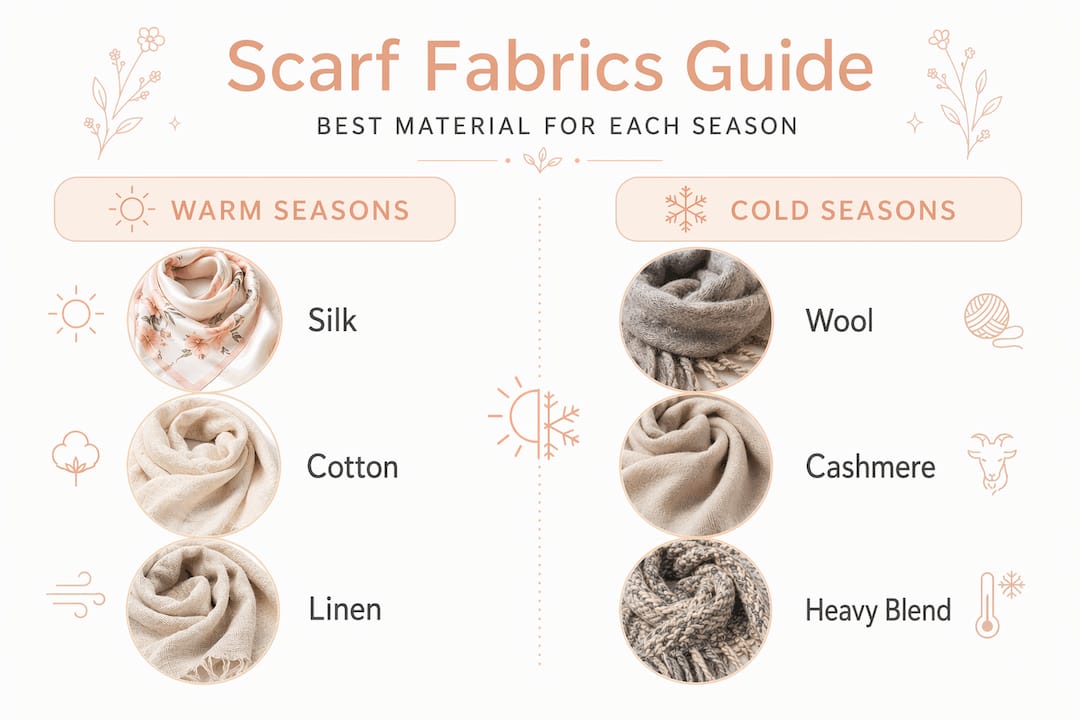
Not all scarves are created equal, and part of mastering this accessory is knowing which fabric to reach for and when. Silk and cashmere serve very different seasonal roles, and choosing intentionally means your scarf will always look like a decision, not an afterthought.
Silk: The most versatile option. Light, breathable, and fluid, silk works in every season but shines in spring and summer. Printed silk adds personality to a simple white shirt and tailored trousers.
Wool: Warm, textured, and grounding. Wool scarves are fall and winter essentials. They layer beautifully over coats and chunky knitwear without adding unnecessary bulk when chosen in the right weight.
Cashmere: The elevated version of wool. Cashmere scarves feel luxurious and have a natural drape that looks effortless. They are especially good for occasions that blend smart dressing with comfort.
Cotton and linen: These breathable blends are underrated. They hold their shape well when tied and can be washed easily, making them ideal for everyday summer styling or travel.
Pro Tip: In spring and summer, reach for silk or cotton in vibrant prints and lighter tones. In fall and winter, anchor your look with plush cashmere or wool in camel, ivory, or deep jewel tones. Matching weight to season makes every look feel polished without effort.
Here is a quick checklist for evaluating whether a new scarf earns its place in your wardrobe:
- Does it work in at least three different placements?
- Does it complement at least five pieces you already own?
- Does it work in more than one season?
- Does it add something unique, either color, texture, or pattern, that your current collection lacks?
- Is the material appropriate for how you will actually wear it day-to-day?
Understanding how to dress with intention for every occasion applies directly to scarf selection. A scarf chosen with purpose always looks better than one grabbed as an afterthought.
Why most women overlook the true power of classic scarves
Here is the uncomfortable truth: most women who own beautiful scarves wear them the same way every single time. They find one method, it works well enough, and they stop exploring. That is completely understandable. But it is also the reason so many scarves end up folded in a drawer, barely touched.
The real power of a classic scarf is not in its pattern or its price point. It is in its flexibility. A single silk square can quietly transform a plain blazer into a statement look, give an old bag a completely new personality, or make a simple outfit look like it was styled with genuine intention. Most people never experience this because they do not push past the first tie they learned.
Scarves also tend to get underestimated because they are not loud. A statement shoe or an oversized bag announces itself. A scarf works differently. It elevates without demanding attention, and that is actually the harder skill to pull off in classic dressing.
Here is what we believe after watching how women engage with timeless style investments: the women who get the most out of their wardrobes are almost always the ones who treat a single quality scarf with the same creative attention they give to a full outfit. They tie it differently. They move it. They layer it. They treat it as a living part of the look, not a finishing checkbox.
That shift in mindset does not require more money or more shopping. It requires curiosity and a willingness to look at what you already own and ask: what else can this do?
Unlock your signature look with timeless accessories
Knowing how to style a classic scarf is just the beginning. The real transformation happens when your entire accessory lineup works together with the same thoughtfulness you now bring to your scarf choices.
At Wildflower Wardrobe, we curate accessories that are designed to do exactly what a great scarf does: elevate, finish, and express. Pair your new scarf-styling skills with a statement bag that anchors the whole look, or add a chain necklace for layered depth when you go the neck-free scarf route. Ready to build out a wardrobe that looks intentional every single day? Explore our full accessories collection and find the pieces that become your signature.
Frequently asked questions
How do I choose the right scarf material for each season?
Opt for silk or cotton in spring and summer for lightweight, breathable styling, and choose wool or cashmere in colder months for warmth and a polished classic appeal, as seasonal material choices matter as much as the pattern or color.
Can I wear a scarf if I want a modern twist on a classic outfit?
Absolutely. Try tying your scarf around a bag handle, your waist, or as a headband for a fresh, modern look that moves well beyond the traditional neck placement.
What is ‘modular upgrading’ with scarves, and how do I do it?
Modular upgrading means changing one styling variable at a time, such as material, placement, or pattern, to keep your look updated without replacing your whole wardrobe. Start with a base placement you love, then adjust just one element.
Are there scarf styles or placements I should avoid?
Avoid tying scarves too tightly under the chin, since this placement can read as dated when the knot is stiff or oversized. Opt instead for casual placements like on bags, through belt loops, or as a relaxed headband for a more modern feel.
0 comments