

Most women open their closets every morning and feel a familiar frustration: rails packed with clothes, yet nothing to wear. That feeling is not a personal failure. It is a sign that your wardrobe has grown without a plan. Research confirms that a significant portion of the average woman’s clothing goes unworn for over a year, which means the problem is rarely a shortage of clothes. It is a shortage of clarity. A closet audit is the tool that fixes exactly that, and this guide will walk you through every step.
Table of Contents
- What is a closet audit and why does it matter?
- How closet audits unlock hidden style potential
- The gendered challenge: Why women accumulate and keep more clothing
- Step-by-step guide to conducting a closet audit for style improvement
- A fresh perspective: Why slow, thoughtful closet audits beat trendy viral purges
- Ready to refresh your closet and style?
- Frequently asked questions
Key Takeaways
| Point | Details |
|---|---|
| Reveal dormant items | Closet audits help identify pieces that go unworn so you can make space for outfits you love. |
| Upgrade your style | Audit processes streamline choices and highlight missing wardrobe essentials for fresh looks. |
| Embrace a reset, not a purge | Effective audits are about systematic organization and thoughtful updating, not aggressive elimination. |
| Boost confidence | Using only your favorite and best-fitting clothes creates new outfit possibilities and greater self-assurance. |
What is a closet audit and why does it matter?
A closet audit is a structured review of everything in your wardrobe. You pull out every item, assess whether it fits, flatters, and actually gets worn, and then make deliberate decisions about what stays, what goes, and what you genuinely need. It is not about minimalism for its own sake. It is about gaining full visibility over what you own so you can dress with intention.
The numbers behind this practice are striking. Volumetric wardrobe studies conducted with adults in Flanders, Belgium, quantified the split between active and dormant garments in real wardrobes. Dormant items, meaning pieces unworn in the past 12 months, made up a surprisingly large share of total clothing stock. That data confirms what most of us already sense: our closets are full of clothes we simply do not reach for.
Understanding wardrobe build-up and shopping patterns is the first step toward changing them. When you can see every piece you own at once, three things happen immediately.
| Benefit | What it means for your style |
|---|---|
| Visibility | You know exactly what you own and stop buying duplicates |
| Value | You rediscover pieces you forgot and get more wear from them |
| Versatility | You spot combination possibilities that were hidden before |
Here is why each of those three benefits matters in practice:
- Visibility stops the cycle of buying the same black top three times because you forgot you already had two.
- Value means you are not wasting money on clothes that sit untouched. Every item you rediscover is money already spent that starts paying off.
- Versatility is where style actually lives. Seeing a forgotten blazer next to a dress you wear weekly might create an entirely new outfit you never considered.
A closet audit is not a one-afternoon task you do once and forget. Think of it as a seasonal check-in, a moment to realign your wardrobe with who you are right now, not who you were two years ago.
How closet audits unlock hidden style potential
With the audit defined, let’s dig into how this process transforms your style day to day. The most immediate payoff is rediscovery. Most women have at least a handful of pieces buried under newer purchases that they genuinely love but simply stopped seeing. A structured audit forces those items back into the light.
Volumetric wardrobe research confirms that audits reveal unused stock, which allows for more intentional outfit creation rather than defaulting to the same five combinations every week. When you see everything at once, your brain starts connecting pieces in new ways.
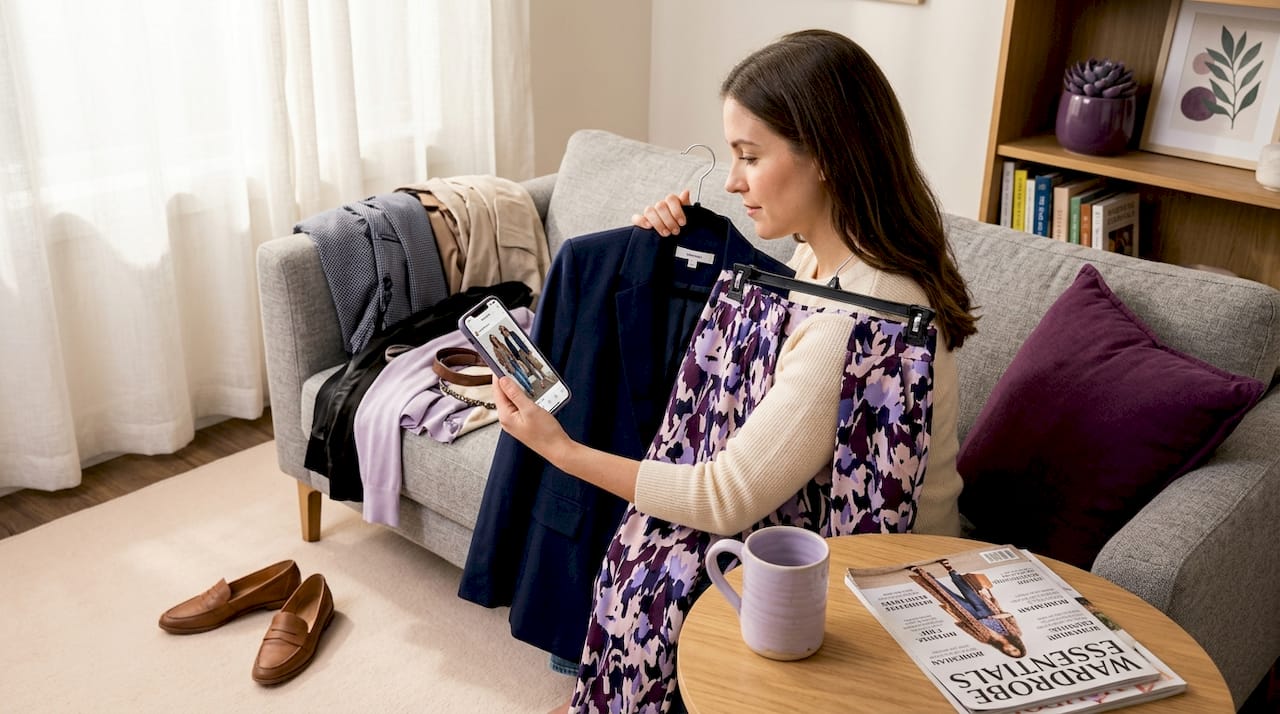
Consider a simple example. A mesh perspective top that felt too bold on its own suddenly works perfectly layered over a fitted tank. Pairing it with thoughtful purchasing decisions means you are building outfits around pieces you already love rather than chasing something new. Similarly, a plaid button down that seemed too casual might become a layering piece over a slip dress or tied at the waist over high-waisted trousers.
The confidence boost that follows is real and measurable in daily life. When you open your closet and every item fits, flatters, and feels like you, getting dressed stops being a source of stress and becomes a creative act.
“Style is not about having more. It is about knowing what you have and wearing it with intention.”
Here is how to approach your audit specifically for maximum creativity:
- Pull everything out and group by category, not by color.
- Try on anything you have not worn in the past six months.
- Ask three questions per item: Does it fit right now? Do I feel good in it? Does it work with at least three other things I own?
- Create a “rediscovered favorites” pile and plan at least one outfit around each piece before putting it back.
Pro Tip: Take photos of your rediscovered outfit combinations immediately. You will forget them by morning, and having a visual reference makes it much easier to actually wear those looks during the week.
The gendered challenge: Why women accumulate and keep more clothing
In understanding the hidden benefits of auditing, we must also talk about the social and gender influences that shape women’s wardrobe habits. This is not about judgment. It is about understanding the forces working against you so you can work with them instead.
Research published on the topic of femininity practices in wardrobe accumulation shows that women tend to own significantly more clothing than men, and the reasons go beyond simple preference. Social practice research confirms that femininity practices, meaning the social expectations placed on women to dress appropriately for multiple roles, drive higher rates of clothing accumulation. Women dress for work, for social events, for fitness, for home, and for occasions that men rarely need separate wardrobes for. Disposal is also harder for women because clothing often carries emotional weight tied to identity, memory, and aspiration.
This is exactly why framing a closet audit as a purge is counterproductive. A purge implies aggression and loss. A reset implies agency and intention.
| Approach | Mindset | Outcome |
|---|---|---|
| Aggressive purge | Get rid of as much as possible | Regret, re-buying, emotional exhaustion |
| Thoughtful reset | Understand and realign your wardrobe | Clarity, confidence, lasting change |
Here is a numbered process for approaching the emotional side of letting go:
- Acknowledge the memory. If a piece carries sentimental value but you never wear it, give yourself permission to honor the memory without keeping the item.
- Separate aspiration from reality. Clothes you bought for a version of yourself you are still working toward deserve honest evaluation. Keep only what motivates you, not what makes you feel guilty.
- Focus on the feeling, not the price. The money is already spent. Keeping something you dislike does not recover the cost.
- Create a “maybe” box. If you genuinely cannot decide, box the item and store it for 30 days. If you do not miss it, you have your answer.
- Donate with purpose. Knowing your clothes will go to someone who will actually wear them makes letting go significantly easier.
Pro Tip: If you feel overwhelmed by the emotional weight of decluttering, start with just one category, such as shoes or tops, rather than tackling the entire closet at once. Small wins build momentum without burning you out.
Step-by-step guide to conducting a closet audit for style improvement
Now that we have addressed the emotional and social factors, here is how to actually conduct your own closet audit from start to finish.
Style fact: Wardrobe studies show that a large proportion of garments in the average wardrobe are dormant, meaning unworn in the past 12 months. Your audit is specifically designed to surface and address that dormant stock.
Follow these steps with audit and organization tips in mind to make every decision style-focused rather than just space-focused.
-
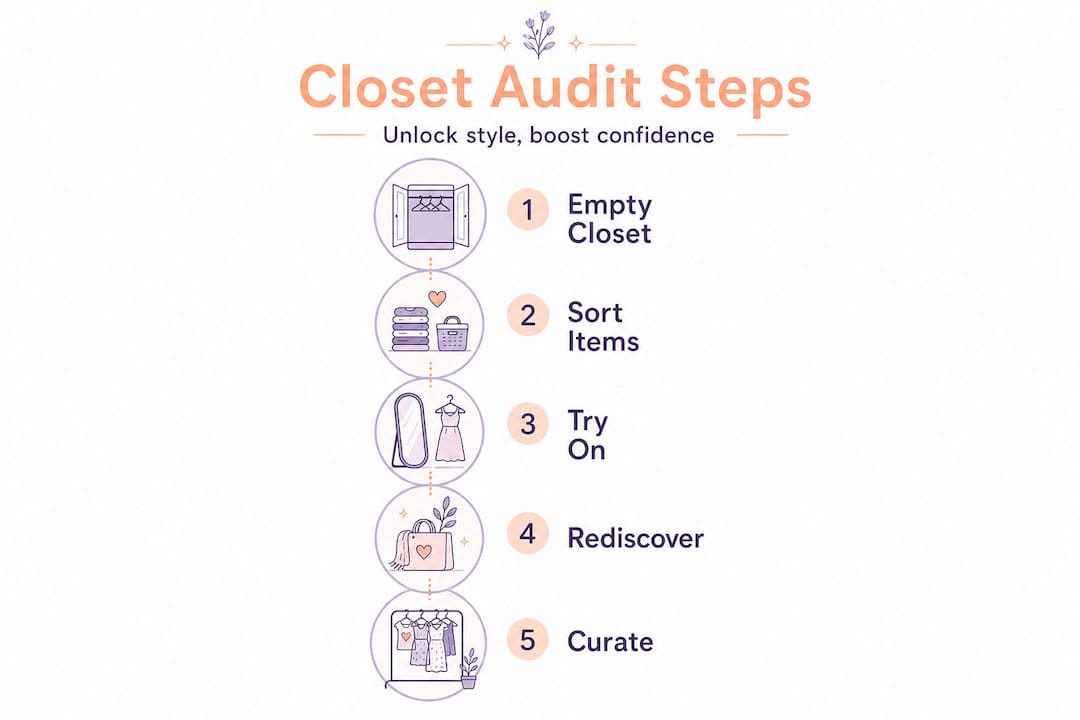
Clear everything out. Remove every single item from your closet and lay it on your bed or floor. This step is non-negotiable. You cannot audit what you cannot see.
-
Sort by category. Group tops together, bottoms together, dresses, outerwear, shoes, and accessories separately. This immediately shows you where you are over-invested and where you have gaps.
-
Do a fit check. Try on anything you have not worn recently or anything that might have changed fit. Clothes that do not fit your current body are not serving you, regardless of how much you paid or how much you loved them once.
-
Apply the three-question rule. For every item: Does it fit? Do I feel confident in it? Does it work with at least three other pieces I own? If an item fails two or more of those questions, it belongs in the donate or sell pile.
-
Identify your style gaps. Once you see what you are keeping, note what is missing. Do you have plenty of casual tops but nothing polished for evening? Lots of bottoms but only one or two versatile layering pieces? These gaps are your actual shopping list.
-
Organize with intention. Return items to your closet in a way that makes your most-worn pieces the most accessible. Color coding within categories helps you spot combinations faster each morning.
-
Revisit seasonally. A full audit twice a year, once in spring and once in fall, keeps your wardrobe aligned with both your lifestyle and the season.
Each of these steps directly improves your style because they force you to make active choices rather than passive ones. Most wardrobe problems stem from avoidance, not from a lack of good pieces.
A fresh perspective: Why slow, thoughtful closet audits beat trendy viral purges
Social media has made the dramatic closet purge look appealing. Flat-lay photos of enormous donation piles, before-and-after videos of stripped-down capsule wardrobes, the aesthetic of radical minimalism. It looks satisfying. But for most women, it does not last.
Here is the uncomfortable truth: viral purges are designed for content, not for real life. They encourage you to make fast, high-pressure decisions about items that carry genuine emotional and financial weight. The result is often regret, followed by re-buying similar pieces within a few months, which puts you right back where you started.
Research on clothing accumulation reinforces this point. Because women’s relationship with clothing is tied to social roles and identity, disposal is genuinely harder and more complex than a 20-minute video makes it seem. Treating that complexity as a weakness to overcome misses the point entirely.
Slow audits, done with care and repeated over time, build something that a single dramatic purge never can: a genuine understanding of your own style. When you take time with each piece, you learn what you actually reach for and why. You start to recognize your real style patterns rather than the ones you think you should have. You shop differently because you know yourself better.
We have seen this play out with retail trends and audit wisdom time and again. The women who build wardrobes they love are not the ones who purged everything and started over. They are the ones who paid attention, made small adjustments consistently, and let their style evolve naturally. That is the kind of lasting change worth working toward.
Ready to refresh your closet and style?
After your audit, you will likely have a clearer picture of the pieces that genuinely excite you and a short list of what your wardrobe actually needs. That is the best possible moment to shop because you are buying with purpose rather than impulse.
At Wildflower Wardrobe, every piece is curated with exactly that kind of intentional shopper in mind. Whether you are filling a style gap you discovered during your audit or treating yourself to something that speaks to who you are right now, our collection blends modern trends with timeless elegance. From statement tops and versatile layering pieces to accessories that pull an entire look together, you will find options that earn a permanent spot in your refreshed wardrobe. Browse the latest arrivals at Wildflower Wardrobe and shop with the confidence that comes from knowing exactly what you need.
Frequently asked questions
How often should I do a closet audit?
Most style experts recommend doing a closet audit at least once every 12 months, and wardrobe studies confirm that dormant items accumulate within that timeframe. Twice a year, once per season change, is even better for keeping your wardrobe aligned with your current lifestyle.
Do I need to get rid of lots of clothes during an audit?
A closet audit is about resetting, not purging. Research on clothing accumulation shows that women’s relationships with their clothing are complex, so focus on making intentional choices rather than hitting a target number of items to remove.
What’s the first step in a closet audit?
Start by removing every item from your closet and grouping them by category to gain full visibility over your wardrobe. Wardrobe studies show that dormant items are easy to overlook when they stay mixed in with active pieces, so the physical act of removing everything is essential.
How does a closet audit change my style choices?
Audits highlight your best pieces and expose genuine style gaps, making it easier to build versatile outfits and shop with purpose. Research confirms that revealing unused stock leads to more intentional outfit creation and smarter purchasing decisions going forward.
0 comments