

You open your closet, stare at a packed rail of clothes, and still feel like you have nothing to wear. Sound familiar? Fast fashion keeps churning out new styles every week, and buying into every trend feels exciting in the moment but leaves you with a closet full of pieces that don’t work together. A smarter approach exists, one built on clear criteria rather than impulse. This article gives you a practical, checklist-driven system for building a wardrobe that stays versatile, stylish, and genuinely yours, regardless of what’s trending this season.
Table of Contents
- The foundation: Capsule wardrobe essentials
- The versatility checklist: How to qualify every piece
- Statement vs. staple: Smartly adding trend-forward pieces
- Putting it together: Sample outfit combinations
- Maintenance and wardrobe audit: Keep your closet lean and stylish
- Perspective: Why less is more for a confident signature style
- Build your trend-proof wardrobe with Wildflower Wardrobe
- Frequently asked questions
Key Takeaways
| Point | Details |
|---|---|
| Start with capsule essentials | Classic, versatile pieces create the backbone of any wardrobe that never goes out of style. |
| Use a versatility checklist | Evaluate each item for fit, compatibility, and comfort before adding it to your closet. |
| Limit trends to small doses | Keep trendy pieces as accents, not foundations, to protect your wardrobe’s flexibility. |
| Regularly audit your closet | Review what you actually wear every six months, removing items that fail your criteria. |
| Confidence beats quantity | A curated wardrobe you love makes style decisions easy and joyful every single day. |
The foundation: Capsule wardrobe essentials
Having outlined the article’s promise, let’s ground your wardrobe in timeless essentials before adding anything else. The word “capsule” gets thrown around a lot, but its meaning is simple: a small, curated set of versatile pieces that mix and match effortlessly, forming the backbone of every outfit you wear. These aren’t boring clothes. They’re the pieces that make everything else in your closet work harder.
As the Vogue Wardrobe Essentials Guide puts it, “a practical way to build a trend-resistant (timeless) wardrobe is to start with a cohesive capsule-like foundation.” Your staples aren’t anti-trend. They’re trend-neutral, meaning they work alongside whatever else you choose to wear and never go out of style.
“Capsule staples serve as the backbone of your wardrobe. Without them, even the most exciting trend pieces have nowhere to land.” — Vogue Wardrobe Essentials Guide
Here are the essential capsule pieces every woman’s closet should include:
- Neutral tailored blazer (camel, black, or ivory): Elevates any outfit instantly
- Crisp white tee in a quality fabric like cotton or modal
- Dark-wash jeans with a flattering, classic cut
- Well-fitted black dress that works for both casual and dressed-up occasions
- Classic tailored trousers in navy, stone, or black
- Versatile loafers or clean white sneakers that pair with nearly everything
- Simple gold or silver jewelry: small hoops, a delicate pendant necklace, a clean bangle
- A quality tote or structured bag in a neutral tone
When you explore timeless style strategies, the throughline is always the same: classic pieces in quality fabrics give you the most outfit combinations per item. A blazer worn over a white tee and jeans is a casual look. Pair that same blazer with tailored trousers and a heel, and you’re office-ready. Wear it over your black dress at night, and you’ve covered three outfits with one piece.
Pro Tip: Shop for capsule staples in natural fabrics like cotton, linen, and wool blends. They hold their shape better, feel more comfortable, and photograph beautifully. A slightly higher price per piece is worth it when that piece earns hundreds of wears.
The versatility checklist: How to qualify every piece
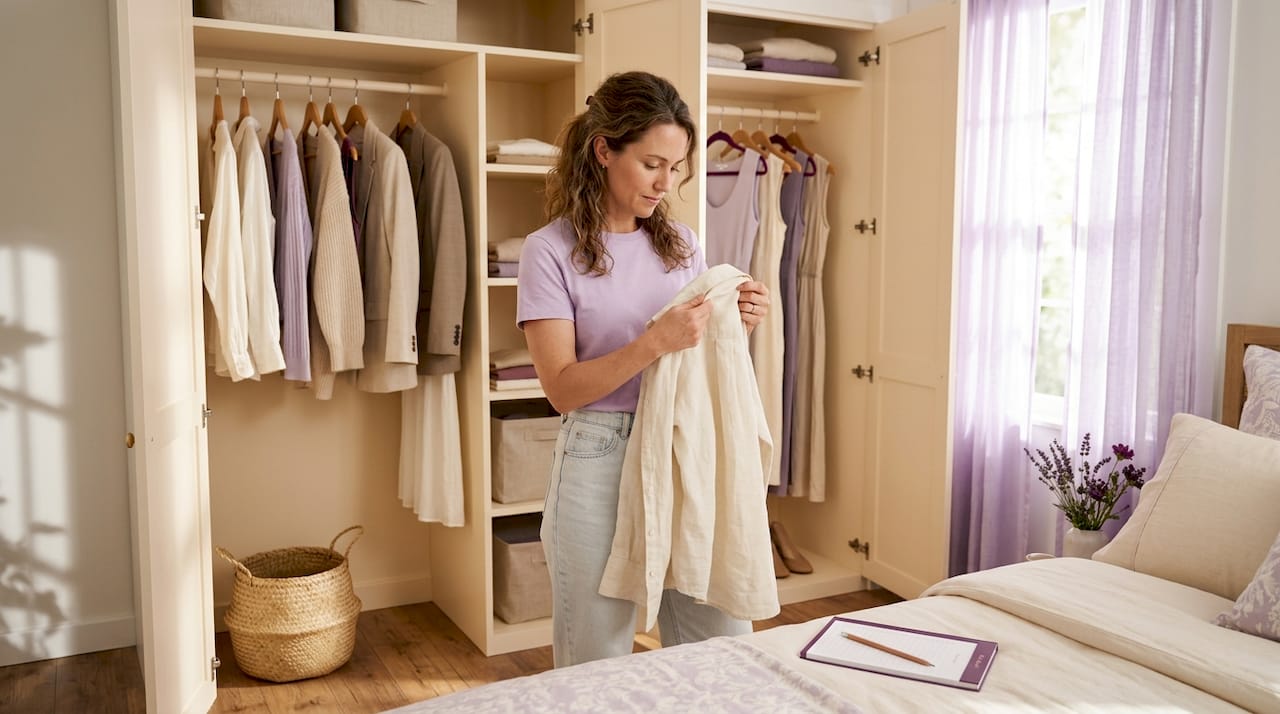
Now that you know what qualifies as a classic, here’s how to scrutinize every potential piece, whether basic or bold, so it truly earns a place in your closet. This is the “item qualification checklist,” a set of criteria that stylists use before recommending a purchase. It sounds methodical, but once it becomes habit, it takes less than two minutes and saves you from costly wardrobe regrets.
According to the guidance at How to Build a Capsule Wardrobe, using an “item qualification” or versatility checklist before buying any new piece is the single most powerful habit you can build as a style-conscious shopper. Ask yourself these questions before anything enters your closet:
- Does it fit perfectly right now, without alterations you’re “planning to do later”?
- Is it comfortable enough to wear for a full day without adjusting it constantly?
- Does the color work with your existing palette? Can it pair with at least three other items you already own?
- Can you style it at least three different ways? Think casual, polished, and layered.
- Is the quality worth the price? Check stitching, fabric weight, and how it holds its shape.
- Does it serve a real purpose in your life, or is it for an imaginary occasion you never actually attend?
- Would you realistically wear this at least twice a month? If the answer is no, reconsider.
“A smart buy checks every box for fit, versatility, and real-life wearability, not just the fantasy version of your life.” — Destination Iman
This checklist works for basics and for bold pieces. A bright red blazer can absolutely pass this test if it pairs with your dark jeans, your trousers, and your black dress. What it can’t do is sit unworn because it only matches one other thing you own.
Pro Tip: Before you buy anything new, open your wardrobe app or take a quick photo of your closet. When you’re in the store or browsing online, test whether that piece forms at least three complete outfits using what you already have at home. If you can’t picture three outfits immediately, leave it.
Statement vs. staple: Smartly adding trend-forward pieces
With your criteria in place, it’s easier to see how trends can be welcomed rather than feared, provided you follow smart guidelines. Not all trends are created equal, and not all of them deserve a permanent home in your closet. The key is treating trend pieces as punctuation, not sentences.
The Capsule Wardrobe guidance from Vogue explains it well: “if you love trends, prevent them from undermining your wardrobe by keeping trend pieces as ‘small additions’ rather than foundations.” The rule of thumb most stylists follow is keeping trend pieces under 20% of your total wardrobe. That’s roughly 5 to 8 items if you own 30 to 40 pieces total.
Here are examples of trend pieces that pair naturally with curated classics and trends you already own:
- Statement shoes in a bold color or unexpected texture (a classic outfit, elevated instantly)
- Accent-color tops in whatever shade is having a moment, worn with your neutral basics
- Bold accessories like oversized earrings, layered chains, or a printed scarf
- Experimental silhouettes: a puff-sleeve blouse or a pleated midi skirt that still hits your versatility checklist
Here’s a clear comparison of how staples and trend pieces serve different functions:
| Factor | Staple item | Trend item |
|---|---|---|
| Purpose | Foundation and versatility | Freshness and personality |
| Cost per wear | Very low (worn hundreds of times) | Higher (worn for one season) |
| Longevity | 5 to 10 plus years | 1 to 2 seasons |
| How many to own | 15 to 25 pieces | 5 to 8 pieces maximum |
| Best way to style | Mix and match freely | Pair with neutral staples |
Trends become a problem only when they become your foundation. A closet built entirely on what’s trending right now is the closet that leaves you feeling like you have nothing to wear next year. Use trends to add personality and energy to a solid base, not to replace that base.
Putting it together: Sample outfit combinations
Once you have staples and a few trend pieces, the fun is in how you combine them for any scenario. The goal, as the Vogue Wardrobe Essentials Guide puts it, is “a coordinated set of versatile pieces and a pared-down collection you love.” Here’s what that looks like in real life.
Sample outfit combinations by occasion:
- Weekend casual: White tee, dark jeans, clean white sneakers, add a crossbody bag and a simple gold hoop
- Office ready: Tailored trousers, blazer, a silk-effect blouse, loafers, and a structured tote
- Special occasion: Black dress, heeled sandals, statement earrings, and a delicate layered necklace
- Travel outfit: Dark jeans, a relaxed knit, white sneakers, and a scarf that doubles as a wrap
See how a single trend piece refreshes any of these looks. Swap the white sneakers for a pair of bold cobalt blue loafers and your weekend outfit suddenly feels editorial. Add an oversized pearl earring to the travel look and it becomes effortlessly chic.
Here’s how your core wardrobe items work across multiple contexts:
| Wardrobe item | Weekend | Office | Special occasion | Travel |
|---|---|---|---|---|
| Dark jeans | Paired with tee and sneakers | Too casual alone | N/A | Paired with knit and sneakers |
| Black dress | Dressed down with flat sandals | Add blazer and loafers | Styled with heels and jewels | Worn with a denim jacket |
| Neutral blazer | Layered over a tee | Core piece of work outfit | Draped over shoulders | Packed as versatile layer |
Notice that mixing staples and trends doesn’t require a large wardrobe. It requires a coordinated one. Three core items just created twelve outfit variations across four different life scenarios.
Maintenance and wardrobe audit: Keep your closet lean and stylish
With the system in place, future shopping and wardrobe edits become nearly foolproof. The part most people skip is the editing. Buying smarter is only half of the equation. The other half is regularly reviewing what’s already in your closet and being honest about what’s actually earning its place there.
A biannual wardrobe audit, done twice a year in spring and fall, keeps your closet working at full capacity. Research from Destination Iman notes that “quantity can dilute wearability,” and that a system forcing you to ask “would I wear this at least every two weeks?” prevents the all-too-familiar “full closet, nothing to wear” problem.
Follow these steps for an effective wardrobe audit:
- Pull everything out of your closet and lay it on your bed. Every item. No exceptions.
- Apply the versatility checklist to each piece. Does it fit? Does it coordinate with at least three other items? Have you worn it in the past two months?
- Create three piles: Keep, Donate or Sell, and Alter or Repair.
- Evaluate the “keep” pile as a whole. Do the colors coordinate? Do you have too many of one item and not enough of another?
- Identify gaps and note what you genuinely need, not what catches your eye on the next shopping trip.
- Organize what remains by outfit type or color family so getting dressed is fast and enjoyable.
Pro Tip: Hang a small notepad or sticky note inside your closet door and mark a tally each time you wear an item. After two months, the pieces with no marks are your editing targets. This “wear tracker” method makes your next audit nearly instant because the data is already there.
Editing is not a sign of failure. It’s a sign that your standards have risen. Every item you remove makes the pieces you keep shine brighter and work harder for you.
Perspective: Why less is more for a confident signature style
Here’s something the fashion industry doesn’t advertise loudly: an overstuffed closet is actually a confidence problem dressed up as a style problem. When your wardrobe is edited and intentional, getting dressed becomes a form of self-expression. When it’s bloated with impulse buys and forgotten trends, it becomes a daily source of low-level anxiety.
Think about the women whose style you admire most. Chances are, they have a recognizable look. A signature. That doesn’t come from owning the most clothes. It comes from understanding what works specifically for them and having the confidence to stick with it, even when every trend reel is pointing in a different direction.
The “full closet, nothing to wear” feeling is a signal. It’s telling you that your closet has quantity without coordination. The solution isn’t another shopping trip. It’s a cleaner, more intentional edit. When you commit to the checklist, you stop buying things that seem good in isolation and start building a wardrobe that functions as a system.
There’s also a deeper benefit that rarely gets discussed: fewer choices actually make you feel more confident. When you open a closet where everything fits, flatters, and works together, you stop second-guessing yourself. You get dressed faster, feel better about how you look, and spend that mental energy on more important things.
Exploring real style strategies often leads to the same conclusion: your personal style solidifies when you stop chasing what’s new and start trusting what works. That’s not playing it safe. That’s developing genuine taste.
Build your trend-proof wardrobe with Wildflower Wardrobe
You’ve got the checklist. You know which staples to prioritize, how to qualify every new piece, and how to keep your closet lean. Now it’s time to fill the gaps with pieces that actually meet those criteria.
Wildflower Wardrobe curates both timeless staples and carefully selected trend pieces so you never have to compromise between classic and current. Whether you’re looking to anchor your wardrobe with a versatile statement dress that passes every checklist test or add the perfect finishing touch with a pair of timeless earrings that work from weekend to evening, the collection is built with versatility in mind. Browse Wildflower Wardrobe and start building a closet you’ll actually love getting dressed from every single morning.
Frequently asked questions
What is a capsule wardrobe and why does it matter?
A capsule wardrobe is a streamlined collection of versatile essentials that easily mix and match, forming the foundation of a trend-proof closet. It matters because it reduces decision fatigue, saves money, and ensures you always have something polished to wear.
How many trend items should I have in my closet?
Keep trend pieces under 20% of your wardrobe to ensure lasting style and reduce regret if trends fade quickly. For most women, that means 5 to 8 trend items maximum within a 30 to 40 piece wardrobe.
How do I decide what clothes to remove during a wardrobe cleanout?
Remove anything that fails the two-week wear test, doesn’t fit your current style, or can’t be styled at least three different ways using what you already own.
What is the versatility test and how do I use it?
Check if a piece meets your checklist criteria for fit, coordination with your existing wardrobe, realistic wear frequency, and the ability to be styled at least three ways before you buy.
Can a trend-proof wardrobe still express my personality?
Absolutely. Your capsule foundation sets the canvas, and the trend pieces and accessories you choose on top are where your individuality comes through loud and clear.
0 comments