

You RSVP to a fashion event, the invite lands in your inbox, and suddenly your entire wardrobe feels wrong. The dress code says “cocktail” or, worse, just lists a vague creative theme. That split-second panic is real, and it happens to even the most style-savvy women. This guide breaks down exactly how to read dress codes, build a standout look, and show up to any fashion event feeling completely in your element. From decoding invite language to nailing the final details, you’ll walk away with a clear, actionable plan that blends trend awareness with your own personal flair.
Table of Contents
- Know your fashion event: decoding the dress code
- Gather your essentials: what to wear and what to avoid
- Express your style: balancing trends, themes, and personal flair
- Perfecting with details: accessories, shoes, and final touches
- Your final checklist: verify and own your look
- Why rules matter, but confidence wins
- Find your event-ready style at Wildflower Wardrobe
- Frequently asked questions
Key Takeaways
| Point | Details |
|---|---|
| Decode your invite | Knowing the event’s dress code helps you choose the right look and avoid awkward mistakes. |
| Build outfit foundations | Pick event-appropriate silhouettes, colors, and accessories as your wardrobe base. |
| Add your flair | Incorporate trends and self-expression while respecting formal event boundaries. |
| Accessorize with purpose | Well-chosen details like jewelry and bags can elevate any ensemble to event-ready status. |
| Confidence is key | Owning your look with self-assurance is your most powerful fashion statement. |
Know your fashion event: decoding the dress code
The very first step to dressing well for any event is understanding what the invite is actually asking of you. Dress codes are not arbitrary rules. They are a framework that tells you how formal the setting will be, what fabrics and silhouettes fit the room, and how much creative freedom you have to play.
Here are the four most common dress codes you’ll encounter at fashion events and what each one really means:
| Dress code | Silhouette | Fabrics | Creative freedom |
|---|---|---|---|
| Cocktail | Knee to midi length | Chiffon, satin, lace | Moderate |
| Semi-formal | Midi to floor length | Crepe, silk, velvet | Low to moderate |
| Black-tie optional | Floor length or formal midi | Silk, taffeta, beaded | Low |
| Avant-garde/themed | Open, experimental | Mixed, unconventional | Very high |
As a general rule, invite language signals that women’s outfit choices shift toward knee-to-midi to floor-length silhouettes and more formal fabrics as the formality level climbs. So if the invite says “cocktail,” a mini tiered shirt dress in a rich fabric can absolutely work. If it says “semi-formal,” you’ll want to lean toward longer hemlines and more structured silhouettes, like an embroidered tassel mini dress paired with elevated accessories.
Wording cues to look for in your invite:
- “Cocktail attire” = knee-length dresses, dressy separates, heels or dressy flats
- “Semi-formal” = midi or maxi dresses, refined fabrics, polished accessories
- “Black-tie optional” = floor-length gown or formal midi, no casual pieces
- “Fashion-forward” or a named theme = creative interpretation encouraged, but formality still applies
- “Smart casual” = elevated basics, no jeans or sneakers, but not a full gown situation
When in doubt, always dress one level up rather than one level down. Arriving slightly overdressed reads as intentional. Arriving underdressed reads as unprepared.
Gather your essentials: what to wear and what to avoid
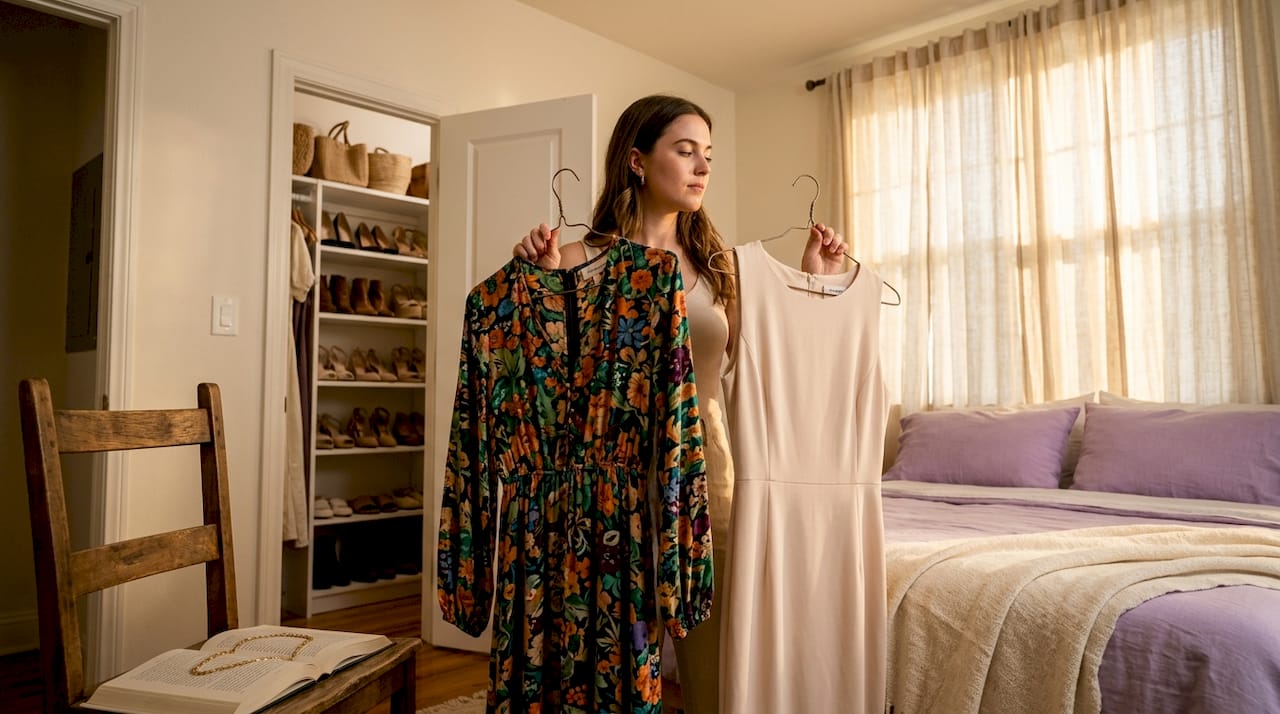
Once you know the dress code, the next step is building your look from the ground up. This means choosing the right silhouette, fabric, and accessories before you even think about trends or personal touches.
| Dress code | Go-to silhouette | Best fabrics | Key accessories |
|---|---|---|---|
| Cocktail | A-line or fit-and-flare | Chiffon, lace, satin | Block heels, clutch, delicate jewelry |
| Semi-formal | Column or wrap midi | Crepe, velvet, silk | Strappy heels, small structured bag |
| Black-tie optional | Floor gown or formal midi | Taffeta, beaded, silk | Statement earrings, evening bag, heels |
| Avant-garde | Experimental, layered | Mixed textures, bold prints | Sculptural jewelry, bold bag |
Color palettes and fabrics that never fail:
- Classic neutrals: black, ivory, champagne, and navy always read as polished and intentional
- Rich jewel tones: emerald, burgundy, cobalt, and deep plum photograph beautifully and feel luxurious
- Soft pastels: blush, lavender, and dusty rose work especially well for daytime fashion events
- Fabrics to reach for: silk, satin, lace, chiffon, velvet, and crepe all signal that you dressed with purpose
- Fabrics to avoid: denim, jersey knit, and anything that wrinkles easily without effort to style it up
A well-fitted smocked waist mini dress in a quality fabric will always outperform an expensive gown that doesn’t sit right on your body. Fit is the single most important element of any event outfit. Tailoring is not just for runway models. Even a quick hem or taking in the waist of a dress can transform how a piece looks on you.
For semi-formal events, a lace tie-front blouse paired with a sleek wide-leg trouser and strappy heels is a smart, sophisticated alternative to a dress if you want to stand out from the crowd.
Common outfit mistakes to avoid:
- Wearing shoes that are too casual (sneakers, flat sandals, or chunky boots at a formal event)
- Visible bra straps, underwear lines, or ill-fitting undergarments
- Overly wrinkled or lint-covered fabric, especially on dark colors
- Wearing something brand new without testing it for comfort and movement first
- Ignoring the venue. An outdoor garden event calls for different heel heights than a ballroom
Pro Tip: Always do a full sit-down test in your outfit before the event. Sit, stand, walk, and reach. If anything gaps, rides up, or restricts movement, it will bother you all night.
For black-tie optional events, refined silhouettes and formal fabrics are non-negotiable. Elevate your look through accessories and fabric quality rather than swapping in casual shoes or denim, no matter how styled they appear.
Express your style: balancing trends, themes, and personal flair
Here is where things get exciting. Once your foundation is solid, you can start layering in personality, trend awareness, and creative expression. This is the part most women skip because they’re afraid of getting it wrong. But playing it too safe often results in an outfit that’s forgettable rather than memorable.
There is an important distinction to understand here. A dress code tells you the formality level. A theme or fashion prompt tells you the creative direction. These are not the same thing. Fashion and dress code are not identical. Some major events use an open-ended prompt that can be interpreted creatively, so you can blend personal expression with still-respectful formality.
“The most memorable looks at any fashion event are the ones where you can feel the person’s personality coming through. The dress code is the floor, not the ceiling.” — Style editor perspective on event dressing
Steps to infuse your look with trending elements without breaking the dress code:
- Start with your base. Choose a silhouette and fabric that fits the formality level first. This is your non-negotiable foundation.
- Pick one trend to feature. Whether it’s a bold color, a statement sleeve, or a textured fabric, commit to one trend rather than stacking several at once.
- Use accessories to push boundaries. A sculptural earring, an unexpected bag shape, or a bold shoe color can modernize even the most classic dress.
- Incorporate the event theme through detail. If the theme is “botanical,” a floral embroidered cami dress interprets the prompt beautifully without feeling costume-like.
- Edit before you leave. Put the look together, step back, and remove one thing. The best-dressed women at fashion events tend to have a clarity to their look, not an excess of it.
The safest place to take creative risks is in your accessories, hair, and makeup. These elements can be swapped, adjusted, or toned down without requiring a full outfit change. A bold lip, an architectural bag, or a pair of statement earrings can shift the entire energy of a look.
Pro Tip: If you are unsure whether a creative choice is too much, photograph yourself in the outfit before the event. The camera reveals what your mirror sometimes hides, including proportion issues, fabric sheerness, and whether your accessories are competing or complementing.
Perfecting with details: accessories, shoes, and final touches
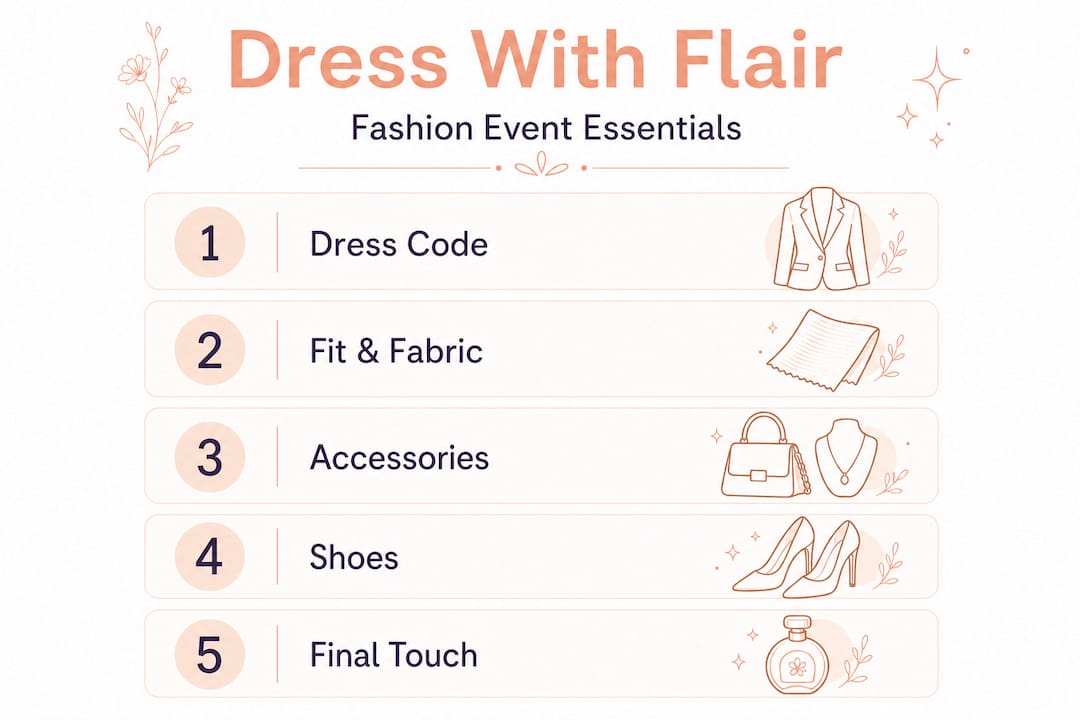
The difference between a good outfit and a great one often comes down to the final 20 percent. Accessories, shoes, and finishing details are where your look either comes together or falls apart.
Must-have accessories by formality level:
- Cocktail: Delicate gold or silver jewelry, a small clutch or mini bag, block heels or pointed-toe flats
- Semi-formal: Statement earrings or a layered necklace, a structured mini bag, strappy heeled sandals
- Black-tie optional: Refined jewelry such as pearl or crystal drops, a sleek structured evening bag, formal heels or dressy flats
- Avant-garde: Sculptural or oversized jewelry, an unexpected bag shape or bold color, fashion-forward footwear
A multi belt accent shoulder bag is the kind of piece that works across multiple dress codes because its structure reads formal while its detail reads fashion-forward. It’s the type of accessory that does the heavy lifting for your look without demanding you change anything else.
Studies consistently show that accessories are the fastest way to elevate a simple outfit. A basic dress with the right shoes, bag, and jewelry reads entirely differently than the same dress styled with casual or mismatched pieces. The investment in one or two quality accessories pays off across dozens of outfits.
Pre-event troubleshooting checklist:
- Steam or iron your outfit the night before, not the morning of
- Check for loose threads, missing buttons, or fabric pulls
- Test your shoes for comfort by wearing them around the house for at least 30 minutes
- Keep a stain pen, clear nail polish (for hosiery runs), and fashion tape in your bag
- Pack a small mirror for touch-ups during the event
Pro Tip: Carry a small emergency kit in your bag: a stain pen, a safety pin, a mini lint roller, and a travel-size deodorant. These four items have saved more fashion event outfits than any styling trick.
Your final checklist: verify and own your look
You’ve chosen your dress code-appropriate silhouette, layered in personal style, and accessorized with intention. Now it’s time to do one final pass before you walk out the door.
Pre-event outfit verification checklist:
- Fit check. Sit, stand, and move in your outfit. Nothing should pull, gap, or restrict.
- Shoes. Are they event-appropriate? Can you walk comfortably in them for several hours?
- Undergarments. Are they invisible, smooth, and supportive? Do they work with your neckline and silhouette?
- Bag. Does it hold your essentials without bulging? Is it appropriate for the formality level?
- Emergency kit. Is it packed and ready? Stain pen, safety pin, fashion tape, touch-up makeup.
- Full-length mirror check. Look at yourself from the front, side, and back. Check for fabric transparency in different lighting.
| Do | Don’t |
|---|---|
| Steam your outfit the night before | Iron on the day and rush |
| Test shoes for comfort beforehand | Debut brand-new shoes at the event |
| Choose undergarments for your silhouette | Wear visible or ill-fitting undergarments |
| Carry a small emergency kit | Leave without essentials |
| Photograph your look before leaving | Rely only on the mirror |
For more outfit readiness tips and curated event-ready pieces, browsing by occasion is one of the fastest ways to find something that fits both the dress code and your personal style.
The final and most important step: relax. Confidence is the one accessory you cannot buy, borrow, or style your way into. It comes from knowing you prepared well and choosing to trust yourself. The women who turn heads at fashion events are not always wearing the most expensive or the most elaborate outfits. They are the ones who look like they meant every single choice.
Why rules matter, but confidence wins
Here is something worth saying plainly: the best-dressed people at fashion events are rarely the ones who followed the dress code most precisely. They are the ones who understood the rules well enough to make intentional choices within them.
At fashion weeks around the world, the looks that generate the most attention are not the safest ones. They are the ones that feel personal. A woman in a perfectly tailored unique mini dress who carries herself with ease will always outshine someone in a technically correct gown who looks uncomfortable.
We have seen it happen repeatedly. The guest who shows up in an unexpected color, a bold silhouette, or an unconventional accessory combination and owns it completely tends to be the one people remember. Not because she broke the rules, but because she made a choice and committed to it fully.
The rules in this guide exist to give you a foundation, not a cage. Use the dress code to eliminate uncertainty. Use your personal style to fill in the rest. The combination of preparation and self-trust is what actually creates standout fashion event style.
Dress codes tell you the minimum. Your confidence, your posture, and your willingness to show up as yourself are what take you beyond it.
Find your event-ready style at Wildflower Wardrobe
You now have the full roadmap for dressing any fashion event with intention and style. The next step is finding the pieces that bring that vision to life.
At Wildflower Wardrobe, every piece is chosen with exactly this kind of woman in mind. Whether you’re searching for a floral embroidered mini dress for a cocktail event or a belt strap shoulder bag that elevates any look, the curated selection makes it easy to shop by silhouette, trend, or occasion. You don’t need to scroll endlessly or second-guess yourself. The collections are built to help you dress for any event with confidence, from the first click to the final look in the mirror.
Frequently asked questions
What should I wear to a black-tie optional fashion event?
Choose a formal midi or floor-length dress with sophisticated accessories, and avoid casual pieces like denim or sneakers. According to event dress code guidelines, refined silhouettes and elevated fabrics are the standard for this formality level.
Is it OK to break the dress code if the event has a theme?
Blend creativity with respect for formality by using the theme for inspiration while sticking to appropriate silhouettes and fabrics. As noted in coverage of major fashion events, fashion and dress code are not the same thing, and creative interpretation is encouraged within the formality framework.
How can I make my fashion event outfit stand out?
Add a trending color, a bold accessory, or a unique fabric choice, then keep your fit and polish immaculate. Standing out comes from intentional choices, not from wearing more.
What are must-have accessories for formal events?
Go for refined jewelry, a structured evening bag, and polished footwear for elegant finishing touches. For black-tie optional events, refined jewelry and formal bags are specifically recommended over casual alternatives.
0 comments