

You open your closet, stare at a packed rack of clothes, and still feel like you have absolutely nothing to wear. Sound familiar? This is one of the most common frustrations women face, and it usually points to the same root problem: too many impulse purchases and not enough intentional investment in pieces that actually work together. Classic wardrobe staples are the fix. They are the foundation items that make every outfit feel pulled together, reduce daily decision fatigue, and pay for themselves over time. This guide walks you through exactly how to build that foundation, step by step.
Table of Contents
- Why classic wardrobe staples matter
- Step 1: Audit your current wardrobe
- Step 2: Identify and prioritize investment pieces
- Step 3: Build your capsule with a cohesive palette
- Common mistakes and how to avoid them
- The reality of CPW: What really matters for your wardrobe ROI
- Refresh your wardrobe with timeless pieces from Wildflower Wardrobe
- Frequently asked questions
Key Takeaways
| Point | Details |
|---|---|
| Invest in impact pieces | Prioritize spending on outerwear, shoes, bags, and blazers that define your look and last. |
| Start with an audit | Review your current wardrobe to spot wear patterns and identify what you truly need. |
| Capsule for versatility | Using a color palette and elevated basics makes outfit combinations easy and chic. |
| Spend wisely on basics | Save on tees and casual items, reserving your budget for quality essentials. |
| Personal style trumps theory | Your lifestyle, fit, and frequent wear are more important than any rule or price tag. |
Why classic wardrobe staples matter
If you’ve struggled to build a closet that actually works, understanding what makes a classic staple is step one.
A classic staple is not just any basic item. It is timeless in silhouette, versatile enough to pair with multiple pieces, and strong enough in quality to elevate whatever you wear it with. Think of a perfectly cut blazer, a structured leather bag, a well-fitted trench coat, or a pair of quality leather boots. These are not trend-driven purchases. They are strategic ones.
The benefits of building around staples are real and measurable. First, you experience less decision fatigue because your core pieces all work together. Second, your style becomes more cohesive, which means you look more polished with less effort. Third, you get genuine long-term value from items that don’t go out of style after one season.
The smartest way to think about staple shopping is through the lens of visibility and frequency. As timeless fashion experts put it, the best investment pieces are those you wear frequently and that visibly determine outfit polish, like outerwear, shoes, and tailored pieces. A coat you throw on every day for five months is worth far more than a trendy blouse you wear twice.
Here are the core categories that qualify as true investment staples:
- Outerwear: Trench coats, wool coats, leather jackets
- Footwear: Quality leather boots, classic pumps, versatile loafers
- Bags: Structured totes, crossbody bags, leather clutches
- Tailored pieces: Blazers, trousers, fitted midi skirts
- Core denim: A well-fitted straight-leg or slim jean in a classic wash
“The pieces that shape your silhouette and are seen first by others are the ones worth spending on. Everything else is secondary.”
Staying current with style trends for women can help you understand which silhouettes are gaining staying power versus which are purely seasonal. Knowing the difference is what separates a smart shopper from an impulsive one.
Step 1: Audit your current wardrobe
Once you know the value of wardrobe classics, start by understanding what you already own.
A wardrobe audit is not just a clean-out session. It is a diagnostic tool. Done correctly, it tells you exactly what you have, what you actually wear, and what gaps exist in your closet. This prevents you from buying duplicates of things you already own and helps you spot the missing pieces you truly need.
Here is how to do it properly:
- Pull everything out. Every item, every shelf, every drawer. Lay it all out so you can see the full picture.
- Sort into three piles. Keep, donate or sell, and replace. Be honest. If you haven’t worn something in 12 months and it doesn’t fit perfectly, it goes.
- Identify your frequent wearers. Notice which items you reach for again and again. These tell you what styles and silhouettes actually suit your lifestyle.
- Spot the gaps. Maybe you have plenty of casual tops but no quality outerwear. Maybe you own five pairs of jeans but no versatile dress. Write these gaps down.
- Note your color patterns. Look at what you gravitate toward. If your wardrobe is full of navy, cream, and camel, that is your natural palette and your future purchases should honor it.
A capsule wardrobe approach formalizes this process beautifully: audit first, then select a cohesive palette and high-quality core pieces, then build repeatable outfit combinations. The audit is what makes the rest possible.
Pro Tip: Take photos of your keep pile before putting everything back. Seeing your wardrobe as a flat-lay makes gaps and imbalances much easier to spot than when items are hanging in a crowded closet.
One often-overlooked audit step is checking the condition of your existing basics. A foundational wardrobe bodysuit in excellent condition, for example, is a keep. The same style in a pilled, faded state is a replace. Condition matters as much as category.
Step 2: Identify and prioritize investment pieces
Now that you’ve taken stock, it’s time to decide what’s worth the splurge and what’s not.
Not all staples deserve the same budget. This is where many women go wrong, spending heavily on basics that don’t justify the cost and then skimping on the pieces that actually shape their look. The key insight is that investment spending should be concentrated in construction-sensitive categories like outerwear, tailored pieces, footwear, and bags, while many basic layers simply don’t require heavy splurges.
Here is a simple framework to guide your spending decisions:
| Item category | Invest or save? | Why |
|---|---|---|
| Wool or trench coat | Invest | Worn daily, shapes every outfit |
| Tailored blazer | Invest | Elevates casual and formal looks |
| Quality leather boots | Invest | High visibility, daily wear |
| Structured handbag | Invest | Seen in every outfit, lasts years |
| Classic white tee | Save | Wears out, easy to replace |
| Layering tank tops | Save | Low visibility, high turnover |
| Casual linen trousers | Save | Trend-adjacent, lower longevity |
| Versatile midi dress | Invest | High outfit mileage, timeless cut |
The items that visibly determine outfit polish are your priority. A great coat makes a simple jeans-and-tee combination look intentional. Cheap shoes undermine even the most expensive dress.
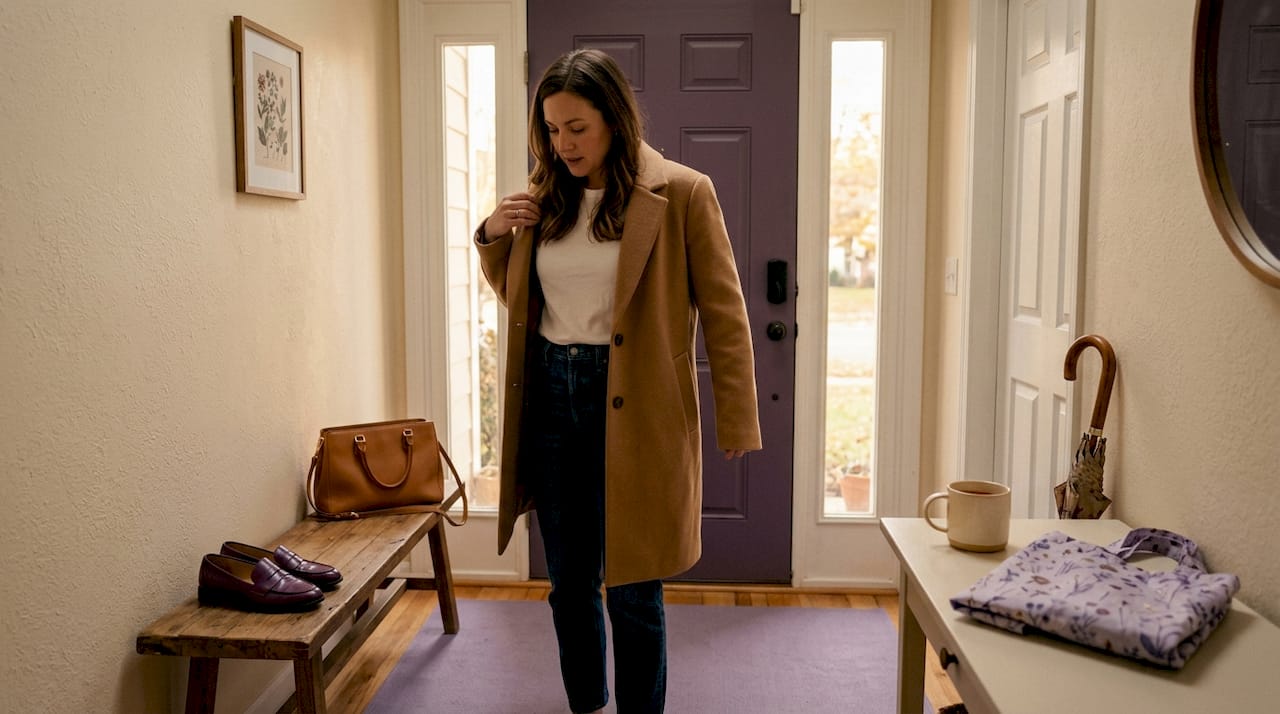
Beyond outerwear and shoes, think about one or two versatile pieces that bridge casual and dressed-up occasions. A versatile jumpsuit in a neutral tone is a perfect example. It reads polished at a lunch meeting and relaxed at a weekend brunch with the right accessories. Similarly, a classic mesh top layered over a bodysuit adds texture and dimension without requiring a major investment.
Pro Tip: Before buying any investment piece, ask yourself three questions. Will I wear this at least once a week during its season? Does it work with at least five things I already own? Will I still love this in three years? If the answer to any of these is no, it is not a true staple for your life.
Step 3: Build your capsule with a cohesive palette
After prioritizing investment items, bring your style to life with cohesive, contemporary choices.
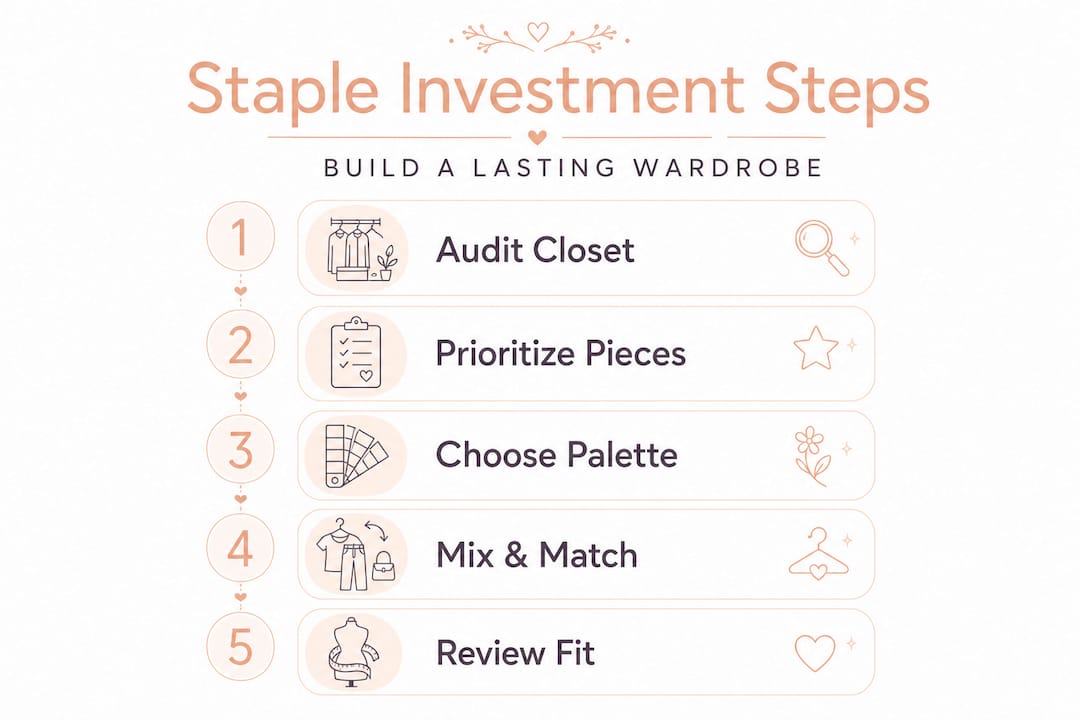
Color is the secret weapon of a functional wardrobe. When your pieces share a common palette, everything mixes and matches effortlessly. You can get dressed in five minutes and still look intentional. The formula is simple: choose two to three base colors and two to three accent colors, then stick to them.
Here is how to build your palette:
- Choose your base colors. These are your neutrals: black, white, navy, camel, cream, gray, or brown. Pick two or three that you genuinely love and that suit your skin tone.
- Add accent colors. These bring personality. Think dusty rose, sage green, cobalt blue, or a warm terracotta. Limit yourself to two or three so things don’t get chaotic.
- Test your combinations. Before buying, hold new pieces against your existing wardrobe. If a new item doesn’t work with at least three things you already own, reconsider.
- Balance timeless with trend. A trendy print or color can work in your capsule as long as it lives in a low-cost, easily replaceable piece like a scarf or a simple blouse.
A capsule approach specifically calls for selecting a cohesive palette alongside high-quality core pieces so that your outfit combinations multiply without your wardrobe growing endlessly.
| Capsule style | Base colors | Accent colors | Best for |
|---|---|---|---|
| Monochrome | Black, white, gray | None or one soft tone | Minimalist, urban style |
| Warm neutrals | Camel, cream, brown | Terracotta, olive | Earthy, relaxed aesthetic |
| Classic contrast | Navy, white, black | Red, gold | Polished, timeless looks |
| Soft feminine | Blush, ivory, taupe | Sage, dusty lilac | Romantic, elevated casual |
A versatile neutral dress in a base color from your chosen palette is one of the highest-value purchases you can make. It works as a standalone outfit, as a layering piece under a blazer, and even dressed down with sneakers.
Pro Tip: If you are unsure which palette suits you, look at the colors you wear in your favorite photos of yourself. Your instincts have already been telling you the answer.
Common mistakes and how to avoid them
With your ideal capsule mapped out, avoid these common errors as you finalize your wardrobe investments.
Even well-intentioned shoppers make mistakes when building a staple wardrobe. Here are the most common ones and how to sidestep them:
- Buying pieces that don’t suit your lifestyle. A structured office blazer is a great staple for someone who works in a formal environment. For someone who works from home or in a creative studio, it might never get worn. Buy for your actual life, not an aspirational one.
- Over-investing in trendy items. A trendy piece can complement your capsule, but it should never anchor it. When trends shift, those items become dead weight.
- Letting cost-per-wear (CPW) theory justify overspending. CPW is a useful tool, but it only works if you actually wear the item. As capsule wardrobe research notes, CPW logic can be used to justify higher spending, but it still depends on your real wear frequency and fit. If items don’t get worn, CPW won’t improve no matter how much you paid.
- Spending heavily on basics. Tees, casual trousers, and layering tanks are not investment categories. They wear out, they fade, and they are easy to replace affordably.
“A wardrobe that works for your real life will always outperform a wardrobe built around what you think you should own.”
The best resource for staying grounded in what actually works is honest classic wardrobe advice that prioritizes function and personal fit over rigid rules.
The reality of CPW: What really matters for your wardrobe ROI
Now that you know the best practices, let’s challenge some conventional wisdom on what wardrobe investment really means.
The cost-per-wear formula is everywhere in fashion advice. Divide the price of an item by the number of times you wear it, and suddenly a $400 coat seems reasonable if you wear it 200 times. The math is sound. The problem is that the formula assumes you will actually wear the item, and that assumption is where most wardrobe investments fail.
Here is what most guides won’t tell you: the ROI of a staple is measured in joy and actual use, not just theoretical wear frequency. A $300 blazer that fits you perfectly, makes you feel confident, and gets worn three times a week is a phenomenal investment. The same blazer in a slightly off cut that makes you feel self-conscious will hang in your closet untouched, regardless of how “timeless” the style is on paper.
Fit and lifestyle alignment stubbornly outweigh price tags every single time. This is why fresh wardrobe perspectives that focus on personal style rather than generic rules tend to produce better results. A wardrobe built around who you actually are will always serve you better than one built around who a style guide says you should be.
The CPW framework is a starting point, not a finish line. Use it to filter out impulse purchases and to justify spending on genuinely high-use items. But never let it override your gut feeling about whether a piece truly belongs in your life. The most timeless wardrobe is the one you actually love wearing every day.
Refresh your wardrobe with timeless pieces from Wildflower Wardrobe
If you’re ready to act on these insights, here’s where your investment in staples pays off and gets easy.
Building a capsule wardrobe that genuinely works takes intention, but it doesn’t have to be overwhelming. Wildflower Wardrobe curates exactly the kind of elevated essentials this guide is all about: versatile silhouettes, classic cuts, and pieces that blend modern style with lasting elegance.
From structured bodysuits and sleek jumpsuits to neutral dresses and statement accessories, every piece is chosen with the capsule-minded woman in mind. Whether you’re filling a gap identified in your wardrobe audit or upgrading a worn-out staple, you’ll find options that fit both your style and your budget. Explore the full collection at Wildflower Wardrobe and start building a closet that works as hard as you do.
Frequently asked questions
What are the most important wardrobe staples to invest in?
Focus on outerwear, shoes, bags, and tailored pieces you wear often, since these visibly determine outfit polish and elevate every look you put together.
How do I decide which pieces are worth splurging on?
Spend more on items with high visibility and frequent wear, because construction-sensitive categories like coats, quality shoes, and structured bags deliver the most value over time.
What is a capsule wardrobe and how does it help with investing in staples?
A capsule wardrobe is a curated collection of versatile pieces in a cohesive palette that lets you build repeatable outfit combinations from fewer, better items.
Should I invest in expensive basics like t-shirts?
No. Save your budget on basics and allocate more to high-impact pieces, since spending should be concentrated in categories like outerwear and footwear rather than everyday tees or casual layers.
0 comments