

You own more clothes than you think. Research shows that women underestimate wardrobe size by roughly 40%, yet the “nothing to wear” feeling is practically universal. That’s not a shopping problem. It’s a common wardrobe mistakes problem. The real culprits behind style frustration are rarely obvious: it’s the top that ends at the wrong place, the accessories that fight the outfit, or the closet full of pieces that never quite work together. This guide breaks down exactly where things go wrong and what to do about each one.
Table of Contents
- Key takeaways
- 1. Treating your wardrobe like a collection instead of a system
- 2. Wearing clothes that don’t fit your body
- 3. Getting proportion wrong and shortening your silhouette
- 4. Letting underwear and accessories work against you
- 5. Skipping the finishing details that actually complete an outfit
- My honest take on why wardrobe mistakes keep happening
- Refresh your wardrobe the right way with Wildflowerwardrobe
- FAQ
Key takeaways
| Point | Details |
|---|---|
| Build a wardrobe system | Choose pieces that connect to at least three others you own to cut outfit planning stress. |
| Fit beats price every time | A well-fitting affordable piece always looks better than an expensive one that doesn’t. |
| Proportion shapes your silhouette | Where your top ends and how you balance volume determines how polished you look. |
| Details finish the look | Layering pieces, clean shoes, and face-framing accessories separate average from put-together. |
| Underwear is a styling tool | Seamless fits and correct cuts prevent visible lines that disrupt even great outfits. |
1. Treating your wardrobe like a collection instead of a system
This is the root cause behind most wardrobe errors women experience. According to a study on wardrobe overwhelm, having too many disconnected trend pieces leads to less satisfaction and measurably more stress. The issue isn’t quantity. It’s cohesion.
Think of your wardrobe the way a chef thinks about a kitchen. Every tool should work with the others. When you buy a sequined top because it was on sale, or a bold printed skirt because it felt exciting in the dressing room, those pieces rarely earn their place if they can’t pair with anything else you own. The result is decision fatigue before 8 a.m. and a pile of “almost” outfits that never come together.
One of the most practical strategies from wardrobe stylists is a simple pre-purchase test. Before adding anything new, ask yourself: does this pair with at least three to five items I already own? If the answer is no, walk away. This single habit transforms impulse buying into intentional building.
- Anchor your wardrobe in neutral base pieces: navy, white, camel, black, and gray
- Add color and pattern through accessories and one or two statement garments per season
- Identify two to three “lifestyle zones” in your life (work, casual, social) and build toward each
- Edit annually. Pieces that haven’t been worn in 12 months rarely get worn in the next 12
Pro Tip: When editing your closet, pull everything out and group by category. It’s nearly impossible to see what you actually have when it’s hanging in a crowded rod.
2. Wearing clothes that don’t fit your body
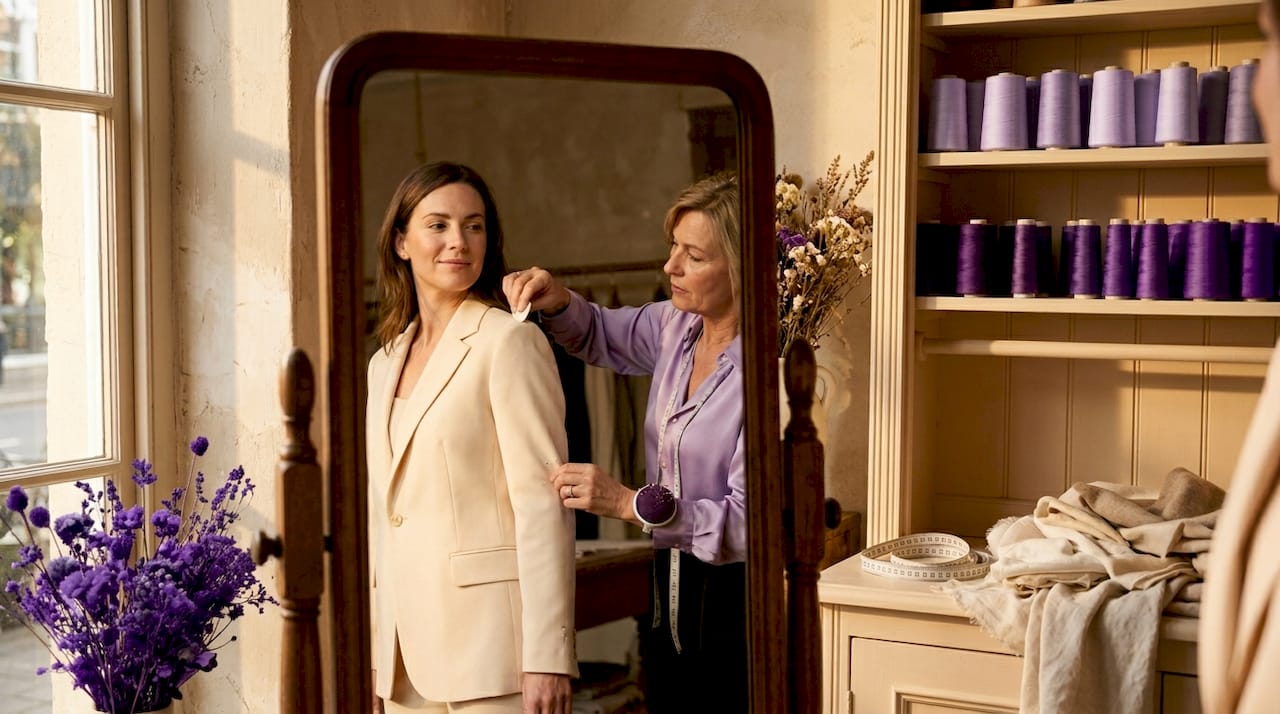
Fit is the single most important factor in how any garment reads on your body. Fit outweighs fabric quality every time. A $30 shirt that fits perfectly will look more polished than a $200 blouse with a shoulder seam that slips off your arm.
The most overlooked fit errors are in specific zones women often ignore.
- Shoulder seams should sit exactly at the edge of your shoulder bone. If they drop onto the upper arm, nothing else about the garment will look right, and no accessory will fix it.
- Sleeve length on blazers and structured tops should show just a hint of the shirt underneath or end at the wrist. Too long looks sloppy; too short looks juvenile.
- Pants bunching at the crotch or thighs signals the wrong rise or cut for your proportions. It’s not a weight issue. It’s a fit issue.
- Clothes that are too tight pull and create lines. Clothes that are too loose erase your shape entirely.
The solution isn’t always buying new. A skilled tailor can fix shoulders, take in a waist, and hem pants for a fraction of what you’d spend replacing the garment. Spend $15 to $25 on alterations before giving up on a piece you love.
Pro Tip: Your undergarments directly affect how clothes fit. The right bra changes your shoulder line, your chest silhouette, and how tops fall across your torso.
3. Getting proportion wrong and shortening your silhouette
Proportion is the technical term for what most women sense but can’t quite name when an outfit looks “off.” Tops that end at the widest point of your hips visually widen and shorten your frame. It’s one of the most widespread women’s styling pitfalls, especially for women over 30 who’ve moved away from skin-tight fits but haven’t replaced them with intentional proportion choices.
The mid-hip top length is the worst offender. It cuts your body at its widest point and offers no waist definition. Tops that end above the hip, at the high hip, or below the hip at upper thigh all work better for most body types.
The volume rule is equally powerful. Volume on volume without an anchor creates a shapeless, boxy look. If you’re wearing a flowy blouse, pair it with fitted pants. If you’re wearing wide-leg trousers, tuck in the top or choose something structured.
| What to avoid | What works instead |
|---|---|
| Wide top + wide pants with no belt | Wide top tucked at front, or belted at waist |
| Mid-hip length top with slim pants | High-hip or thigh-length top with slim pants |
| Cropped top with ankle-length skirt | Cropped top with high-waisted midi or maxi |
| Flared pants with chunky platform shoes | Flared pants with a heel that elongates the leg |
Belts are one of the most underused proportion tools in fashion. Too-wide belts overwhelm the frame on petite women, while too-narrow belts disappear on curvy frames. Match the belt width to your torso height for the most flattering result.
Pro Tip: Use a full-length mirror to test where each garment ends on your body before buying. Proportion is personal. Stand straight, hands at your sides, and see what the clothing is pointing to.
4. Letting underwear and accessories work against you
Visible underwear lines are one of the most consistent outfit planning errors women make under fitted clothing. The fix isn’t always about color. Panty line prevention requires matching the underwear’s cut and rise to your body mechanics, not just wearing nude under light fabrics. A brief-cut underwear worn under fitted trousers will show lines regardless of color if the leg opening sits at a visible ridge.
Seamless underwear with a laser-cut edge solves this for most garments. Thongs work for some, but they require the correct rise for your pants to avoid creating a different visible line at the waistband.
Accessories present a separate but equally common problem. Delicate chains disappear under bulky knits, and bold statement pieces overwhelm simple, fitted tops. The principle to follow is that accessory scale should reflect the visual weight of the garment. Heavy, textured fabrics call for bolder pieces. Light, minimal fabrics pair with subtle jewelry.
- Avoid wearing every jewelry type at once. Choose one focal point: ears, neck, or wrist.
- Match the finish of your metals when layering (all gold, all silver, or mixed deliberately)
- Bags should be proportionate to your frame. A tiny bag on a tall woman and a large tote on a petite woman both create visual imbalance.
5. Skipping the finishing details that actually complete an outfit
Small finishing details are what separate a fine outfit from a finished one. Most women focus on the main pieces and stop there. But the details are what other people actually notice, even if they can’t articulate why.
A blazer or structured cardigan does something a regular top cannot. It creates a finished outer edge, adds intentionality to the look, and signals that the outfit was put together rather than grabbed. Even a casual jeans-and-tee combination reads differently with a well-cut blazer over it.
Neatness matters more than newness. Polished shoes and neat accessories do more for an outfit than a brand-new garment worn with scuffed flats. A clean, pressed piece of clothing in good condition always looks more expensive than a wrinkled designer item.
Face-framing accessories are one of the most underrated tools in personal styling. Earrings and necklaces draw attention upward, toward your face, and create a finished, put-together impression before anyone even registers what you’re wearing below the collarbone.
- Keep a lint roller and a garment steamer accessible. Use them before leaving.
- Replace worn-out shoes before replacing clothing. Shoes carry the entire look.
- A single structured layer transforms casual outfits into polished ones in under a minute.
Pro Tip: Before you leave the house, do a 10-second mirror check from the shoulders up. If your face-framing accessories are in place and your collar or neckline is clean, the rest of the outfit reads well.
My honest take on why wardrobe mistakes keep happening
I’ve spent years thinking about how women relate to their clothes, and what I keep coming back to is this: most dressing mistakes women make aren’t really about style knowledge. They’re about a disconnect between who you are right now and what’s hanging in your closet.
Most well-intentioned shoppers accumulate clothes that represent who they were two years ago, who they wanted to be last season, or who they hoped they’d become when they bought that dress that never got worn. The closet becomes a museum of past selves instead of a working tool for the present.
What I’ve found actually works isn’t buying better pieces. It’s getting honest about your life, your body, and what genuinely makes you feel confident. When you build a wardrobe around your real lifestyle, the overwhelm disappears. You stop standing in front of a full closet feeling like you have nothing to wear.
Start with one small fix. Fix your fit in one category. Master one proportion rule. Add one finishing layer to your daily outfits. Confidence in personal style doesn’t come from having more. It comes from working well with what you have.
— Patrick
Refresh your wardrobe the right way with Wildflowerwardrobe
If this article made you want to look at your closet differently, that’s exactly the right first step. The second step is making sure your wardrobe has the right pieces to build from.
Wildflowerwardrobe curates women’s fashion with cohesion and confidence in mind. From versatile casual wear that pairs easily across outfits to finishing-detail solutions like belts, bags, and statement jewelry, the collections are built around exactly what this article covers. If you’ve realized your accessories aren’t quite working, the jewelry collection at Wildflowerwardrobe is worth a look for pieces that complement rather than compete with your outfits. Thoughtful additions, not more clutter.
FAQ
What are the most common wardrobe mistakes women make?
The most frequent wardrobe errors women make include poor fit in key areas like shoulders and pants length, tops that end at the widest hip point, and building a closet from disconnected pieces with no cohesion. These issues affect how polished an outfit reads, regardless of price.
How do I fix proportion mistakes in my outfits?
Test where each garment ends on your body using a full-length mirror. Avoid tops that cut at your widest hip point, and balance volume by pairing one fitted piece with one relaxed piece per outfit.
Do seamless underwear really make a difference?
Yes. Visible underwear lines often come from a mismatch between the underwear’s cut, rise, and your outer garment, not just color. Seamless, laser-cut styles eliminate this for most fitted clothing.
How can I avoid wardrobe overwhelm when I have too many clothes?
Before buying anything new, check whether it pairs with at least three to five items you already own. This pre-purchase test helps you update your wardrobe without adding pieces that create more decision fatigue.
What finishing details make the biggest difference in an outfit?
A structured outer layer like a blazer or cardigan, clean and polished shoes, and face-framing jewelry consistently do the most to take an outfit from average to finished. These details are more impactful than adding new clothing items.
0 comments