

Every morning, the average woman spends 17 minutes deciding what to wear, and that daily friction adds up fast. Wardrobe versatility best practices exist to solve exactly this problem: not by buying more, but by choosing smarter. A versatile wardrobe reduces decision fatigue and saves real money by using coordinated, mix-and-match pieces that work across every occasion in your life. This guide walks you through the criteria, organization methods, color strategies, and outfit-building habits that make versatility actually work, while keeping your style trend-forward and personal.
Table of Contents
- Defining wardrobe versatility criteria to simplify your style
- Wardrobe organization best practices to maximize versatility
- Choosing versatile wardrobe staples that fit and last
- Using color smartly to enhance outfit versatility
- How to build a travel- and event-ready versatile wardrobe
- Why organizing your wardrobe like an outfit system is the secret to true versatility
- Explore Wildflower Wardrobe for stylish, versatile pieces that support small businesses
- Frequently asked questions
Key Takeaways
| Point | Details |
|---|---|
| Reduce decision fatigue | Build your wardrobe with fewer, well-coordinated pieces to simplify daily outfit choices. |
| Organize as an outfit system | Store frequently worn items visibly and by outfit type to speed up dressing and maximize versatility. |
| Prioritize fit over trends | Choose versatile staples that fit well and hold up to multiple occasions for long-term use. |
| Use color strategically | Adopt a structured palette using the three-color rule to add personality without sacrificing mix-and-match potential. |
| Leverage accessories | Update repeated outfits easily with statement accessories that add style without clutter. |
Defining wardrobe versatility criteria to simplify your style
Wardrobe versatility is not about owning fewer things for the sake of minimalism. It is about owning pieces that earn their place by working across multiple occasions. A great versatile wardrobe follows fewer but better-coordinated pieces, with repeatable outfit formulas and regular edits to keep everything functional. Think of it as building a trend-proof wardrobe rather than chasing every seasonal shift.
Here is what makes a wardrobe genuinely versatile:
- Cross-occasion wearability. Each piece should work for at least three different settings, such as a blazer that goes from a work meeting to a dinner out to a weekend brunch.
- Coordinated color story. Items should mix and match without you having to think hard. If most of your pieces share a consistent palette, outfit building becomes automatic.
- Repeatable outfit formulas. Identify three to five combinations that always work for you and build around them. This is the real engine behind decision fatigue reduction.
- Regular wardrobe edits. Versatility erodes when unworn pieces crowd out the ones you actually reach for. Running closet audits for style every season keeps your wardrobe sharp and functional.
- Quality over quantity. Ten pieces you love and wear constantly beat forty pieces you cycle through randomly.
The goal is a wardrobe that feels effortless on a Tuesday morning and still looks intentional at a Friday evening event.
Wardrobe organization best practices to maximize versatility
Clear criteria mean nothing if your closet is a chaos of tangled hangers and forgotten items. Organization is where wardrobe versatility best practices become daily reality. Professional organizers recommend editing, accessible storage by category, and keeping only rotation-ready items to support true versatility.
Follow these steps to organize your closet for maximum outfit-building speed:
- Declutter completely first. Pull everything out and remove anything you have not worn in the past year, anything that does not fit well right now, and anything that does not coordinate with at least two other pieces you own.
- Organize by category, then by color. Group tops together, bottoms together, dresses together. Within each group, arrange by color from light to dark. This makes finding a specific item in seconds genuinely possible.
- Place your most-worn 30% at eye level. Store frequently worn items at eye level and near the door, and group tops above bottoms so your brain naturally thinks in outfits.
- Use bins and drawer dividers. Folded items like knitwear and casual tops benefit from dividers that prevent the “dig and destroy” effect that makes drawers useless by Wednesday.
- Keep accessories visible but contained. A small tray for jewelry, a hook for bags, and a clear organizer for scarves means you actually use them instead of forgetting they exist.
Pro Tip: Hang complete outfits together once a week, especially for busy workweeks. Pre-building five looks on Sunday takes ten minutes and eliminates every morning decision entirely.
Choosing versatile wardrobe staples that fit and last
Organization creates the system. The right staples fill it with pieces that actually pull their weight. The single most important rule here is that fit matters more than trends when selecting pieces for a versatile wardrobe. A perfectly fitted neutral trouser in a quality fabric will outlast five trendy pairs that never quite work with anything else you own.
Your essential wardrobe pieces should include:
- Well-fitted trousers in neutral tones. Black, camel, and navy are the three most versatile trouser colors. Each pairs with virtually every top you own.
- Simple knitwear in two weights. A lightweight knit for layering and a heavier one for colder days. Both should be in neutrals or one of your chosen accent colors.
- Crisp, simple tops. White, cream, and black tops in clean cuts are the connective tissue of any versatile wardrobe. They make statement pieces shine without competing.
- One quality blazer. This single piece shifts almost any outfit from casual to polished. It is the most underrated item in the mix.
- Comfortable, versatile shoes. A clean white sneaker, a block-heeled boot, and one simple flat or low heel cover nearly every occasion without bulk.
When it comes to fabric, prioritize pieces that hold their shape and layer well. Cotton blends, ponte, and quality jersey are all reliable. Linen works beautifully in warmer months but wrinkles fast, so factor that into how you plan to wear it.
Pro Tip: Use statement pieces and trendy accessories to add personality without sacrificing mix-and-match utility. A bold printed scarf or a structured bag from a small brand like those at Wildflower Wardrobe can transform a neutral base outfit without requiring you to rebuild your entire wardrobe around it.
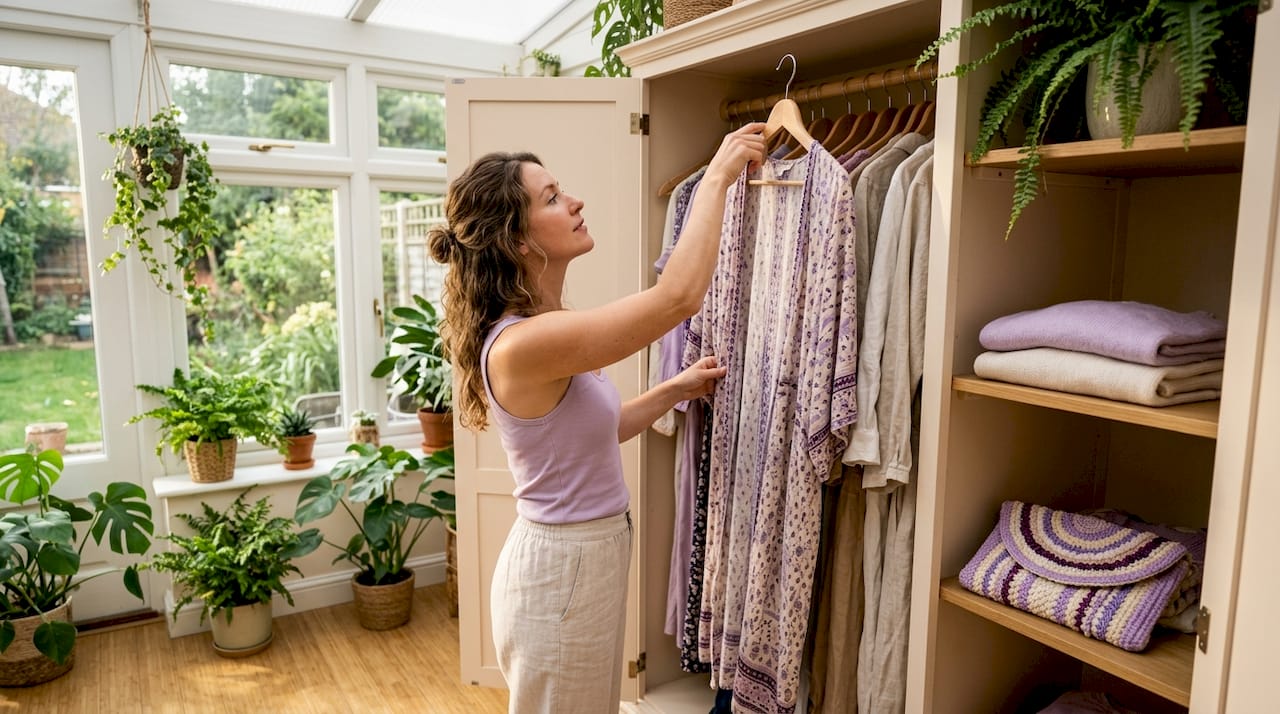
Check your versatile wardrobe checklist to make sure your staples cover every occasion you regularly dress for.
Using color smartly to enhance outfit versatility
Color is where most women either unlock their wardrobe or accidentally lock it down. The fix is a structured approach. The three-color rule helps maintain versatility while still allowing for a colorful, expressive wardrobe: build around two to three core neutrals, then add one or two accent colors that harmonize across your pieces.
Here is how to apply it practically:
- Choose your two neutrals first. Black and white is the classic pairing, but navy and cream or camel and gray work just as well.
- Add one warm and one cool accent. Terracotta and sage, for example, harmonize beautifully and cross-coordinate with most neutral bases.
- Avoid impulse color purchases that do not connect to your existing palette. That cobalt blue top might be beautiful on its own, but if nothing else in your closet picks up that tone, it becomes an island piece.
| Core neutral | Works with | Accent color options |
|---|---|---|
| Black | Everything | Burgundy, cobalt, camel |
| Navy | Cream, white, camel | Terracotta, sage, blush |
| Camel | White, black, brown | Olive, rust, deep teal |
| Gray | Black, white, navy | Blush, lavender, mustard |
Using statement clothing and color strategically means your accent pieces do not just sit in the closet. They become the pieces that make your neutrals feel fresh every time you reach for them.
How to build a travel- and event-ready versatile wardrobe
Packing for a trip is the ultimate test of wardrobe versatility. If your pieces only work in one context, travel reveals it immediately. Travel capsule wardrobes rely on neutral, well-fitted basics plus statement pieces and accessories to maximize look variety with minimal luggage.
Your travel-ready versatile wardrobe should include:
- Three to four neutral basics. A pair of dark jeans, two simple tops, and one pair of versatile trousers form the foundation. Every item should work with every other item.
- One or two statement pieces. A printed wrap dress or a textured blazer adds variety without adding bulk. These are the pieces that make your travel photos look intentional.
- Accessories that do the heavy lifting. A silk scarf worn as a top, a hair tie, or a belt completely changes the read of an outfit. Accessories are the most space-efficient versatility tool you have.
- Two pairs of shoes maximum. One comfortable walking shoe and one that transitions to evening. Everything else is extra weight.
“The most versatile travel wardrobe is not the one with the most options. It is the one where every single item earns its place by working with everything else in the bag.”
Fashion layering techniques matter especially here. A lightweight cardigan over a slip dress becomes a daytime look. Remove the cardigan, add a heel, and you have an evening outfit. Explore statement pieces for travel and events that pull double and triple duty across your itinerary.
Why organizing your wardrobe like an outfit system is the secret to true versatility
Here is the thing most wardrobe advice misses entirely: you can follow every best practice in the book, buy all the right staples, and nail your color palette, and still open your closet every morning feeling like you have nothing to wear. The reason is almost always organizational, not sartorial.
Versatile wardrobes fail when “workhorse” items are not visually and physically accessible, which completely negates the decision fatigue benefits you were trying to create. If your most-worn black trousers are buried under a pile of rarely-used items, your brain will not reach for them. You will grab whatever is easiest, which is rarely the most versatile choice.
The shift that changes everything is thinking of your closet not as a storage space but as an outfit engine. That means organizing by how you actually get dressed, not by category alone. Your most-reached-for pieces should be at the front, at eye level, and grouped in a way that suggests pairings. Tops above bottoms. Neutrals together. Frequently worn items near the door.
Running closet audits for outfit systems twice a year is not housekeeping. It is a performance review for your wardrobe. You are asking: which pieces are actually working, which are taking up space, and what gaps are costing you outfit combinations every single week?
The women who dress effortlessly every day are not the ones with the biggest budgets or the most clothes. They are the ones whose buying, organizing, and outfit-building habits all point in the same direction.
Explore Wildflower Wardrobe for stylish, versatile pieces that support small businesses
Knowing the principles is one thing. Finding pieces that actually live up to them is another. At Wildflower Wardrobe, every item in the collection is chosen with versatility and style in mind, so you are never buying something that only works once.
Browse the women’s casual wear collection for trend-forward basics that transition from work to weekend without effort. Update any look instantly with pieces from the unique jewelry collection, where small-business-crafted accessories add personality to every outfit formula you build. When you shop at Wildflower Wardrobe, you are investing in quality pieces that support independent fashion businesses committed to style that lasts beyond a single season.
Frequently asked questions
What is a capsule wardrobe and how does it relate to versatility?
A capsule wardrobe is a curated set of coordinated pieces designed to simplify outfit choices, and capsule wardrobes reduce decision fatigue by enabling mix-and-match dressing across multiple occasions with fewer total items.
How often should I edit my wardrobe to maintain versatility?
Quarterly edits work best for most women. Editing frequently and keeping only items you actually wear ensures your wardrobe stays functional rather than becoming a crowded archive of good intentions.
How can I add color to my versatile wardrobe without reducing mix-and-match options?
Use the three-color rule to keep your palette structured: two to three core neutrals plus one or two accent colors that harmonize across your existing pieces will expand your outfit options without creating coordination problems.
What role do accessories play in wardrobe versatility?
Accessories are the most efficient versatility tool you have. Accessories transform looks and make re-wearing feel fresh, which is especially valuable for travel and events where packing space is limited.
Why is organizing clothes by outfit logic important?
Storing clothes by outfit groups and keeping your most-worn pieces visually accessible turns your closet into an active outfit system rather than passive storage, which directly reduces morning decision fatigue and dressing time.
0 comments