

You open your closet, stare at a rack stuffed with clothes, and still feel like you have nothing to wear. Sound familiar? The urge to update wardrobe without overspending is real, and most women get stuck cycling between impulse buys and buyer’s remorse. This article cuts through that cycle. You’ll learn how to audit what you already own, build a capsule foundation that actually works, apply a cost-per-wear mindset to every purchase, and use smart shopping tactics to pull off an affordable wardrobe refresh without blowing your budget.
Table of Contents
- Key takeaways
- How to update your wardrobe without overspending starts here
- Building a budget capsule wardrobe
- The cost-per-wear mindset
- Smart shopping and styling hacks for less
- My honest take on why intentional beats impulsive every time
- Refresh your look with Wildflowerwardrobe
- FAQ
Key takeaways
| Point | Details |
|---|---|
| Start with a closet audit | Sorting clothes into YES, MAYBE, NO, and REPAIR piles reveals what you already have and prevents unnecessary purchases. |
| Build a capsule core | A 10 to 15 piece wardrobe of versatile basics can generate dozens of outfit combinations without overspending. |
| Use cost per wear | Dividing item price by expected wears shows real value and stops impulse buys from eating your budget. |
| Apply the three-item rule | Only buy a new piece if you can style it with at least three things already in your closet. |
| Shop smart, not often | Thrift stores, sales, and seasonal top-ups beat full-price resets every time for budget-friendly fashion. |
How to update your wardrobe without overspending starts here
Before you spend a single dollar, you need to know exactly what you’re working with. Most closets are full of unworn pieces, forgotten combinations, and items that just need a minor fix. Skipping this step is how you end up buying a third white button-down when two are already buried in the back.
A closet audit workflow uses four categories: YES, MAYBE, NO, and REPAIR. Pull every item out and sort as you go. Here’s how to make each decision fast and without hesitation:
- YES: It fits well, you’ve worn it in the past year, and you feel good in it. Back it goes.
- MAYBE: You paused for more than three seconds. That hesitation is information. Set it aside.
- NO: You haven’t worn it in over a year, it doesn’t fit, or you never loved it. Out it goes.
- REPAIR: Button missing, hem unraveling, zipper stuck? These cost a few dollars to fix and can feel like brand-new pieces once done.
The MAYBE pile deserves a second look after everything else is sorted. Try each piece on. If it still doesn’t excite you when paired with your YES items, it becomes a NO. This rule reduces the hesitation that leads to keeping items you never wear.
Repairing and reorganizing your existing wardrobe is often the cheapest upgrade available, because separating categories and building new outfit combos with what you already own is genuinely free. You might discover a blazer that pairs perfectly with jeans you almost donated, or a scarf that transforms three otherwise boring outfits.
Pro Tip: After sorting, hang your YES items by outfit rather than by category. Grouping a top, bottom, and layer together makes getting dressed faster and shows you what gaps actually exist before you shop.
Once your audit is complete, you have a real picture of what you own. Now you can shop with intention instead of emotion.
Building a budget capsule wardrobe
A capsule wardrobe is a small, curated set of pieces that work together across many outfits. The goal is not minimalism for its own sake. It’s about making every item earn its spot.
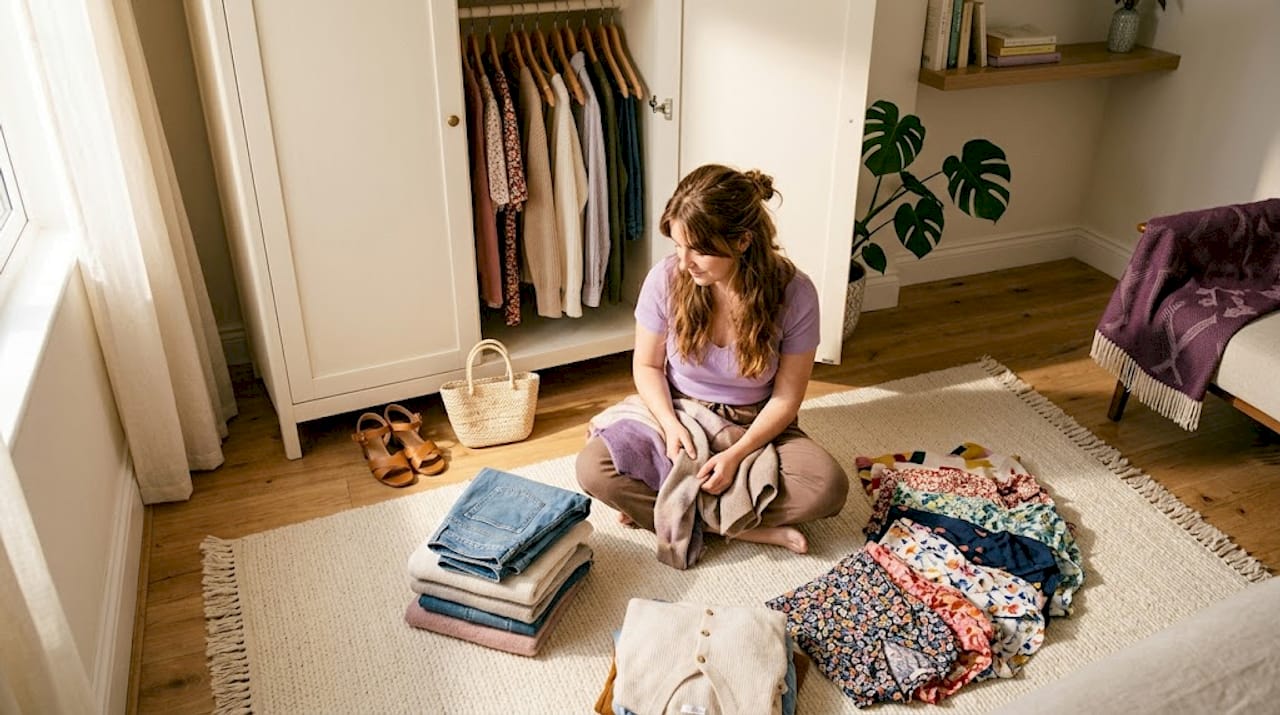
Most capsule wardrobes work best at 10 to 15 pieces per season. An intentional capsule wardrobe reduces decision fatigue and eliminates random buying, meaning a 10 to 15 piece set creates a repeatable system where spending decreases and outfit usage increases. That’s the opposite of what happens with most shopping hauls.
Here’s what a functional capsule core looks like for most women:
- Two to three well-fitting tops in neutral or versatile colors
- Two bottoms (one casual, one slightly elevated)
- One layering piece such as a denim jacket, cardigan, or structured blazer
- One pair of everyday shoes and one that can dress up or down
- One or two accessories that tie multiple outfits together
The good news is that you can build a 12-piece wardrobe for around $98 using thrift and discount shopping for tees, bottoms, outerwear, shoes, and a bag. That’s not a typo. Thrift stores, especially those in mid-size cities, stock quality pieces at a fraction of retail cost. A thrift store wardrobe update means you treat shopping like a skill, not a chore. Go often, go with a list, and know your measurements so you can assess fit quickly.
For those who prefer retail, sales cycles matter. A 10-piece capsule with clearance pricing can generate 30 different outfits for around $150, down from a full-price value of nearly $280. The rule that makes it work: every piece must coordinate with at least five others in the set.
| Shopping source | Best for | Cost range |
|---|---|---|
| Thrift stores | Basics, blazers, denim | $2 to $15 per item |
| Retail sales and clearance | Trendy tops, seasonal layers | $10 to $35 per item |
| Online resale platforms | Brands at discount | $8 to $40 per item |
| Discount retailers | Accessories, basics | $5 to $25 per item |
Before buying anything, apply the three-item test. Never buy a piece that you cannot style with at least three existing items. This rule alone will stop most impulse purchases before they happen.
Pro Tip: When thrift shopping, bring a photo of your YES pile on your phone. Holding up a potential purchase against photos of what you already own makes the three-item test instant.
To build a trend-proof wardrobe that lasts more than one season, lean into neutral colors for your foundational pieces and use accessories to add trend-driven interest.
The cost-per-wear mindset
This is the framework that separates smart shoppers from chronic overspenders. Cost per wear (CPW) is simple: take the price of an item plus any maintenance costs, and divide by the number of times you realistically expect to wear it.
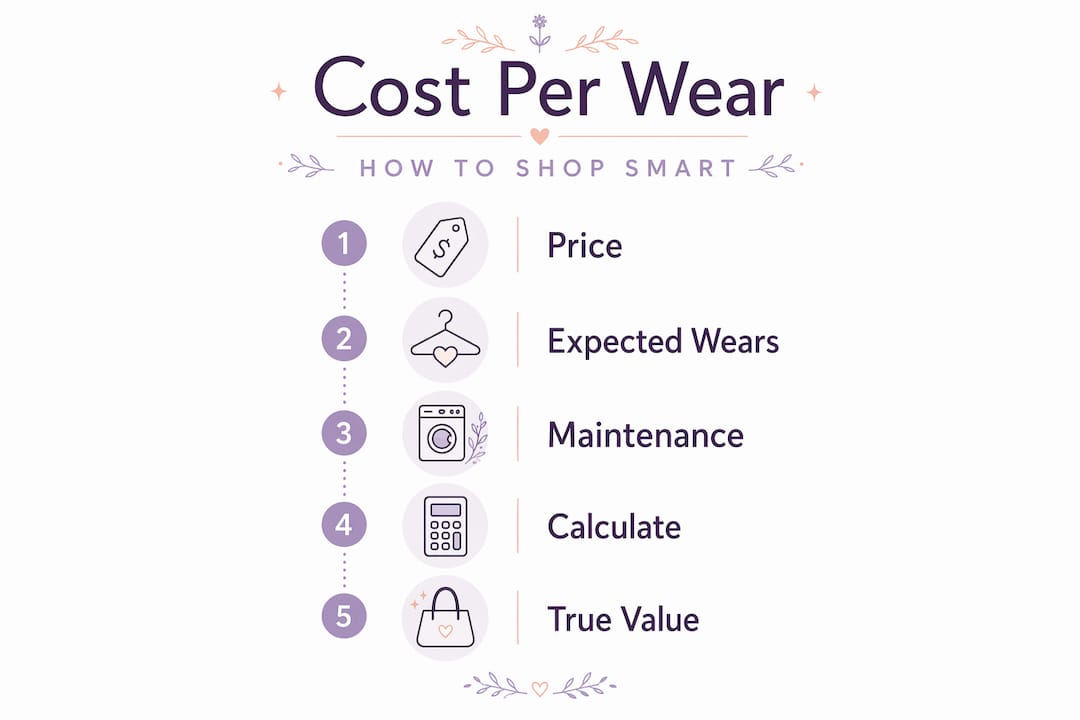
The cost per wear formula helps shoppers avoid overspending on low-use fast fashion by making the true value of any item visible. Here’s what that looks like in practice:
| Item | Price | Expected wears | Cost per wear |
|---|---|---|---|
| Trendy going-out top | $20 | 3 | $6.67 |
| Quality crewneck sweater | $65 | 80 | $0.81 |
| Classic white tee | $18 | 50 | $0.36 |
| Statement dress (worn once) | $85 | 1 | $85.00 |
The $20 top looks like a deal. It isn’t. The $65 sweater feels expensive. It’s actually one of the cheapest items in your rotation. CPW aligns shopping with actual behavior to stop impulse buying and build a leaner, higher-quality wardrobe over time.
Apply this before every purchase, not after. Ask yourself: how many times will I realistically reach for this? Be honest. If the answer is fewer than 10 times, the item needs to offer something exceptional to justify the cost.
Maintenance counts too. A dry-clean-only blouse may cost $30 upfront but add $8 to $12 per cleaning, which changes its true cost per wear significantly. Look for pieces that wash well at home.
Pro Tip: Keep a simple note on your phone where you log new purchases and track how often you wear them for one month. After 30 days, you’ll have real data on your own wearing habits, which makes future CPW estimates much more accurate.
Smart shopping and styling hacks for less
You don’t need a new wardrobe to look like you have one. A few targeted purchases combined with styling techniques can produce a visually fresh closet for very little money.
When it comes to purchases, prioritize by impact. Starting with an everyday top at $20 to $30, replacing worn bottoms at $25 to $35, and adding a single accessory at $15 to $25 is one of the most cost-effective refresh methods available. These three categories get the most daily use, so the CPW on each one drops fast.
Seasonal top-ups focusing on replacing highest-wear basics first and adding one accent piece minimize overspending while keeping your style feeling current. This approach beats the full wardrobe reset mentality that encourages buying 15 things at once, most of which end up unworn.
Here are the fashion hacks for less that actually move the needle:
- Layer intentionally. A simple tank becomes three outfits: alone, under an open button-down, or under a blazer.
- Half-tuck your tops. This single move shifts casual basics into polished territory instantly.
- Mix patterns with intention. Pair a small print with a larger one in the same color family. It looks deliberate and stylish, not accidental.
- Use accessories as the trend vehicle. A bold pair of earrings or a statement bag can modernize a two-year-old outfit. Statement accessories do the heavy lifting so your basics don’t have to.
- Shop with a list, not a mood. Walking into a thrift store or clicking through a sale without a list is how impulse buying wins.
A bargain shopping checklist can make a real difference when you’re working with a tight budget. Knowing exactly what you’re hunting for keeps you focused and prevents the “great deal on something I don’t need” trap.
Pro Tip: Set a Google alert for your favorite retailers with the word “sale.” You’ll catch markdowns the day they go live rather than discovering them when your size is gone.
If you want to go deeper on mix-and-match techniques, wardrobe versatility practices are worth exploring to maximize what you already own before spending a dollar more.
My honest take on why intentional beats impulsive every time
I’ve watched the same pattern play out more times than I can count. Someone buys 12 items in a sale haul, wears three of them, and feels no better about their wardrobe six weeks later. Then the cycle restarts.
The issue isn’t the budget. It’s the approach. When I shifted to thinking about my wardrobe as a curated collection rather than a rotating pile, everything changed. Getting dressed took less time. I spent less money. And I actually felt more stylish, because every item I owned was there on purpose.
What most people don’t realize is that the capsule approach pays dividends beyond money. The mental load of a chaotic closet is real. Decision fatigue at 7 a.m. affects your whole morning. When your closet makes sense, that friction disappears.
I’d also push back on the idea that trends are the enemy. They’re not. The trick is using them as accents, not as the foundation. A trendy scarf or a bold bag on top of a solid capsule base keeps you current without demanding a full wardrobe overhaul every season. Think of classic wardrobe staples as the canvas and trends as the brushstrokes.
My one piece of advice: start with the audit, not the shopping cart. You cannot buy your way to clarity. But you can sort, repair, and reorganize your way there for free.
— Patrick
Refresh your look with Wildflowerwardrobe

Once your audit is done and your capsule blueprint is clear, you’ll know exactly what to add and what to skip. That’s where Wildflowerwardrobe comes in. The curated women’s casual wear collection is built around the kind of versatile, everyday pieces that slot directly into a capsule wardrobe without forcing you to rethink everything you own.
If accessories are your next move, the Fame Multi Belt Strap Shoulder Bag is a strong example of a single piece that elevates multiple outfits at once. For jewelry that adds personality without a high price tag, the Wildflowerwardrobe jewelry collection offers options that work across casual and elevated looks alike. Every piece is chosen with style and real-life wearability in mind.
FAQ
How do I start a wardrobe refresh on a tight budget?
Begin with a closet audit before spending anything. Sorting into YES, MAYBE, NO, and REPAIR categories often reveals that you already own more usable pieces than you thought, and repairing and reorganizing your existing wardrobe is frequently the cheapest upgrade available.
What is the three-item rule for buying clothes?
The three-item rule means you only purchase a new piece if you can immediately style it with at least three items already in your closet. This single rule prevents most impulse purchases and keeps your wardrobe cohesive.
How many pieces does a budget capsule wardrobe need?
A functional capsule wardrobe works well at 10 to 15 pieces per season. Research shows that a 10-piece capsule built with sales and clearance pricing can generate up to 30 different outfits for around $150.
What is cost per wear and why does it matter?
Cost per wear is calculated by dividing an item’s price (plus maintenance) by how many times you expect to wear it. It matters because it reveals that a $100 item worn 100 times offers far better value than a $20 item worn once.
Are thrift stores worth it for a wardrobe update?
Yes, thrift stores are one of the most effective ways to refresh your wardrobe cheaply. A 12-piece thrift wardrobe can be assembled for around $98, covering all key capsule categories from tops to outerwear to shoes.
0 comments