

A belt sitting in your drawer right now could completely change how you feel in your favorite outfit. That’s not an exaggeration. The role of belts in outfit styling goes far beyond holding your jeans up. Belts shape your silhouette, anchor your look, and add that one intentional detail that separates a thrown-together outfit from something that looks considered. Yet most women treat them as an afterthought. This guide covers everything from picking the right belt to mastering the biggest belt trends of 2026, including layering and wearing belts as statement accessories.
Table of Contents
- Key Takeaways
- The real role of belts in outfit styling
- Belt types and how to choose the right one
- 2026 belt trends worth knowing
- Styling belts with everyday clothing
- Using belts to coordinate color and texture
- My honest take on belts and why I changed my approach
- Find your next statement belt at Wildflowerwardrobe
- FAQ
Key Takeaways
| Point | Details |
|---|---|
| Belts define your silhouette | Adding a belt to any outfit creates waist definition and proportion that clothing alone often cannot achieve. |
| The “third piece” rule works | Belts act as connective accessories that tie colors and textures together for a polished, intentional look. |
| Belt type changes everything | Thin, wide, braided, or chain belts each create a different visual effect and suit different outfit contexts. |
| Stacking belts is trending in 2026 | Layering two belts with contrasting textures or metals adds dimension and personality without looking overdone. |
| Right fit is non-negotiable | Fastening your belt on the center hole gives you the most comfort and the cleanest aesthetic line. |
The real role of belts in outfit styling
Most people think of belts as functional, and that framing sells them short. Yes, they hold things in place. But when stylists talk about the importance of belts in fashion, they describe them as “quiet anchors” that bring structure to silhouettes that would otherwise look shapeless.
Think about what happens when you throw on an oversized linen blazer. Without a belt, the shape is lost. Add a wide leather belt at the natural waist, and suddenly you have a waist. The blazer looks deliberate. You look polished. Stylists note that belts define shape in loose layers, preventing oversized clothing from looking frumpy. This is one of the most practical benefits of understanding belts and outfit balance.
“A belt is the one accessory that can instantly restructure an entire look. It’s not decoration. It’s architecture.” — fashion stylists on the modern role of the belt
Beyond structure, belts act as what stylists call the “third piece” in a look. Here’s how that plays out:
- Jeans and a white tee are two pieces. Add a thin tan leather belt, and you have three pieces and a complete outfit.
- A flowy midi dress becomes a waist-defining look with a fabric wrap belt cinched over it.
- An oversized coat transforms from shapeless to intentional the moment a statement belt is looped through or worn over it.
The third piece rule is one of the most underused tools in everyday dressing. Belts are the easiest way to apply it.
Belt types and how to choose the right one
Not all belts are created equal, and the one you choose does a lot of the styling work for you. Here is a breakdown of the most common belt styles and what they do for an outfit:
- Thin leather belts (under 1 inch wide): Best for tailored trousers, straight-leg jeans, and midi skirts. They add a subtle waist point without drawing too much attention.
- Wide leather or faux-leather belts (2 inches and above): Create strong silhouette definition. Ideal over dresses, longline cardigans, and trench coats.
- Braided or woven belts: Bring a relaxed, textural quality. They work well with casual linen outfits, flowy skirts, and summer dresses.
- Chain belts: Trend-driven and statement-making. Layer them over denim or a slip dress for a fashion-forward effect.
- Fabric sash or wrap belts: Soft and fluid. They define the waist without structure, perfect for draped fabrics and wrap dresses.
- Embellished or statement belts: Treat these like jewelry for your waist. One bold belt can make a plain outfit look entirely styled.
When it comes to sizing, the correct belt size is typically your pant size plus 1 to 2 inches, with the middle hole being your ideal fastening point. That middle hole gives you room to size up or down as needed, which matters more than most people realize.
Color and material also carry weight in how to style belts effectively. A black leather belt is a wardrobe neutral. A cognac tan belt adds warmth and works particularly well with earthy tones and denim. A metallic or gold-toned belt reads as an accessory first, a functional item second.
Pro Tip: If you are buying your first real investment belt, choose a wide cognac leather style with a simple gold buckle. It layers well, contrasts beautifully with neutrals, and reads as intentional in almost any outfit.
2026 belt trends worth knowing
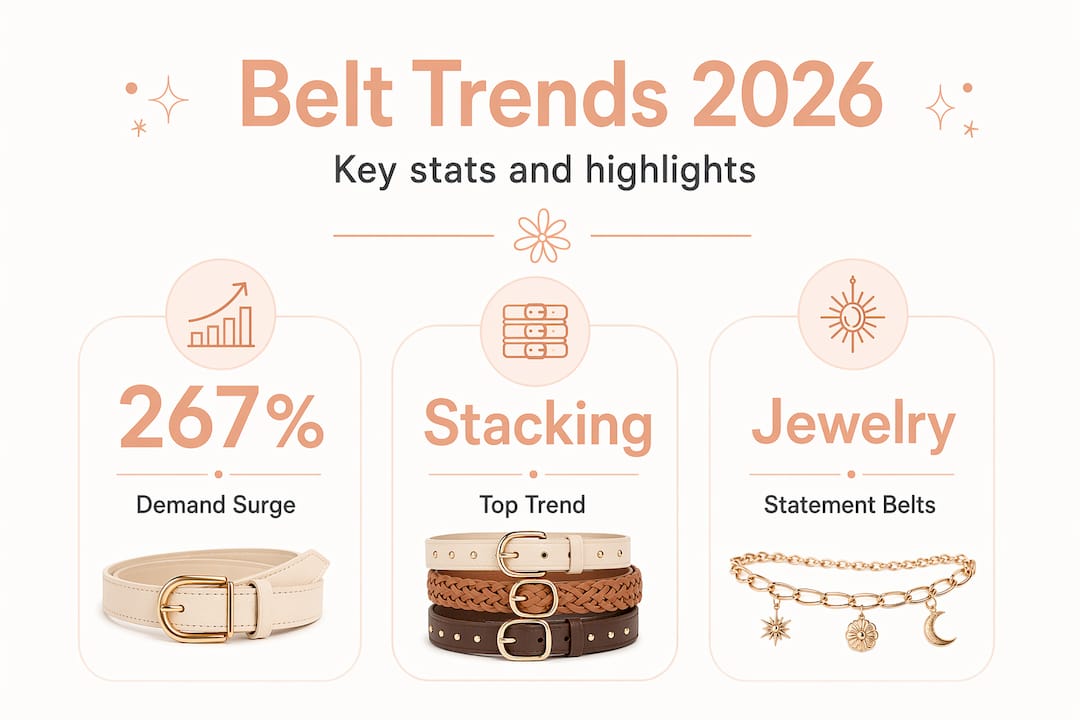
Net-a-Porter reported a 267% increase in demand for specific designer belts heading into spring and summer 2026. That number tells you something significant is happening with how fashion-conscious women view belts. They are no longer a finishing touch. They are the statement.
The biggest trend this year is stacking. Fashion houses like Celine and Etro showcased the look of layering multiple belts over jeans and dresses on the runway. Wearing two belts at once sounds like a lot, but the trick is contrast. Pair a thin chain belt with a wider leather one, or layer a braided style over a simple canvas belt. The result is a layered, intentional look that reads more like jewelry than hardware.
Here is how the major 2026 belt placement trends compare:
| Placement | Effect on silhouette | Best worn with |
|---|---|---|
| Natural waist | Creates an hourglass shape | Dresses, oversized tops, blazers |
| High hip | Elongates the torso | Wide-leg trousers, maxi skirts |
| Low hip | Relaxed, casual, retro feel | Low-rise jeans, cargo pants |
| Over outerwear | Adds structure and drama | Coats, chunky knits, longline blazers |
| Stacked (two belts) | Adds dimension and personality | Jeans, slip dresses, wide-leg pants |
Beyond stacking, the “belt as jewelry” trend continues to grow. Chunky, wide, and statement belts are positioned as 2026’s key runway accessories, with designers using them to add proportion and drama to shapes that runway dressing once left uncinched.
Styling belts with everyday clothing
Learning how to style belts with the specific pieces already in your wardrobe is where the real shift happens. Start with what you wear most.
- With jeans: Thread a thin or mid-width belt through the loops for a put-together casual look. Try a cognac or white belt instead of the standard black for contrast. Pair with a tucked tee or blouse and the outfit builds itself. For denim styling inspiration, denim style guides can help you find the right pairings.
- With dresses: This is where belts do the most transformative work. A belted dress look sharpens proportion and adds a waist to styles that might otherwise look boxy or shapeless. Wrap belts work beautifully with flowy fabrics; wide leather works better with structured or jersey styles.
- With blazers and outerwear: Wearing a belt over a coat or blazer changes the structure of your entire silhouette. Stylist Hallie Abrams recommends layering with belted looks to accommodate different body shapes while still creating waist definition. This also applies to oversized sweaters and longline cardigans.
- With skirts: A thin belt on a high-waist skirt adds a finishing detail without competing with the skirt’s shape. A wide belt over a maxi skirt creates a clear waist break that keeps the proportions balanced.
Common mistakes worth avoiding: wearing a belt that is too tight (it causes bunching and draws attention to the discomfort rather than the outfit), choosing a buckle that competes with statement jewelry, and defaulting to a black belt every time when your outfit calls for contrast.
Pro Tip: If you feel self-conscious about drawing attention to your midsection, try a belt in the same tonal family as your top rather than contrasting. It still creates shape without making the belt the focal point.
Using belts to coordinate color and texture
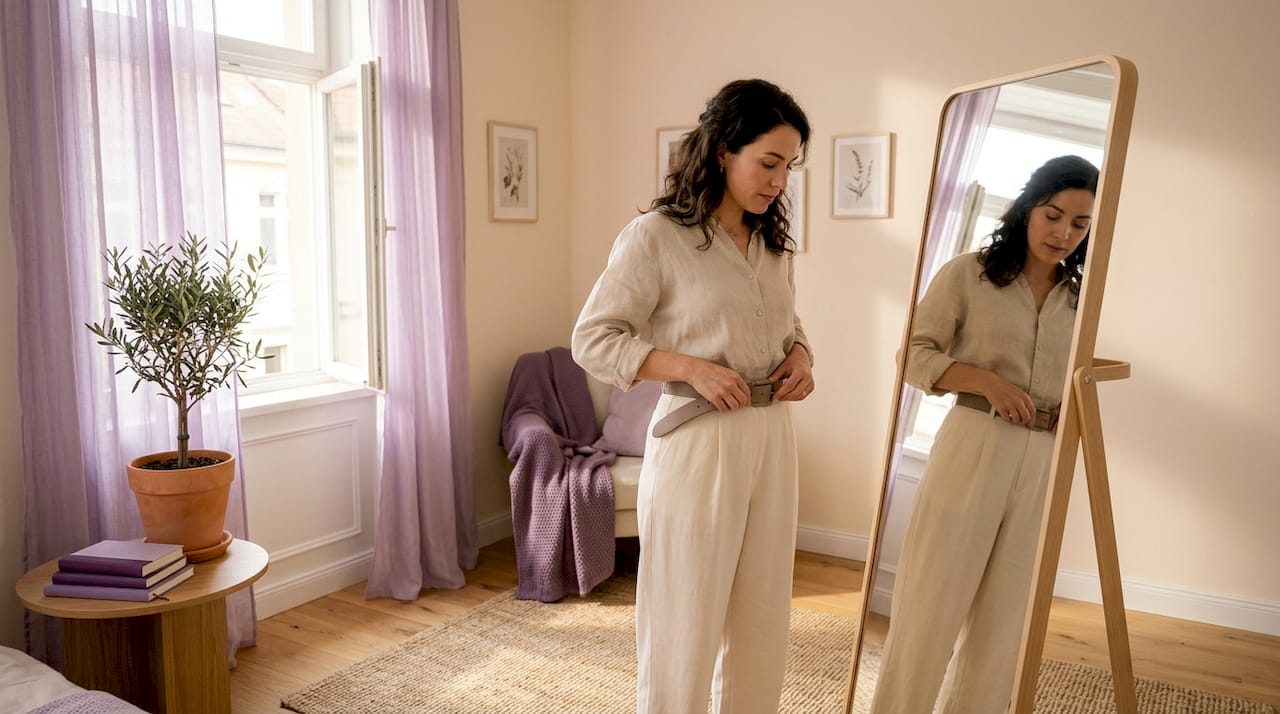
This is where belts move from practical to sophisticated. The third piece rule applies directly here. A belt placed between a top and bottom can pick up a color from either, creating cohesion without matching anything exactly.
Here are the principles that make this work:
- Match the belt to your shoes: This is the classic approach. A brown leather belt with brown ankle boots creates a visual thread through the outfit that feels polished and put-together.
- Match the belt to your bag: If your bag has gold hardware, wear a belt with a gold buckle. The repetition of the metallic registers as intentional.
- Use a contrasting belt for visual interest: A white belt on a black outfit is striking. A pop-color belt on a neutral monochromatic look is one of the fastest ways to make a simple outfit look creative.
- Mix textures deliberately: A woven belt over a smooth silk dress creates textural contrast that adds depth. A metallic chain belt over a matte fabric does the same. Mixing textures and metals is the technique behind the most creative belt looks of 2026.
Stylists describe belts as the “marrying piece” in outfit composition. When you are wearing a print top and solid pants, or mixing two different textures, a belt at the middle pulls both elements toward each other visually. It signals that the outfit was thought through, not just thrown on. For more on building versatile looks around accessories, wardrobe versatility tips at Wildflowerwardrobe are worth bookmarking.
My honest take on belts and why I changed my approach
I spent years treating belts as optional. I had a few, wore them rarely, and never thought much about which belt suited which outfit. What changed my view was noticing how one well-placed belt made everything look more finished without any other change to the outfit.
I have seen statement belts treated like jewelry for clothes, and that reframe is what stuck with me. You would not wear the same pair of earrings to every outfit without thinking. Why treat your belt differently? Once I started choosing belts the way I choose accessories, the results were immediate and obvious.
The fear of drawing attention to the midsection is real, and I hear it often. My perspective is this: a belt worn in a matching tone to your top creates shape without spotlight. You define your waist without making the belt the center of attention. The body confidence follows the outfit, not the other way around.
The 2026 trend toward stacking and bold, wide belts is not just a runway moment. It represents a genuine shift in how belts as fashion accessories are understood. They are not afterthoughts. They are often the most important piece in the outfit.
— Patrick
Find your next statement belt at Wildflowerwardrobe
If this article sparked an interest in rethinking your belt collection, Wildflowerwardrobe has the pieces to back it up. The casual wear collection features versatile everyday pieces that pair naturally with both thin and wide belt styles. For something that bridges belts and bags in one statement piece, the Fame Multi Belt Strap bag at Wildflowerwardrobe is the kind of accessory that pulls a look together the moment you carry it. The curation at Wildflowerwardrobe focuses on pieces that feel both current and wearable, which is exactly the standard a good belt should meet too. Browse and find the one that finishes your look.
FAQ
What is the role of belts in outfit styling?
Belts define the waist, improve silhouette proportion, and act as a “third piece” that ties colors and textures together. They transform outfits from functional to intentional without requiring any other changes.
How do you style belts over dresses?
Choose a wide leather belt at the natural waist for structured dresses, or a fabric wrap belt for flowy styles. This creates waist definition and adds a finished, editorial quality to simple dress silhouettes.
Which belts suit different outfits?
Thin belts suit tailored trousers and denim, wide belts work over coats and dresses, braided belts complement casual and linen looks, and chain belts act as statement jewelry pieces over slip dresses or jeans.
Is stacking two belts a real styling trend in 2026?
Yes. Fashion houses including Celine and Etro showed layered belt looks on their 2026 runways, and demand for designer belts surged over 267% in early 2026. The key is pairing contrasting textures or widths for balance.
How do I know which belt size to buy?
Add 1 to 2 inches to your pant size to find your belt size, then fasten on the center hole. The center hole position gives you the most flattering fit and allows flexibility as your wardrobe or body changes.
0 comments