

Dressing for your body type is the practice of selecting dress styles, cuts, and details that enhance your natural proportions and highlight the features you love most. This dress for body type guide covers the five most common female body shapes, the specific dress cuts that flatter each one, and the fabric and styling details that make the biggest visual difference. Styles like wrap dresses, A-line cuts, and fit-and-flare silhouettes each work with proportion rather than against it. The goal is never to “fix” your shape. It is to celebrate it.
How to identify your body type for dressing
Knowing your body shape is the foundation of every good styling decision. The five most recognized female body types are hourglass, pear, apple, inverted triangle, and rectangle. Each is defined by the relationship between your bust, waist, and hip measurements.
Take three measurements to get started:
- Bust: Measure around the fullest part of your chest.
- Waist: Measure around the narrowest part of your torso, usually just above your belly button.
- Hips: Measure around the fullest part of your hips and seat.
Once you have those numbers, compare them to identify your shape:
- Hourglass: Bust and hips are roughly equal, with a noticeably smaller waist.
- Pear: Hips are wider than the bust, with a defined waist.
- Apple: Bust and midsection are fuller, with narrower hips.
- Inverted triangle: Shoulders and bust are wider than the hips.
- Rectangle: Bust, waist, and hips are close in measurement with little curve definition.
Visual assessment matters just as much as numbers. Stand in front of a full-length mirror in fitted clothing and look at your overall silhouette. The shape you see is your guide.
Pro Tip: Try on a structured wrap dress before committing to a body type label. How it fits at the waist, chest, and hips will tell you more about your proportions than a tape measure alone.

What are the best dress styles for each body type?
The wrap dress is universally flattering for women across all body types because its adjustable waist and V-neckline create a balanced silhouette. That adjustability is the key. You control exactly where the waist sits and how much the neckline opens, which means the dress adapts to you rather than forcing you into a fixed shape.
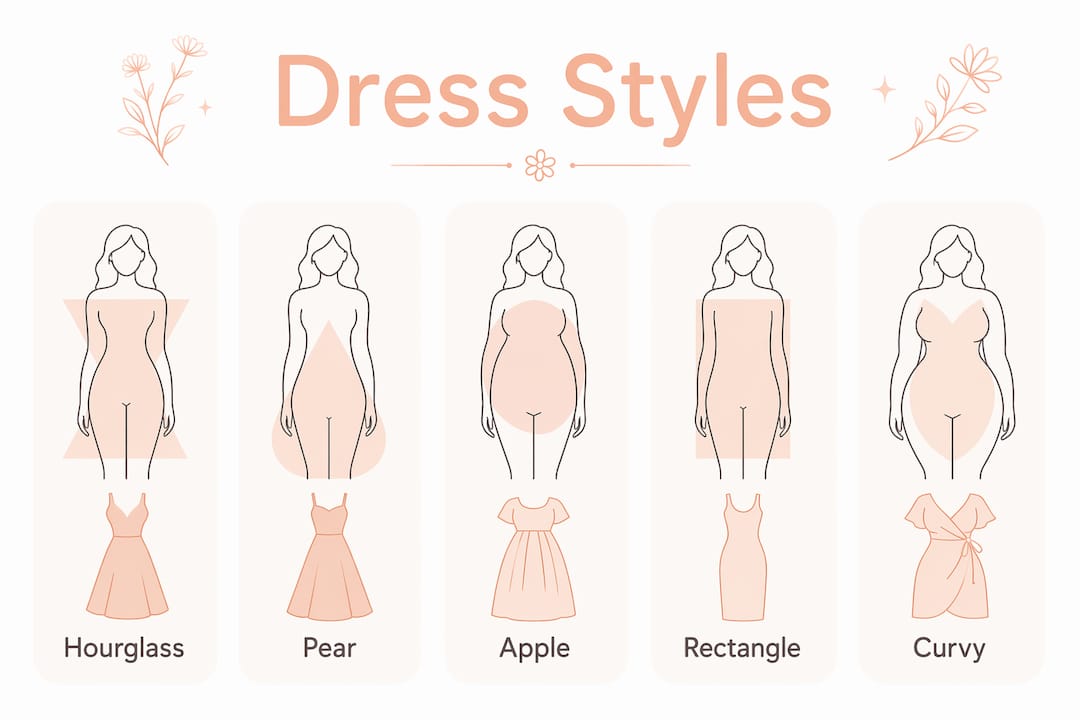
A-line dresses flatter pear and hourglass shapes by fitting close at the top and flaring gently over the hips. This cut balances proportions without adding bulk. For pear shapes, it draws attention upward while skimming over the hips gracefully.
Flattering styles for curvy figures include wrap, A-line, and fit-and-flare cuts because all three define the waist and balance proportions. Fit-and-flare is particularly effective for hourglass and curvy bodies. It cinches at the natural waist and flares at the skirt, creating a dramatic and feminine silhouette.
For apple shapes, empire waist dresses are the strongest choice. The seam sits just below the bust, which is typically the narrowest point for apple figures. The skirt falls loosely over the midsection, creating a long, clean line from chest to hem.
Rectangle shapes benefit most from sheath dresses and bodycon cuts. These styles trace the body’s existing lines and add the illusion of curve through fit alone. Adding a belt at the waist transforms a sheath dress into a more defined silhouette.
| Body type | Best dress styles | Why it works |
|---|---|---|
| Hourglass | Wrap, fit-and-flare, A-line | Highlights defined waist and balanced proportions |
| Pear | A-line, wrap, fit-and-flare | Balances wider hips with a fitted top |
| Apple | Empire waist, wrap, shift | Draws attention above the midsection |
| Inverted triangle | A-line, wrap, fit-and-flare | Adds volume below to balance broader shoulders |
| Rectangle | Sheath, bodycon, belted styles | Creates the appearance of curves and definition |
Pro Tip: If you are between shapes, choose based on the feature you most want to highlight. A pear with a defined waist will love a wrap dress. A pear who wants to show off her legs will love a fit-and-flare with a shorter hem.
How do fabric, neckline, and details change how a dress fits?
The cut of a dress gets most of the attention, but fabric and details do just as much work. Structured fabrics like linen, cotton, organza, and ponte shape and support the body, creating a cleaner look. Stretchy fabrics like jersey and matte spandex blend move with the body and work well for fit-and-flare and bodycon styles.
Necklines shift the eye and change perceived proportions:
- V-neck: Elongates the neck and enhances the chest, drawing the eye downward and inward. Best for apple and rectangle shapes.
- Boat neck: Broadens the shoulders visually. Best for pear and hourglass shapes who want to balance wider hips.
- Sweetheart: Lifts and defines the bust. Works well for hourglass and pear figures.
- Scoop neck: Versatile and flattering across most shapes. Adds softness without strong directional pull.
Details like ruching, belts, and vertical lines create visual balance. Ruching at the waist draws the eye to the narrowest point of the torso. Vertical seams and prints lengthen the body. A wide belt over a shift dress instantly creates a waist where the cut does not provide one.
Color and pattern placement matter more than most women realize. Dark colors on areas you want to minimize, and lighter or bolder patterns on areas you want to highlight, is a simple and effective rule. A dress with a bold print on the bodice and a solid dark skirt draws attention upward, which works well for pear shapes.
Pro Tip: Mixing textures adds depth and seasonal versatility. A ponte blazer over a jersey wrap dress creates structure on top without sacrificing the wrap’s flattering waist definition.
Practical tips for building a confident, body-positive wardrobe
Dressing for your body type focuses on proportion over size, using design elements to create visual balance aligned with your personal goals. That means fit matters far more than the number on the tag. A size 12 dress that fits perfectly will always look better than a size 8 that pulls at the seams.
Follow these steps when shopping for dresses:
- Prioritize fit at your widest point. Buy for the largest measurement and tailor from there. A good tailor can take in a waist or shorten a hem for under $30 in most cities. Read more about fit and tailoring to understand how small adjustments transform a dress.
- Try on before you commit. Move around, sit down, and raise your arms. A dress that restricts movement will stay in your closet.
- Build a capsule of three to five dresses. One wrap dress, one A-line, and one sheath cover nearly every occasion and body type combination. Add a fit-and-flare for events and a casual shift for everyday wear.
- Use accessories to shift the silhouette. A statement necklace draws the eye upward. A wide belt creates a waist. A well-chosen bag at hip level adds horizontal balance for inverted triangle shapes.
- Highlight what you love. Successful styling starts with knowing which features you love and using necklines, hemlines, and accessories to put those features forward.
2026 fashion trends emphasize comfort, perfect fit, and flattering shapes, encouraging women to celebrate their curves and self-expression rather than hide perceived flaws. That shift is showing up in size-inclusive collections, stretch-friendly fabrics, and adjustable silhouettes across every price point. You can find budget-friendly ways to dress confidently without compromising on fit or style.
Key takeaways
The most effective dress for your body type is the one that fits your largest measurement, highlights a feature you love, and makes you feel confident the moment you put it on.
| Point | Details |
|---|---|
| Identify your shape first | Measure bust, waist, and hips to determine your body type before shopping. |
| Match cut to proportion | Wrap and A-line dresses flatter most shapes; empire waist suits apple figures best. |
| Fabric and details matter | Structured fabrics and strategic necklines shift visual balance as much as cut does. |
| Fit beats size every time | Buy for your widest measurement and tailor for a perfect fit at the waist or hem. |
| Confidence is the final layer | Confidence is the most effective accessory and makes any dress style look great. |
Why body type rules are tools, not laws
I have spent years watching women walk into fitting rooms with a rigid checklist and walk out frustrated. The checklist is not the problem. The rigidity is.
Body type guides are flexible starting points, not strict laws. The best results come from emphasizing the features you love rather than trying to correct perceived imbalances. That is a fundamentally different mindset, and it changes everything about how you shop.
I have seen women with pear shapes wear bold horizontal stripes and look extraordinary, because they wore them with total confidence. I have seen apple shapes rock a fitted bodycon dress at a wedding and own the room. The “rules” said neither of those looks should work. The women wearing them disagreed.
Current trends are shifting toward comfort and individuality, and that is the right direction. Use the guide as a starting point. Then break the rules that do not serve you. Your shape is not a problem to solve. It is the canvas you get to work with. And that is a genuinely exciting thing.
— Patrick
Wildflowerwardrobe’s dress collection for every shape
Wildflowerwardrobe carries a curated selection of dresses designed with real women’s proportions in mind. From structured wrap styles to flowing A-line cuts, the collection reflects exactly the principles covered in this guide.
Whether you are building a capsule wardrobe or looking for one standout piece, the women’s casual wear collection includes flattering cuts in stretch-friendly and structured fabrics across a full size range. Pair your dress with pieces from the jewelry collection to complete the look and shift the silhouette exactly where you want it. Wildflowerwardrobe’s focus on self-expression means you will find styles that work with your shape, not against it.
FAQ
What is the most universally flattering dress style?
The wrap dress is the most universally flattering style for women across all body types. Its adjustable waist and V-neckline create a balanced silhouette that adapts to different proportions.
How do I know which body type I am?
Measure your bust, waist, and hips, then compare the three numbers. If your bust and hips are equal with a smaller waist, you are hourglass. If your hips are wider than your bust, you are pear-shaped.
What dress styles work best for curvy figures?
Wrap, A-line, and fit-and-flare dresses are the best dresses for curvy figures because they define the waist and balance proportions without restricting movement.
Does fabric choice really matter for body type dressing?
Fabric makes a significant difference. Structured fabrics like ponte and linen hold their shape and create a cleaner silhouette, while soft jersey and matte spandex move with the body and work best for fitted or flared styles.
Should I follow body type rules strictly?
Body type guides are starting points, not strict rules. Use them to identify cuts that tend to flatter your proportions, then adjust based on the features you personally want to highlight and the style you feel most confident wearing.
0 comments