

A balanced wardrobe is defined by a foundation of timeless classics supplemented with carefully chosen trend accents. The timeless vs trendy wardrobe balance works best when you treat classics as your wardrobe’s backbone and trends as the seasoning. Fashion trends cycle every 3–6 months, while timeless pieces hold their value for 5–10+ years. That gap is the core argument for building your closet around classics first. Experts recommend an 80/20 budget split, putting 80% toward staples and 20% toward trend pieces, or one trend item for every three basics. Wildflowerwardrobe curates both categories so you never have to choose one over the other.
1. How fashion experts define timeless vs trendy wardrobe balance
Timeless fashion means clothing that stays relevant across seasons without needing replacement. Classic pieces share four traits: neutral or versatile colors, clean silhouettes, quality construction, and high cost-per-wear value. Think a well-cut blazer, a white Oxford shirt, straight-leg denim, or a trench coat. These items work across years, not just months.
Trendy pieces, by contrast, are defined by bold colors, statement cuts, and seasonal popularity. Digital acceleration shortens trend cycles, causing clothing to feel outdated within months of purchase. The Y2K revival is a useful exception: that microtrend lasted roughly 18 months, longer than most, yet still faded. Most trends do not get that runway.
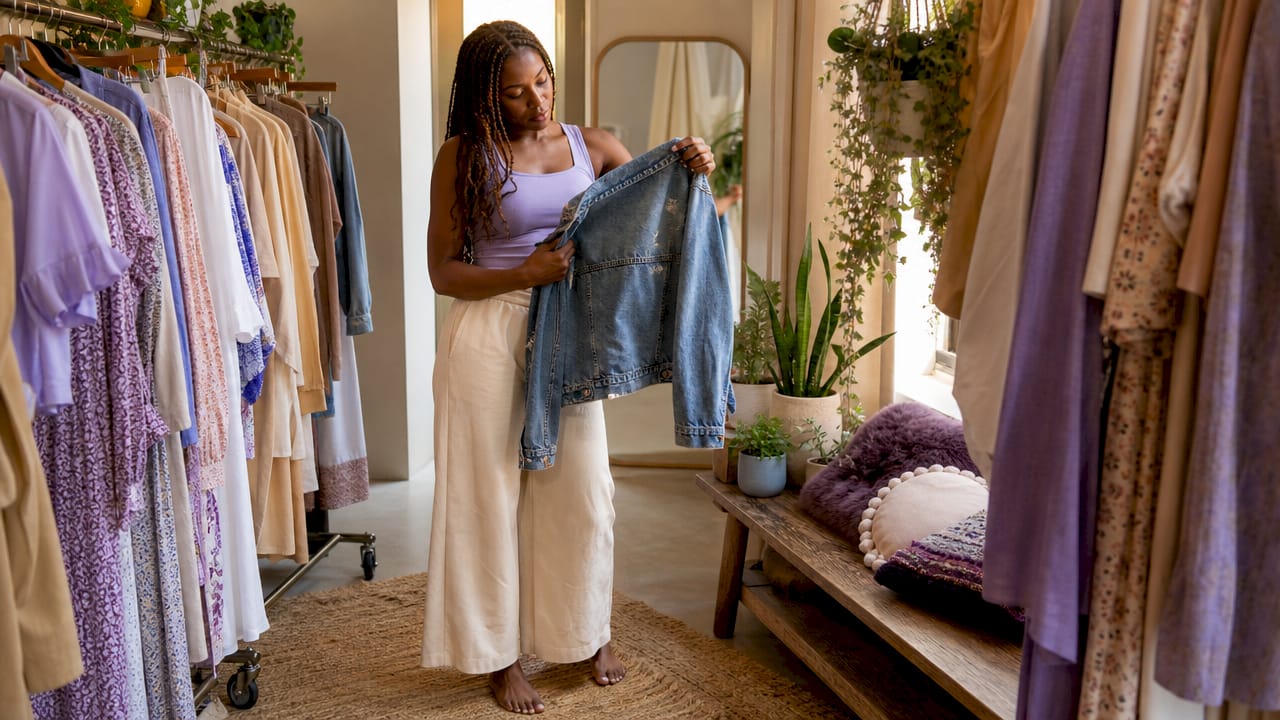
The industry distinguishes between macrotrends (broad shifts like minimalism or maximalism that last several years) and microtrends (specific items like cargo pants or ballet flats that peak and fade within a single season). Knowing which category a piece falls into helps you decide how much to spend on it.
Pro Tip: Before buying any trend piece, ask whether it fits a macrotrend or a microtrend. Macrotrend items are worth slightly more investment. Microtrend items should stay cheap.
2. The 80/20 rule and other formulas for wardrobe balance
The 80/20 formula is the most widely cited guideline for balancing classic and trendy fashion choices. It means 80% of your wardrobe budget or item count goes to timeless staples, and 20% goes to trend pieces. A related version is the one-to-three rule: one trend piece for every three basics. Both formulas point to the same principle. Classics anchor; trends accent.
The 70/20/10 formula adds a third category. Seventy percent goes to core basics, 20% to trend-adjacent pieces (items that feel current but will last two to three seasons), and 10% to bold trend statements. This works well for women who want more variety without overcommitting to fast fashion.
Rigid ratios are impractical when applied without considering your actual lifestyle. A woman who works in a creative field may need more trend-forward pieces than someone in a corporate environment. The formula is a starting point, not a rule. Adjust the percentages based on how you actually spend your days.
Pro Tip: Audit your wardrobe before shopping. Pull out everything you have not worn in six months. That pile tells you exactly where your balance is off.
3. How to identify timeless pieces worth investing in
Investment pieces anchor the wardrobe while trend pieces add freshness and personality. The clearest way to identify a true classic is the cost-per-wear index. Divide the price of a garment by the number of times you will realistically wear it. A $200 blazer worn 100 times costs $2 per wear. A $40 statement top worn twice costs $20 per wear. The math favors the blazer every time.
The must-have classics that consistently pass this test include:
- Tailored blazer in black, navy, or camel
- White or cream button-down shirt in cotton or linen
- Quality straight-leg or slim denim in a dark wash
- Trench coat in a neutral tone
- Simple leather or faux-leather handbag in a structured shape
- Flat or low-heeled ankle boot in black or tan
- Fitted crewneck or V-neck sweater in a neutral
Evaluating purchase value by number of wears consistently favors basics over trend buys. That is the core logic behind building your wardrobe from the inside out. Start with the pieces you reach for every single day, then layer trend accents on top. You can learn more about building around classics to see how this plays out in practice.
4. Smart ways to incorporate trends without overspending
Trends are not the enemy. They keep your wardrobe feeling alive and current. The key is acquiring them affordably so you are not locked into a piece that feels dated in six months.
The most cost-effective channels for trend pieces include secondhand platforms, clothing rental services, and budget-friendly retail. Accessories are the smartest entry point. A trendy belt, a statement earring, or a printed scarf can update an entirely classic outfit for under $30. Prioritizing quality timeless pieces can save up to 50% of your seasonal shopping budget by reducing how often you replace trend buys. That savings goes directly back into better basics.
Tailoring is an underused tool for extending the life of both classic and trend pieces. A blazer that fits your shoulders perfectly will look current regardless of the season. A trendy wide-leg trouser that is hemmed correctly reads as polished rather than costume-like. The role of tailoring in classic fashion is often the difference between a piece that lasts and one that gets donated after one season.
Limit trend elements to one or two per outfit. A bold printed top pairs with straight-leg jeans and clean white sneakers. A statement bag works with a neutral dress and simple flats. Stacking multiple trends in one look creates visual noise and dates the outfit faster.
5. Common mistakes that throw off your wardrobe balance
The most common mistake is replacing basics prematurely because a trend makes them feel boring. A white shirt is not boring. It is the canvas that makes every trend piece look intentional. Pulling it out of rotation to chase something new breaks the foundation of your wardrobe.
Fast-fashion marketing frequently mislabels items as “timeless classics.” True timelessness is determined retroactively, not by a label or a campaign. A piece is timeless when it has proven it can survive multiple seasons without looking dated. Quality construction and proper fit are the real markers, not the price tag or the brand’s claims.
“Authentic style comes from mastering and curating trends in alignment with your identity, not slavishly following social media. The best-dressed women are not the ones who buy every trend. They are the ones who know exactly which trends belong in their wardrobe and which ones do not.”
Social media accelerates impulse buying. A trend that looks stunning on a curated feed may not suit your body type, lifestyle, or existing wardrobe. Before purchasing, ask three questions: Does this work with at least five things I already own? Will I still want to wear this in 12 months? Does it fit my actual life, not my aspirational one?
Other common pitfalls to avoid:
- Buying duplicates of basics you already own instead of filling actual gaps
- Ignoring fit and assuming tailoring is only for expensive pieces
- Stacking bold trends in a single outfit, which creates a costume effect
- Skipping wardrobe edits, which lets clutter obscure what you actually have
6. How to personalize your wardrobe balance by lifestyle and budget
Personal lifestyle and needs dictate wardrobe balance more than any strict ratio. A woman who works from home needs a different split than one who attends client meetings five days a week. The formula has to reflect your real life, not a fashion ideal.
The table below shows how wardrobe proportions shift across three common lifestyle scenarios.
| Lifestyle | Timeless basics | Trend-adjacent | Bold trends |
|---|---|---|---|
| Corporate professional | 80% | 15% | 5% |
| Creative professional | 60% | 25% | 15% |
| Casual/work-from-home | 70% | 20% | 10% |
Seasonal wardrobe refreshes are the practical version of trend shopping. Instead of overhauling your closet every season, add two or three trend pieces each spring and fall. This keeps your wardrobe current without disrupting the classic foundation. A seasonal wardrobe refresh works best when you shop with a list rather than browsing open-endedly.
Budget allocation matters as much as item count. Set a fixed seasonal budget for trend pieces before you shop. When that budget is spent, stop. This prevents the impulse spiral that fast fashion marketing is designed to trigger. Your classics budget can be larger and less frequent since quality basics do not need replacing every season.
Authentic style comes from curating trends in alignment with your identity rather than following every wave. Women who build around a clear style identity, whether that is minimalist, bohemian, or classic preppy, find it easier to reject trends that do not fit and embrace the ones that do. Knowing your style DNA is the most practical wardrobe tool you have. For a deeper look at how to style trend pieces without losing your classic base, the guide on mixing pop culture tees casually shows how even statement graphic pieces can work within a balanced wardrobe.
Key Takeaways
The most effective timeless vs trendy wardrobe balance puts 80% of your budget toward lasting classics and 20% toward trend accents, adjusted for your actual lifestyle.
| Point | Details |
|---|---|
| Use the 80/20 rule as a starting point | Allocate 80% of your wardrobe budget to classics and 20% to trend pieces. |
| Apply cost-per-wear to every purchase | Divide price by expected wears to confirm a piece earns its place in your closet. |
| Limit trends to one or two per outfit | Stacking multiple trends creates visual noise and dates your look faster. |
| Adjust ratios to your real lifestyle | Corporate, creative, and casual lifestyles each call for different wardrobe proportions. |
| Ignore fast-fashion “timeless” labels | True timelessness is proven over multiple seasons, not declared by marketing copy. |
What I have learned from years of mixing classics and trends
The fashion advice that changed how I think about my wardrobe was not a ratio or a formula. It was the realization that being well-dressed is not about owning the right trends. It is about knowing yourself well enough to reject the wrong ones.
I spent years buying trend pieces that looked great in the store and sat unworn at home. The problem was not the pieces. It was that I had not built a strong enough classic foundation for them to work with. Once I committed to quality basics, the trend pieces I did buy started earning their place.
The women I admire most in fashion are not the ones chasing every season. They are the ones who wear a 10-year-old blazer with a fresh accessory and look more current than anyone in head-to-toe new arrivals. That is the real goal. Build a wardrobe that works for you, not one that works for the algorithm.
— Patrick
Wildflowerwardrobe: classics and trend accents in one place
Wildflowerwardrobe carries both sides of the wardrobe equation. The collection includes quality everyday staples alongside seasonal trend pieces designed to complement, not overpower, a classic foundation.
Whether you are building your classic base or adding a fresh accent for the season, the women’s casual wear collection covers both. You will find versatile pieces that work across multiple outfits, plus trend-forward accents that add personality without demanding a full wardrobe overhaul. Wildflowerwardrobe also carries jewelry and accessories that make trend updates affordable and easy to swap out as seasons change. Shop the full range at Wildflowerwardrobe and build a wardrobe that lasts.
FAQ
What does timeless fashion mean?
Timeless fashion refers to clothing that stays relevant across multiple seasons without looking dated. True timeless pieces are defined by quality construction, classic silhouettes, and neutral or versatile colors rather than by marketing claims.
What is the best ratio for balancing timeless and trendy pieces?
The 80/20 rule is the most widely recommended starting point: 80% of your wardrobe budget goes to classics and 20% to trend pieces. Adjust the ratio based on your lifestyle, with creative professionals often shifting toward a 60/25/15 split.
How do I identify a truly timeless piece?
A timeless piece has a clean silhouette, neutral or versatile color, quality fabric, and a high cost-per-wear value. If a garment has proven it looks current across at least two or three seasons, it qualifies as timeless.
How many trend pieces should I wear at once?
Limit trend elements to one or two per outfit. Pairing a trend piece with classic basics keeps the look intentional and prevents the outfit from feeling dated or costume-like.
How often should I refresh my wardrobe with trend pieces?
A seasonal refresh of two to three trend pieces each spring and fall is enough to keep your wardrobe current. Set a fixed budget for each refresh and shop with a specific list to avoid impulse purchases.
0 comments