

Contemporary classic fashion is defined as a style that fuses enduring wardrobe staples with modern design updates to create looks that are sophisticated, wearable, and built to last beyond a single season. The industry term for this aesthetic is “modern classic,” and it sits between traditional formal dressing and fast fashion’s disposable trends. Think of it as the 70/30 principle in action: a wardrobe anchored by timeless pieces, refreshed with carefully chosen contemporary touches. Wildflowerwardrobe is built on exactly this philosophy, curating pieces that deliver lasting style without sacrificing a current, confident feel. If you have ever wondered what is contemporary classic fashion and whether it fits your life, the answer is almost certainly yes.
What is contemporary classic fashion and what defines it?
Contemporary classic fashion is accessible, high-quality style that bridges mass-market clothing and designer dressing by prioritizing wearable designs built for longevity. That means better materials, cleaner construction, and cuts that stay relevant across multiple seasons rather than expiring with a single trend cycle.
The style rests on a handful of non-negotiable characteristics:
- Quality fabrics. Wool, cotton twill, silk blends, and structured jersey all hold their shape and drape better than synthetic fast-fashion alternatives. Better materials extend garment lifespan well beyond a single season.
- Neutral, versatile color palettes. Navy, beige, black, ivory, and charcoal form the foundation. These colors mix freely, which multiplies the number of outfits you can build from a small wardrobe.
- Clean lines and tailored silhouettes. Clean lines and neutral palettes updated with modern proportions, such as relaxed tailoring and slightly wider trousers, keep the look fresh without chasing trends.
- A curated set of key pieces. Blazers, tailored trousers, trench coats, crisp button-down shirts, and well-cut denim are the building blocks. Each piece works alone and with at least three others in the wardrobe.
The 70/30 rule is the most practical framework for this style: 70% timeless neutral-toned staples paired with 30% trend-aware items. That ratio keeps a wardrobe current and coherent without requiring a full overhaul every season.
Pro Tip: When shopping for classic fashion pieces, touch the fabric before you buy. If it pills, snags, or feels thin, it will not survive regular wear. Weight and texture are your fastest quality signals.
How does contemporary classic fashion differ from traditional classic or fast fashion?
The distinction matters because it changes how you shop, how much you spend, and how long your clothes last. Traditional classic fashion, think structured Chanel-era suits and rigid dress codes, prioritizes formality and restrained aesthetics. Contemporary classic fashion keeps the quality and the clean lines but relaxes the silhouette and allows for personal expression.
Fast fashion sits at the opposite end. It chases weekly micro-trends using lower-quality materials, and most pieces are designed to be replaced within months. Quality and fit create sophistication that is more impactful than loud, seasonal prints. That is the core argument against fast fashion: presence comes from how a garment fits and feels, not from how loud it is.
| Feature | Traditional classic | Contemporary classic | Fast fashion |
|---|---|---|---|
| Silhouette | Structured, formal | Tailored with relaxed updates | Trend-driven, variable |
| Fabric quality | High | High | Low to medium |
| Color palette | Neutral, conservative | Neutral with selective accents | Trend-reactive |
| Longevity | Multi-decade | Multi-season to multi-year | Single season or less |
| Price point | High | Mid to high | Low |
| Wearability | Occasion-specific | Work, casual, and social | Casual and occasion-specific |
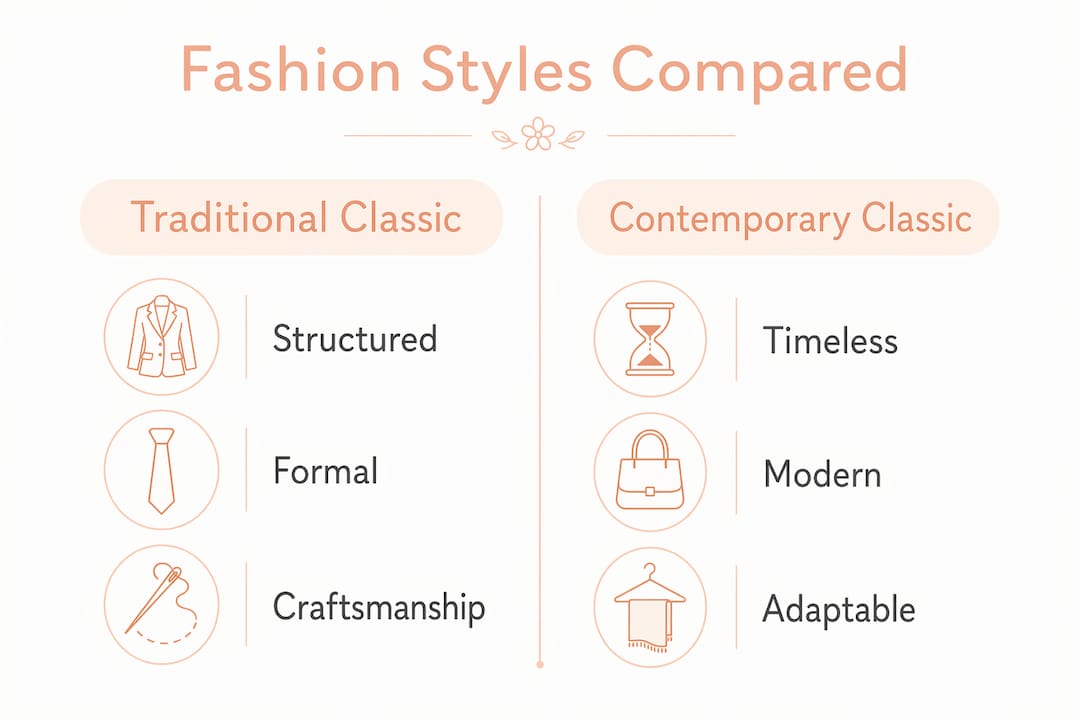
Contemporary classic fashion occupies the middle column for a reason. It takes the craftsmanship of traditional dressing and makes it practical for a life that moves between a morning meeting, a lunch out, and an evening event.
Pro Tip: Before replacing a piece, ask whether a tailor could fix the problem. Letting out a seam or taking in a waist costs far less than buying new, and it extends the life of a quality garment by years.
How to build a contemporary classic wardrobe in 2026
Building this wardrobe is a system, not a shopping spree. The 3-3-3 capsule system is the most efficient starting point: 3 tops, 3 bottoms, and 3 pairs of shoes that all work together. From nine pieces, you can generate a significant number of distinct outfits without redundancy.
Follow these steps to build yours:
- Audit what you already own. Pull out every piece you have worn in the last six months. Identify the neutral foundation pieces and the trend items. This tells you what you actually need versus what you think you need.
- Choose a neutral palette and commit to it. Navy, charcoal, beige, ivory, and black work together without effort. Every new purchase should connect to at least two pieces already in your wardrobe.
- Invest in fit above all else. Shoulder fit in tailoring is the most critical detail: the seam must align with your natural shoulder line for a garment to look structured and current rather than dated. Poor fit ages a quality piece faster than anything else.
- Add modern texture and proportion. Wide-leg trousers, slightly oversized blazers, and relaxed-fit shirts are the 2026 updates to classic silhouettes. They feel current without being trend-dependent.
- Build in the 30% trend layer. Once your foundation is solid, add one or two trend-aware pieces per season. A textured bag, a printed scarf, or a statement shoe updates the whole wardrobe without disrupting it.
For a deeper look at building classic wardrobe staples that hold their value over time, Wildflowerwardrobe’s style guides walk through specific investment decisions by category.
The goal is a daily wardrobe system rather than a costume. Pieces that move from a work setting to a casual evening without a full outfit change are the most valuable ones you can own. Tailored trousers worn with clean leather sneakers is a perfect example of that principle in practice.
How to keep your contemporary classic style fresh and personalized
A wardrobe built on classic pieces can feel static if you do not refresh it intentionally. The solution is not to overhaul your closet every season. It is to update the details.
- Use accessories as your trend layer. A structured bag in a seasonal color, a statement necklace, or a pair of bold earrings updates a neutral outfit without touching the foundation pieces. Accessories are the lowest-risk, highest-impact way to stay current.
- Introduce color or pattern in small doses. A striped shirt worn under a navy blazer, or a camel coat over an all-black outfit, adds personality without breaking the palette. The rule is one statement element per outfit.
- Rotate seasonal layers. A linen blazer in spring, a wool coat in fall, and a silk scarf in winter give the same core wardrobe a completely different feel across the year.
- Avoid style stagnation by tracking what you actually reach for. If three pieces sit unworn for six months, they are not working in your system. Replace them with something that connects better to the rest of your wardrobe.
Modern classic fashion is adaptable, evolving with personal style and lifestyle over time. Style longevity is not about reinvention. It is about refinement. You are not building a look for this season. You are building a visual identity that grows with you.
Incorporating new trends into a classic wardrobe is a skill, and it gets easier once your foundation is solid. The foundation does the heavy lifting. The trend pieces just add the spark.
Pro Tip: Shop your own closet before buying anything new. Style a classic piece three different ways before deciding it no longer works. Most pieces have more range than you think.
Key Takeaways
Contemporary classic fashion succeeds because it combines quality construction and timeless silhouettes with deliberate, limited trend updates that keep the wardrobe current without requiring constant replacement.
| Point | Details |
|---|---|
| The 70/30 rule | Build 70% of your wardrobe from timeless neutrals and reserve 30% for trend-aware pieces. |
| Fit is the priority | Shoulder alignment and overall fit determine whether a quality piece looks current or dated. |
| Accessories carry trends | Use bags, jewelry, and scarves to update classic outfits without overhauling your wardrobe. |
| The 3-3-3 capsule system | Start with 3 tops, 3 bottoms, and 3 shoe pairs that all work together for maximum outfit range. |
| Style is a daily system | Choose pieces that transition between work, casual, and social settings without a full outfit change. |
Why I think contemporary classic fashion is the most honest style choice you can make
I have watched fashion cycles repeat themselves for years, and the one thing that never changes is this: the women who look most put together are not wearing the most trend-forward pieces. They are wearing things that fit well, in colors that work together, with one detail that feels current. That is contemporary classic fashion in practice, even when the person wearing it has never used that phrase.
What I find genuinely interesting about this style is that it removes the anxiety of dressing. When your wardrobe is built on quality pieces in a coherent palette, getting dressed stops being a daily negotiation. Consumers increasingly prefer style that signals taste and self-knowledge over brand names alone. That shift is real, and contemporary classic fashion is the direct answer to it.
The sustainable angle is also worth taking seriously. A wardrobe built on fewer, better pieces generates less waste and costs less over time than a fast-fashion habit. Treating your wardrobe as a daily system rather than a costume is both a style decision and a practical one. You spend less time shopping, less money replacing worn-out pieces, and more time actually wearing things you love.
My honest advice: start smaller than you think you need to. Three great pieces that work together will do more for your style than fifteen mediocre ones. Refine from there.
— Patrick
Wildflowerwardrobe’s collection for contemporary classic style
Wildflowerwardrobe curates pieces that sit squarely in the contemporary classic space: clothing and accessories built for real life, with the quality and design to stay relevant well past a single season.

The women’s casual wear collection covers the everyday foundation pieces that anchor a classic wardrobe, from clean-lined tops to versatile layering options. For the accessories layer, the Fame Multi Belt Strap Accent Shoulder Bag is exactly the kind of structured, detail-forward bag that updates a neutral outfit without overpowering it. The jewelry range, including pieces like the Starburst Gold-Plated Earrings and Necklace Set, gives you the trend layer in its most manageable form. Every piece is selected to work with what you already own, not against it.
FAQ
What is contemporary classic fashion in simple terms?
Contemporary classic fashion is a style that combines timeless wardrobe staples, such as blazers, tailored trousers, and trench coats, with modern updates in fit and proportion. The result is a look that is polished, wearable, and relevant across multiple seasons.
How many pieces do I need to start a contemporary classic wardrobe?
The 3-3-3 capsule system is the most efficient starting point: 3 tops, 3 bottoms, and 3 pairs of shoes in a neutral palette that all work together. From those nine pieces, you can build a full range of outfits for work, casual wear, and social settings.
What is the difference between classic and contemporary classic fashion?
Traditional classic fashion emphasizes formal silhouettes and restrained aesthetics, while contemporary classic fashion updates those same quality standards with relaxed tailoring and modern proportions. The contemporary version is designed for everyday life, not just formal occasions.
How do I add trends to a classic wardrobe without ruining it?
Use accessories as your trend layer. A statement bag, bold earrings, or a seasonal scarf updates a neutral outfit without touching the foundation pieces. The 70/30 rule applies: keep 70% of your wardrobe in timeless neutrals and use the remaining 30% for trend-aware items.
Is contemporary classic fashion suitable for all ages?
Contemporary classic fashion suits any age because it is built on fit, quality, and proportion rather than age-specific trends. The style refines over time as you learn what works for your body and lifestyle, making it one of the few approaches that genuinely improves with experience.
0 comments