

Minimalist fashion is defined as a style philosophy built on owning fewer, timeless, high-quality pieces that prioritize simplicity, function, and personal expression over trend-chasing. Known formally as fashion minimalism, this approach reduces decision fatigue, cuts environmental impact, and builds a wardrobe that works harder with less. Designers like Jil Sander, Celine, and The Row have shaped this aesthetic for decades, proving that restraint is its own form of power. If you want a wardrobe that feels effortless every morning, minimalist fashion is the most direct path there.
What is minimalist fashion and what makes it different?
Minimalist fashion is a philosophy of intentional consumption. It focuses on timeless, high-quality, versatile pieces that reduce environmental impact and decision fatigue. The goal is not to own less for the sake of it. The goal is to own only what genuinely serves you.
The minimalist style definition centers on three pillars: simplicity, functionality, and elegance. A minimalist wardrobe does not chase seasonal trends. It builds a core collection of pieces that work across multiple occasions, seasons, and years. That shift in thinking is what separates fashion minimalism from simply having a small closet.
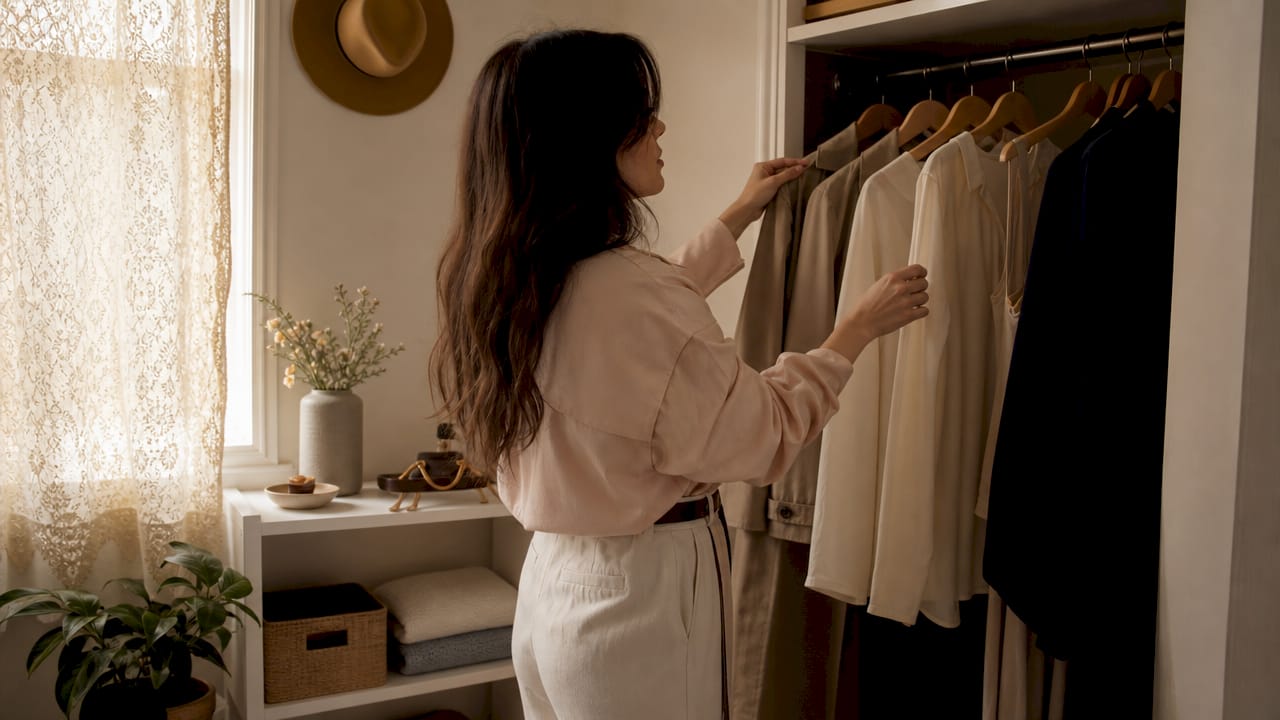
Influential figures like Carolyn Bessette-Kennedy and brands like Everlane and Cos have brought this philosophy into mainstream culture. Their approach shows that a white shirt, a well-cut trouser, and a structured coat can be more powerful than a closet packed with options. The benefits of minimalist fashion go beyond aesthetics. They include lower spending over time, reduced waste, and a clearer sense of personal identity.
What are the key features and principles of minimalist fashion?
Minimalist fashion rests on a specific set of principles that go far beyond choosing neutral colors. Understanding these principles is what separates a truly minimalist wardrobe from one that just looks sparse.
The core pillars of minimalist style:
- Simplicity: Clean lines, uncluttered silhouettes, and no unnecessary embellishment. Every design element has a purpose.
- Quality over quantity: Investing in cashmere, silk, and structured leather costs more upfront but delivers a lower cost-per-wear over time.
- Neutral and cohesive color palettes: Whites, blacks, creams, taupes, and navy form the foundation. Selective use of muted tones adds depth without chaos.
- Timeless cuts: Tailored blazers, high-waisted trousers, straight-leg jeans, and statement coats are minimalist wardrobe essentials because they never go out of style.
- Intentionality: Every piece you own should earn its place. If it does not mix with at least three other items in your wardrobe, reconsider it.
A common misconception is that minimalist fashion means boring or colorless dressing. True minimalism embraces curated color and even selective pattern choices, as long as they simplify decisions and fit a cohesive palette. A rust-colored silk blouse or a camel coat absolutely belongs in a minimalist wardrobe. The question is always whether the piece serves your overall vision.
Minimalist fashion requires prioritizing cut, proportion, and fabric quality over embellishment. When a garment has no decorative distraction, the craftsmanship becomes the statement. A perfectly draped silk dress says more than a heavily embellished one ever could.
Pro Tip: Before buying any piece, ask yourself: does this work with at least three items I already own? If the answer is no, put it back. This single question eliminates most impulse purchases.
How does minimalist fashion differ from fast fashion?
Fast fashion and minimalist fashion operate on completely opposite philosophies. Understanding the contrast makes it easier to commit to one approach.
| Feature | Minimalist fashion | Fast fashion |
|---|---|---|
| Purchase frequency | Infrequent, deliberate | Frequent, trend-driven |
| Price per item | Higher upfront cost | Low upfront cost |
| Cost-per-wear | Low over time | High due to short lifespan |
| Environmental impact | Reduced waste and consumption | High waste, resource-intensive |
| Style longevity | Timeless, season-agnostic | Trend-dependent, quickly dated |
| Wardrobe size | Small, curated | Large, often cluttered |
Minimalism reduces waste by curbing overconsumption and rejecting the fast-fashion cycle of constant purchasing. That cycle pressures shoppers to buy new items every few weeks, most of which end up discarded within a year. Minimalism breaks that pattern entirely.
The economic argument for minimalism is strong. Spending $200 on a quality cashmere sweater that lasts a decade costs far less per wear than buying five $40 sweaters that pill and fade within months. Quality materials like cashmere and silk offset their higher price through longevity. That math changes how you shop permanently.
One nuance worth noting: many people imitate minimalism by buying neutral basics to appear polished, but true minimalism demands confidence and genuine self-expression. Copying a Pinterest aesthetic without personal intention is just a different kind of overconsumption. Real minimalism starts from the inside out.
How to build a minimalist wardrobe: practical steps
Building a minimalist wardrobe does not require throwing everything out on a Sunday afternoon. A gradual, intentional approach works far better and sticks longer.
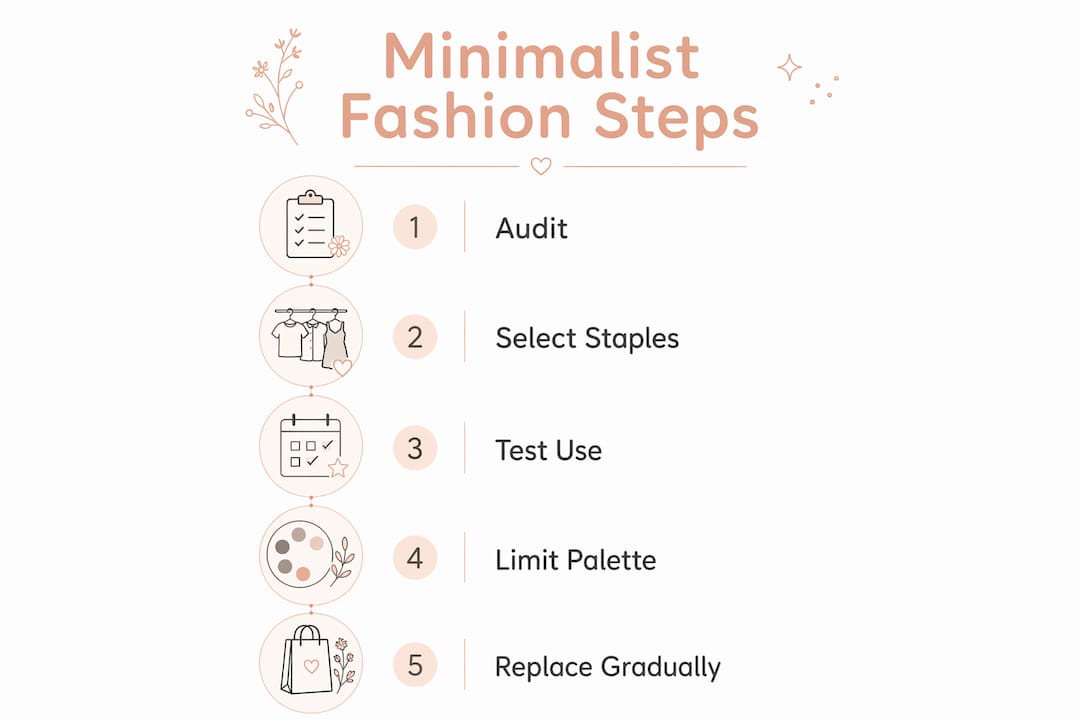
1. Audit what you already own. Pull everything out and identify the pieces you reach for most. These are your real wardrobe essentials. Everything else is noise.
2. Start with 7–10 versatile staples. Experts recommend beginning with 7–10 high-quality staples in a restricted palette of 3–5 complementary neutral colors. Core pieces include a tailored blazer, a white or cream button-down shirt, high-waisted trousers, straight-leg or slim jeans, a structured coat, a simple knit sweater, a versatile midi dress, and clean white sneakers or leather loafers.
3. Run a 30-day test phase. Tracking clothing use over 30 days reveals which items you actually wear versus which ones just take up space. The Project 333 method, which limits your wardrobe to 33 items for 3 months, is a proven framework for this process. It builds creativity and reduces waste simultaneously.
4. Restrict your color palette. Choose 3–5 colors that work together naturally. When every item in your wardrobe coordinates with every other item, getting dressed becomes genuinely effortless. Check out this guide on building a trend-proof wardrobe for a practical checklist to get started.
5. Replace low-quality items gradually. Stylists recommend a gradual transition to avoid wardrobe burnout. As items wear out, replace them with one better-quality version rather than two cheaper ones. This approach builds a stronger wardrobe over time without the stress of a total overhaul.
Pro Tip: Rigid capsule wardrobe numbers cause unnecessary stress. Ignore the “33 items only” rule if it does not fit your lifestyle. The principle matters more than the number. Aim for intentionality, not a specific count.
Learning why versatile pieces matter is the foundation of this entire process. One piece that works five ways beats five pieces that each work once.
How to wear minimalist fashion with confidence every day
Knowing the principles is one thing. Wearing minimalist fashion well in real life requires a few specific skills that most style guides skip over.
Fit is everything. A $30 white tee that fits perfectly looks more expensive than a $200 shirt that does not. Tailoring is not a luxury in minimalist fashion. It is a requirement. Even small adjustments like hemming trousers or taking in a blazer at the waist transform how a piece reads.
Texture creates visual interest without adding clutter. A cashmere ribbed sweater paired with smooth leather trousers and a matte cotton tote creates a rich, layered look using only three items. Mixing textures within a neutral palette is the minimalist’s primary styling tool.
Occasion versatility is a core skill. A tailored white shirt works for a client meeting, a weekend brunch, and a casual travel day. The difference is in how you style it: tucked into wide-leg trousers for work, half-tucked into jeans for the weekend, or knotted over a slip skirt for travel. One piece, three contexts.
Common minimalist styling mistakes to avoid:
- Buying all your basics in the same shade of white or black without considering undertones. Warm whites and cool whites clash visibly.
- Ignoring accessories entirely. A simple linked pendant necklace or clean gold hoops add polish without breaking the minimalist aesthetic.
- Over-investing in trendy “minimalist” pieces that are actually just this season’s neutral. True minimalist pieces look just as good in five years.
- Choosing comfort over fit. Oversized does not mean minimalist. Proportion matters as much as simplicity.
For a complete breakdown of what to avoid, the guide on common wardrobe mistakes covers the most frequent errors and exactly how to fix them.
Key Takeaways
Minimalist fashion works because it replaces volume and trend-chasing with intentionality, quality, and a curated palette that serves your life rather than complicating it.
| Point | Details |
|---|---|
| Core definition | Fashion minimalism prioritizes timeless, high-quality, versatile pieces over trend-driven volume. |
| Quality investment | Materials like cashmere, silk, and structured leather lower cost-per-wear despite higher upfront prices. |
| Wardrobe building | Start with 7–10 staples in a 3–5 color palette and replace low-quality items gradually. |
| Fit over quantity | Tailoring and proportion matter more than how many pieces you own. |
| Not just neutrals | True minimalism allows curated color and texture as long as choices are intentional and cohesive. |
Why minimalism changed how I think about getting dressed
I spent years buying more than I needed. Not because I lacked discipline, but because I genuinely believed more options meant more freedom. The opposite turned out to be true.
Minimalism reduces stress by eliminating choice paralysis and consumer pressure. That is not a theory. It is something you feel the first morning you open a wardrobe where every single item works together. The decision is already made. You just get dressed.
What surprised me most was how personal minimalism actually is. The neutral-only aesthetic you see on social media is one version of it. But minimalism as a mindset means aligning your wardrobe with your actual values, not copying someone else’s Pinterest board. My minimalist wardrobe includes a deep burgundy wool coat and a printed silk scarf. Neither is neutral. Both are intentional.
The hardest part is not getting rid of things. The hardest part is resisting the urge to fill the space back up. Consumer culture is relentless. Once you recognize the pressure, you can push back against it with real clarity.
My honest advice: start smaller than you think you need to. Pick five pieces you love completely and build outward from there. Minimalism is not a destination. It is a practice you get better at over time.
— Patrick
Build your minimalist wardrobe with Wildflowerwardrobe
Wildflowerwardrobe curates women’s fashion with exactly this philosophy in mind: timeless designs, versatile silhouettes, and quality pieces that work across seasons and occasions.
The women’s casual wear collection at Wildflowerwardrobe is a strong starting point for building or refreshing a minimalist wardrobe. You will find clean cuts, neutral and muted tones, and pieces designed to mix and match without effort. For accessories that complement a minimalist look without overpowering it, the jewelry collection offers refined options from simple hoops to delicate chain necklaces. Every piece is chosen to add polish, not clutter.
FAQ
What is the minimalist style definition in simple terms?
Minimalist style is a fashion approach that focuses on owning fewer, high-quality, timeless pieces in a cohesive color palette. The goal is a wardrobe where every item serves a clear purpose and works with everything else you own.
How many items does a minimalist wardrobe need?
Experts suggest starting with 7–10 versatile staples as a foundation. The Project 333 method uses 33 items for 3 months as a practical framework, though the exact number matters less than the intentionality behind each piece.
Is minimalist fashion only for neutral colors?
No. True minimalist fashion allows curated color and selective pattern choices as long as they fit a cohesive palette and simplify your decisions. A camel coat or a muted rust blouse belongs in a minimalist wardrobe.
What are the main benefits of minimalist fashion?
The core benefits include reduced decision fatigue, lower long-term spending through higher cost-per-wear efficiency, less environmental impact, and greater personal confidence through a wardrobe that reflects your actual identity.
How do I start wearing minimalist fashion without overhauling my closet?
Track what you actually wear over 30 days, identify your most-used pieces, and begin replacing low-quality items gradually with one better version at a time. A sudden total overhaul often leads to burnout and unnecessary spending.
0 comments