

Wardrobe staples every decade are the defining clothing items that capture each era’s aesthetic while staying wearable far beyond their original moment. In fashion, these pieces are often called “capsule essentials,” a term popularized by British Vogue and Vogue editors who treat them as the non-negotiable foundation of any well-built closet. Fashion trends cycle roughly every 20 years, meaning the slip dress you wore in the '90s and the trench coat your grandmother owned in the '50s are not relics. They are blueprints. Understanding which pieces defined each decade gives you a shortcut to building a wardrobe that is both personal and genuinely timeless.
1. Wardrobe staples every decade: the 1920s and 1930s
The 1920s introduced the first true wardrobe revolution for women. The flapper dress, with its dropped waist and knee-length hem, replaced the restrictive silhouettes of the Edwardian era and gave women physical freedom they had never experienced in clothing. The cloche hat became the decade’s signature accessory, framing the face and signaling modernity. These were not just fashion choices. They were cultural statements.
The 1930s shifted toward elegance and restraint, largely driven by the Great Depression’s economic reality. The bias-cut dress, mastered by designer Madeleine Vionnet, draped the body in a way that felt luxurious without excess fabric. Tailored suits with wide lapels and nipped waists became a wardrobe anchor for women entering the workforce in greater numbers. The silhouette was long, fluid, and deliberately sophisticated.
- Flapper dress: Drop-waist, knee-length, often beaded or fringed
- Cloche hat: Close-fitting, bell-shaped, worn low on the brow
- Bias-cut dress: Diagonal-cut fabric that follows the body’s natural curves
- Tailored suit: Wide lapels, structured shoulders, fitted waist
Pro Tip: If you want to reference the 1930s today, look for slip-style midi dresses in silk or satin. The bias-cut principle translates directly into modern minimalist dressing.
2. Decade style must-haves from the 1940s and 1950s
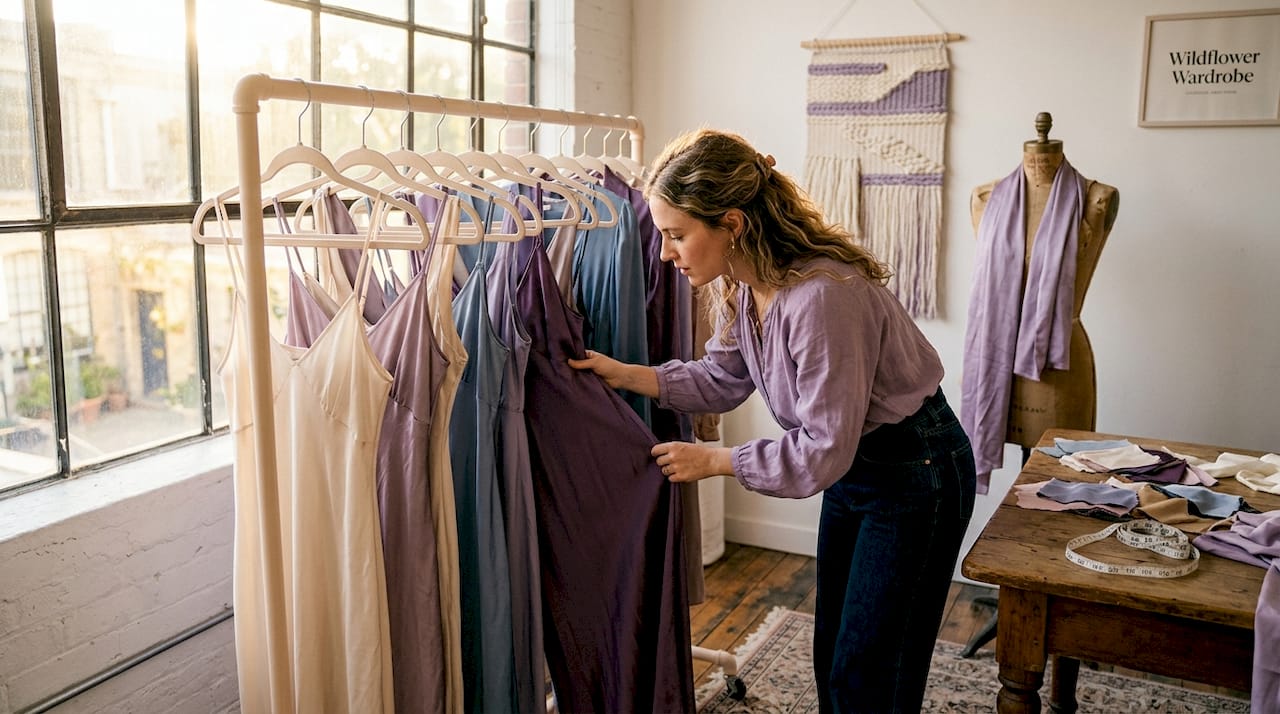
World War II defined 1940s fashion through necessity. Fabric rationing in the United States and United Kingdom produced utility wear: A-line skirts, structured blouses, and practical trousers that women wore while working in factories. The A-line skirt became a staple because it used minimal fabric while maintaining femininity. It remains one of the most universally flattering silhouettes ever designed.
The 1950s brought abundance back, and with it, the full circle skirt, the pencil skirt, and the classic trench coat. Christian Dior’s “New Look” from 1947 set the template for the entire decade: cinched waist, full skirt, and an emphasis on hourglass proportion. The trench coat, originally a military garment from Burberry and Aquascutum, crossed into civilian women’s fashion during this period and never left. It is arguably the single most enduring wardrobe staple of the 20th century.
The 1950s also gave us the twin set (a matching cardigan and shell top), which remains a quiet staple in capsule wardrobe guides today. Paired with tailored trousers or a pencil skirt, it covers everything from office to dinner.
3. Which staples defined fashion from the 1960s through the 1980s?
The 1960s broke every rule the previous decades had established. Mary Quant’s miniskirt, introduced in London around 1964, became the decade’s defining garment. The shift dress followed closely, offering a clean, geometric silhouette that worked for day and evening. Go-go boots in white or patent leather completed the look and remain a recognizable reference point in contemporary fashion.
Here is how the three mid-century decades compare in terms of dominant silhouettes and key staples:
| Decade | Dominant silhouette | Key staples |
|---|---|---|
| 1960s | Short, geometric, mod | Miniskirt, shift dress, go-go boots |
| 1970s | Relaxed, wide-leg, bohemian | Bell-bottoms, peasant blouse, denim jacket |
| 1980s | Structured, power-forward | Power suit, shoulder-pad blazer, statement belt |
The 1970s leaned into denim as a recurring fashion staple across multiple silhouettes. Bell-bottoms, denim jackets, and high-waisted jeans defined the decade’s casual register, while the peasant blouse and wrap dress (introduced by Diane von Furstenberg in 1974) covered its more dressed-up moments. The wrap dress is still in production and still sells.
The 1980s are harder to distill into a single staple because, as data shows, fashion began fragmenting after 1980 into multiple coexisting trends rather than one dominant silhouette. The power suit with exaggerated shoulder pads is the most iconic image, but the decade also produced preppy polo shirts, athletic wear as streetwear, and the beginning of logo-driven dressing. Decade staples are better understood as reusable shapes and silhouettes that evolve through multiple variations, and the 1980s is where that complexity begins.
4. The most enduring wardrobe essentials from the 1990s to today
The 1990s produced some of the most culturally durable pieces in modern fashion history. Slip dresses, cigarette jeans, and pencil skirts retain cultural capital today because their silhouettes are simple, functional, and immediately recognizable. The cami top, the strappy mule, and the minimalist leather handbag all originated in '90s fashion and are currently in heavy rotation on runways and in street style photography.
What makes '90s staples particularly easy to wear now is their restraint. Styling '90s pieces works best when you pair a base layer with one signature accessory or shoe silhouette, rather than stacking multiple decade references at once. A slip dress with contemporary block-heeled boots reads as modern. The same slip dress with strappy mules and a tiny shoulder bag reads as costume.
Vogue’s 2026 wardrobe essentials guide combines classic pieces with updated items, listing trench coats, tailored jeans, knitwear, tailored trousers, and versatile footwear as the core of any well-functioning closet. These are not new discoveries. They are the same shapes that appeared in the 1940s, 1950s, and 1970s, refined for current proportions and fabrics.
- Slip dress: Works as a standalone piece or layered over a fitted turtleneck
- Cigarette jeans: Straight-leg, ankle-grazing, pairs with everything
- Minimalist blazer: The 2020s version of the 1980s power suit, scaled back and wearable
- Versatile coat: Wool, knee-length, neutral color. The single most cost-effective wardrobe investment
- Strappy mule or block-heeled boot: The shoe silhouettes that anchor decade-inspired outfits without overpowering them
Pro Tip: Build your modern capsule around the trench coat and one great pair of tailored trousers first. Every other decade reference you add will have an anchor to connect to.
5. How to build a versatile capsule wardrobe from multiple decades
A capsule wardrobe is not a uniform. It is a curated set of pieces that work together across occasions, seasons, and moods. British Vogue recommends starting with a wardrobe audit using the “turn, then track” method: turn all your hangers backward, and over six months, flip them forward when you wear each item. What stays backward tells you exactly what is not working.
Once you know your actual wear patterns, you can build a trend-proof wardrobe by filling gaps with pieces that have proven longevity across decades. The goal is not to own one item from every era. The goal is to identify the silhouettes and proportions that work for your body and lifestyle, then find the best current version of those shapes.
Mixing decade references works when you follow one rule: anchor the look in the present. A 1970s-inspired wide-leg trouser pairs well with a contemporary fitted knit top. A 1950s-style full skirt works with a modern minimalist sneaker. The decade piece provides character. The contemporary element prevents the outfit from reading as costume.
“Timelessness is not a property of a garment. It is a relationship between a garment and the person wearing it.” This framing, drawn from Devon Rule’s essay on timeless essentials, is the most useful lens for building a capsule wardrobe. Buy what you will actually wear, not what a list tells you is eternal.
Fit and actual wear frequency are the two criteria that define a true personal staple. A perfectly cut blazer you wear twice a week is a staple. A “timeless” white button-down you avoid because it gaps at the chest is not. The audit makes this visible.
Pro Tip: When mixing silhouettes from different decades, keep your color palette tight. Two or three neutrals with one accent color let the shapes speak without visual noise.
Key takeaways
Wardrobe staples every decade are defined by silhouette and function, not trend, and the pieces with the longest staying power are those that fit well and get worn consistently.
| Point | Details |
|---|---|
| Silhouette over trend | Staples are reusable shapes that recur across decades, not single-moment designs. |
| The 20-year cycle | Fashion trends resurface roughly every 20 years, making historic staples directly relevant today. |
| '90s pieces lead modern capsules | Slip dresses, cigarette jeans, and minimalist blazers remain the most versatile current staples. |
| Audit before you buy | The “turn, then track” method identifies your actual staples before you invest in new pieces. |
| Timelessness is personal | A staple is defined by how often you wear it, not by what any guide declares universal. |
Why I stopped chasing “timeless” and started tracking what I actually wear
The word “timeless” has been used to sell women clothing for so long that it has lost almost all meaning. I spent years buying pieces that every capsule wardrobe guide declared non-negotiable, and half of them sat unworn because they did not fit my actual life. The white button-down. The nude pump. The structured tote. All present, all ignored.
What changed my approach was the audit. Tracking what I actually reached for over six months showed me that my real staples were a 1970s-inspired wide-leg trouser, a simple ribbed knit, and a knee-length wool coat. None of those appeared on the standard “10 timeless essentials” lists I had been following.
The deeper truth, which Devon Rule articulates well, is that timelessness is subjective. It is not a property of a garment. It is the relationship you build with it over repeated wear. The most useful thing this decade-by-decade breakdown can do is show you which silhouettes have proven staying power historically, so you can test them against your own wardrobe and see what resonates. Buy what you love. Wear it often. That is the only formula that works.
— Patrick
Shop decade-inspired pieces at Wildflowerwardrobe
Wildflowerwardrobe curates women’s fashion that draws from the best silhouettes across every era, from the clean lines of the 1960s shift dress to the relaxed ease of 1990s minimalism. The casual wear collection features versatile pieces designed to anchor a capsule wardrobe without locking you into a single trend. Whether you are building from scratch or filling gaps in an existing closet, Wildflowerwardrobe offers the foundational pieces that translate across decades and occasions. Explore the full range at Wildflowerwardrobe and find the staples that will actually get worn.
FAQ
What are the most universal wardrobe staples across every decade?
The trench coat, tailored trousers, a well-cut blazer, and denim in some form appear as staples across nearly every decade from the 1940s onward. These silhouettes recur because they are proportionally balanced and work across multiple body types and occasions.
How often do fashion trends and staples cycle back?
Fashion trends cycle roughly every 20 years, based on analysis of womenswear images spanning over 150 years. This means staples from the early 2000s are currently re-entering relevance.
Are '90s fashion staples still worth buying today?
Yes. Slip dresses, cigarette jeans, cami tops, and strappy mules all retain strong cultural relevance and are actively worn by contemporary style figures. The key is pairing them with one modern element to avoid a costume effect.
How do I identify my personal wardrobe staples?
British Vogue’s “turn, then track” audit method is the most practical approach: reverse your hangers and flip them forward only when you wear each piece. After six months, the unworn items reveal which “staples” are not actually working for you.
What is a capsule wardrobe and how does it relate to decade staples?
A capsule wardrobe is a small, curated set of versatile pieces that mix and match across occasions. Decade staples form its historical backbone, providing proven silhouettes that have already demonstrated longevity across multiple eras.
Recommended
- Build a trend-proof wardrobe with the right checklist – Wildflower Wardrobe
- Denim’s Role in Classic Wardrobes: A Style Guide – Wildflower Wardrobe
- Everyday wardrobe essentials women need for stylish versatility – Wildflower Wardrobe
- How to invest in classic wardrobe staples that last – Wildflower Wardrobe
0 comments