

Most women treat a seasonal wardrobe refresh as an excuse to shop. New season, new haul, repeat. But that approach quietly drains your wallet, clutters your closet, and works against the kind of style you actually want to build. A thoughtful seasonal refresh is one of the most powerful habits you can develop for your wardrobe because it protects your clothes, sharpens your personal style, and supports a more sustainable way of getting dressed every single day.
Table of Contents
- What is a seasonal wardrobe refresh?
- How a refresh boosts garment longevity and style
- Seasonal refresh as a path to sustainable fashion
- Making the most of your wardrobe: tips for a successful seasonal refresh
- What most style guides miss about seasonal refresh
- Elevate your seasonal refresh with Wildflower Wardrobe
- Frequently asked questions
Key Takeaways
| Point | Details |
|---|---|
| Wardrobe refresh defined | Refreshing your wardrobe seasonally is about editing, storing thoughtfully, and making dressing simple and enjoyable. |
| Improves style and garment life | Proper rotation and curation make every outfit functional and keep clothes lasting longer. |
| Supports sustainability | Focusing on quality and remixing pieces reduces waste and unnecessary shopping. |
| Shop with intent | Fill only genuine gaps per season rather than defaulting to a full-shop overhaul. |
| Creative remixing wins | True style comes from reimagining what you have, not from endless shopping. |
What is a seasonal wardrobe refresh?
A seasonal wardrobe refresh is not a shopping event. It is an editing system. Think of it as a twice-yearly audit of your entire closet, where you rotate out what no longer fits the season, assess what you actually wear, declutter the pieces that are not working, and make intentional decisions about what stays, what goes, and what might need to be added.
According to the Real Simple seasonal swap method, a seasonal wardrobe refresh works as an editing system: you keep in-season items accessible, store off-season pieces, and do inventory and decluttering to reduce clutter and decision fatigue. That last point matters more than people realize. When your closet is packed with pieces from three different seasons, getting dressed becomes a daily frustration instead of a creative ritual.
Here is what a well-executed seasonal refresh typically looks like:
- Pull everything out so you can actually see what you own.
- Sort by season and set aside pieces that are clearly not weather-appropriate right now.
- Try on anything you have not worn recently to check fit, condition, and how it makes you feel.
- Declutter intentionally by donating, selling, or recycling pieces that no longer serve you.
- Store off-season items properly using breathable bags or boxes and folded, clean garments.
- Identify real gaps in your wardrobe, not imagined ones, before reaching for your credit card.
“The goal of a seasonal refresh is not to have more, but to have better access to what you already love. When your closet reflects your actual life, getting dressed becomes effortless.”
Exploring proven closet audit strategies can help you develop a process that works for your specific lifestyle and style goals. The twice-yearly rhythm, once in spring and once in fall, gives your wardrobe a chance to reset with intention rather than react with impulse.
How a refresh boosts garment longevity and style
Here is something most people do not think about: the way you store and rotate your clothes has a direct impact on how long they last. Garments that sit folded incorrectly in overstuffed drawers develop permanent creases. Knits stored on hangers stretch out at the shoulders. Delicate fabrics packed away dirty can attract moths or develop stains over time.
Rotating wardrobes can protect garments and extend their usable life by reducing damage from long storage and by preparing items correctly before they are put away. This means washing or dry cleaning items before storing them, using proper folding methods for knitwear, and keeping leather or structured pieces in their original dust bags or in breathable garment bags.
The style benefits are just as real. Seasonal refresh improves style outcomes by aligning outfits with the realities of seasonal weather variability, especially during transitional periods, using a curated set of versatile staples and outfit formulas rather than rigid rules. Transitional seasons like spring and fall are where most women struggle most, reaching for pieces that are either too warm or too light for the shifting temperature. A refreshed wardrobe solves this by keeping layering-friendly staples front and center.

| Benefit | Without seasonal refresh | With seasonal refresh |
|---|---|---|
| Garment condition | More wrinkles, snags, and damage | Better preserved, longer-lasting pieces |
| Getting dressed | Overwhelming, time-consuming | Streamlined and intentional |
| Style clarity | Mixed signals, cluttered options | Clear personal aesthetic |
| Cost per wear | Higher due to impulse replacements | Lower from extended garment life |
| Sustainability impact | More textile waste over time | Reduced fashion footprint |
Key style improvements women notice after their first real refresh:
- Less decision fatigue because every item in your closet earns its place.
- More complete outfits because gaps and mismatches become visible before you need them.
- Better layering options for transitional weather without buying entirely new pieces.
- Renewed appreciation for pieces you had forgotten you owned.
Pro Tip: Before storing any off-season pieces, always clean them first. Even invisible body oils can oxidize over months and leave permanent stains on silk, linen, and other natural fabrics. That extra step can save a garment you love.
When you focus on investing in wardrobe staples that can be remixed across seasons, your refresh becomes less about replacing and more about rediscovering. A great trench coat, a well-fitted white shirt, or a pair of tailored trousers can work across multiple seasons with the right layering and accessory choices. The closet inventory tips that work best focus on cost-per-wear thinking: how often will you realistically reach for this piece in the next six months?
Seasonal refresh as a path to sustainable fashion
This is where a seasonal refresh stops being just a style habit and becomes something with real impact. From a sustainability perspective, seasonal refresh matters because it shifts spending from impulse “need something new” shopping toward reworking, curating, and wearing what you already own, including secondhand options.
The fashion industry produces enormous amounts of textile waste every year. Fast fashion cycles encourage consumers to buy frequently and discard quickly, which keeps the cycle going at a cost to both the environment and your personal style development. A seasonal refresh interrupts that cycle by making you face what you already own before you reach for anything new.
The financial argument is equally compelling. Fewer, longer-lasting garments with better resale value and less frequent replacement can actually lower your total effective cost over time compared to fast-fashion replacement cycles. In other words, a $150 well-made blouse that lasts five years and holds resale value costs you less in the long run than five $30 blouses that fall apart after six months of wear.
| Approach | 5-year cost estimate | Garments discarded | Style consistency |
|---|---|---|---|
| Fast fashion cycle | $1,500 or more | 40 or more items | Low, trend-chasing |
| Seasonal refresh with quality pieces | $800 to $1,000 | 10 to 15 items | High, personal aesthetic |
| Secondhand first + quality gaps | $500 to $700 | 5 to 8 items | High, curated |
Practical sustainability habits to build into your refresh:
- Shop secondhand first for trend-driven pieces you might only wear for one season.
- Sell or donate instead of discarding, so garments stay in circulation longer.
- Choose natural, durable fabrics like cotton, linen, and wool when buying new.
- Invest in versatile colors like navy, cream, olive, and camel that work across seasons and outfits.
- Explore eco-conscious accessories as accents, like an eco-friendly headwear guide suggests, since accessories can transform an existing outfit without adding bulk to your closet.
When elevating your wardrobe sustainably, the focus shifts to statement pieces that work harder. One bold jacket or a striking pair of earrings can make three different outfits feel entirely new without adding three new garments to your collection. Keep an eye on the latest sustainable style trends for inspiration on how to do this without sacrificing style.
Making the most of your wardrobe: tips for a successful seasonal refresh
Now that you know the why and how, let’s look at practical steps to maximize every seasonal refresh without waste or overwhelm. The best refresh is not the one where you buy the most new things. It is the one where you walk away knowing exactly what you have, what you love, and what you are going to wear.
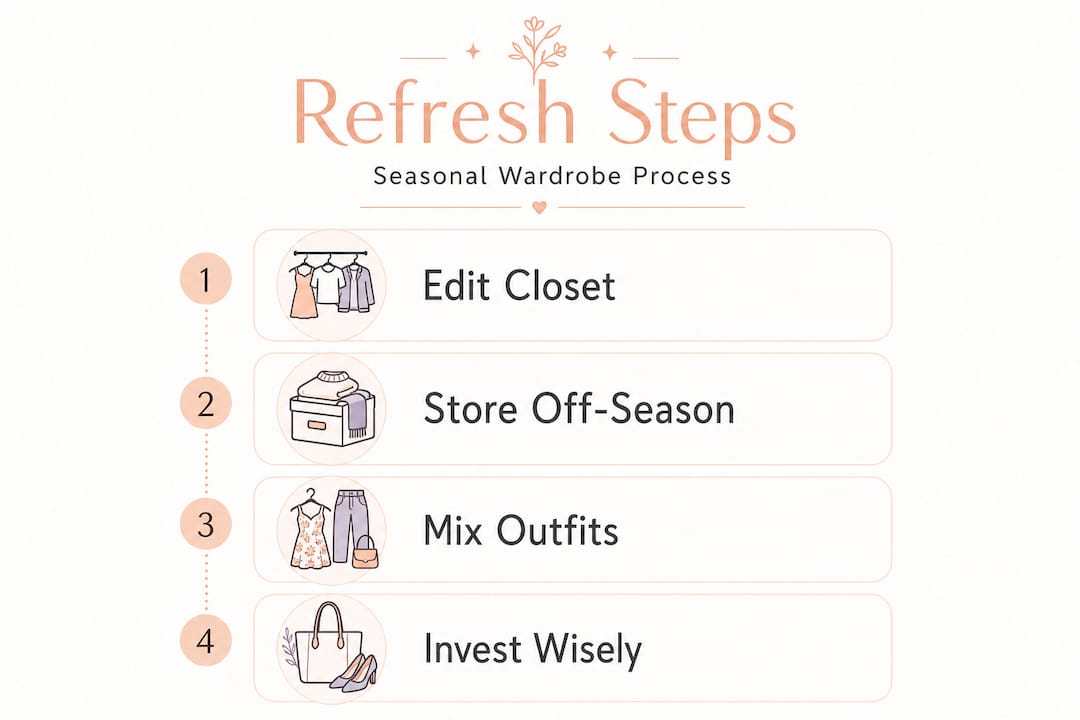
Seasonal rotation is more about constructive experimentation, including reworking, accessorizing, and layering, than wholesale replacement. Fashion editors approach a spring refresh as an editing process first and a shopping trip only after, when genuine gaps have been identified. That mindset shift is everything.
Here is a practical step-by-step approach:
- Start with a full edit. Remove everything that you have not worn in the past year or that no longer fits well. Be honest. Aspirational pieces that have never made it off the hanger are not serving you.
- Build outfits around your favorites. Identify five to ten pieces you reach for constantly and build the rest of your accessible wardrobe around them.
- Use accessories and layering to create variety. A silk scarf, a structured blazer, or a new belt can completely change the reading of an outfit you already own.
- Identify only genuine gaps. The seasonal swap mechanics that work best for women balancing trendy and classic styles recommend adding only one to three intentional pieces per season to fill real gaps rather than shopping broadly.
- Store off-season pieces with care. Clean everything before storage. Use breathable fabric containers for knitwear and natural fabrics. Keep structured pieces stuffed with tissue paper to hold their shape.
- Photograph your best outfits. A quick photo of a combination you love means you can recreate it later without the guesswork.
Pro Tip: Try transitioning your wardrobe for different seasons by thinking in outfit formulas rather than individual pieces. A formula like “silk slip plus blazer plus ankle boots” can be dressed up or down and adapted across multiple seasons with simple swaps.
The goal is a closet that feels alive and edited, not one that feels like a storage unit. When you approach each seasonal refresh as a creative exercise rather than a chore or a shopping opportunity, the process becomes genuinely enjoyable.
What most style guides miss about seasonal refresh
Here is an honest take that most articles will not give you: the seasonal refresh concept, as it is often presented, can quietly encourage exactly the behavior it is supposed to prevent.
When every fashion publication runs a “spring refresh” issue filled with new arrivals, the message gets tangled. Refresh becomes synonymous with buy. And so women who genuinely want to build a more intentional wardrobe end up feeling like their existing clothes are automatically not enough the moment a new season rolls around.
Seasonal refresh can backfire if it becomes a de facto shopping spree. The “shop your own wardrobe” philosophy exists as a direct counter to this pattern, and sustainable fashion guidance consistently warns against the habit of replacing your entire wardrobe each season.
The truth is that real style is built on creativity with what you have. The women with the most enviable wardrobes are rarely the ones who buy the most. They are the ones who know their pieces intimately, who can combine a vintage find with a current season staple, who accessorize with intention, and who resist the pull of trend-chasing for its own sake.
There is also something worth naming about the emotional side of this. The thrill of a seasonal update, the sense of newness and possibility, does not have to come from purchasing. It can come from rediscovering a piece you forgot you owned, finally figuring out how to style something you loved but never knew how to wear, or building an entirely new outfit combination from pieces that have been in your closet for years. Leaning into reusing statement pieces in fresh ways gives you that feeling without the environmental or financial cost.
The seasonal refresh is a tool. Used well, it sharpens your style and reduces waste. Used carelessly, it becomes a justification for overconsumption dressed up in the language of organization.
Elevate your seasonal refresh with Wildflower Wardrobe
For fashion-forward women ready to put these insights into action, it pays to source high-quality, versatile pieces that match your evolving seasonal needs.

At Wildflower Wardrobe, you will find a curated selection of clothing, accessories, jewelry, and lingerie designed for exactly this kind of intentional approach to style. Whether you are filling a genuine gap in your wardrobe with a versatile layering piece, adding a statement accessory to refresh a favorite outfit, or finally investing in a classic staple that will anchor your closet for years, Wildflower Wardrobe offers thoughtfully selected options that blend modern trends with timeless elegance. Shop with intention, build with purpose, and make every seasonal refresh count.
Frequently asked questions
How often should I do a wardrobe refresh?
A refresh twice a year, in spring and in fall, is ideal to stay in sync with seasonal shifts and maximize garment longevity. This twice-yearly editing system keeps clutter manageable and your closet functional year-round.
What should I prioritize when editing my closet?
Prioritize keeping versatile, classic pieces that you actually reach for; remove unworn or ill-fitting clothes and store out-of-season items properly. A reliable framework is to keep a consistent foundation you can remix across outfits and seasons.
Does a seasonal wardrobe refresh mean I have to shop every season?
No, a refresh is primarily about remixing and restyling what you already own; only fill intentional gaps rather than buying all new. Shopping your own wardrobe first is a sustainability-forward approach that also produces better personal style outcomes.
How can I make my wardrobe more sustainable when refreshing?
Opt for versatile, quality pieces and consider secondhand options first to avoid fast-fashion replacement cycles. A five-year cost analysis consistently shows that sustainable wardrobe investment results in lower net total cost over time.
What is one mistake to avoid when doing a seasonal wardrobe refresh?
Avoid turning a refresh into a shopping spree by focusing first on creative styling with existing pieces before identifying any real gaps. Shopping your own wardrobe and filling only mindful gaps is the approach that supports both your style goals and your sustainability values.
0 comments