

Fashion editors are the architects of style trends, responsible for deciding which aesthetics reach the public and which disappear after the runway. The role of fashion editors in style goes far beyond writing captions or attending shows. These professionals shape seasonal narratives, influence retail buying cycles, and translate abstract designer visions into clothes real people want to wear. For aspiring stylists and fashion enthusiasts, understanding how fashion editors work is the fastest way to understand how the industry actually moves.
What is the role of fashion editors in style?
Fashion editors are defined as the creative and editorial leaders who select, contextualize, and communicate fashion trends to a specific audience. Their decisions during critical moments like Fashion Week dictate which aesthetics dominate the upcoming buying cycle, shaping both designer output and consumer desire. That is a significant amount of cultural power concentrated in a relatively small group of professionals.
The industry term for their broader function is “fashion editorial,” a practice that combines visual storytelling, cultural criticism, and commercial awareness. The phrase “role of fashion editors style” captures the SEO search intent well, but inside the industry, this work is called editorial direction or creative editorship. Both terms matter: one gets you found, the other gets you taken seriously.
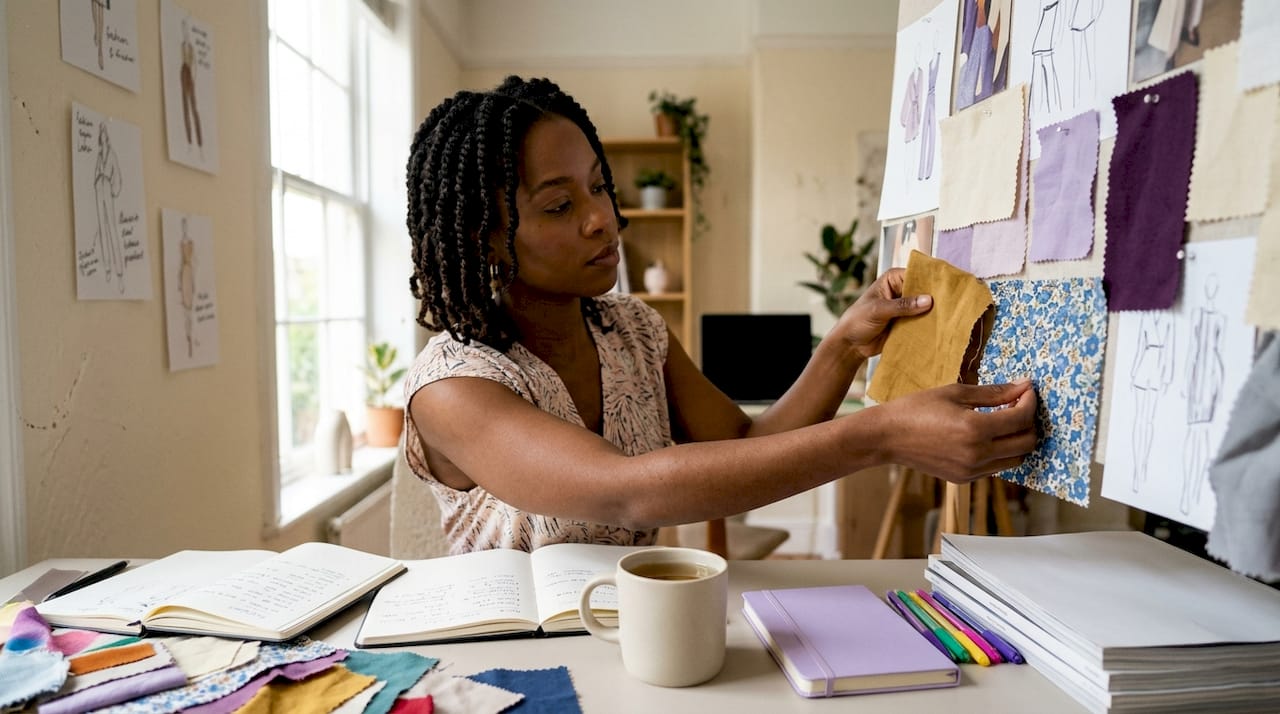
Fashion editors also craft brand storytelling through visual aesthetics, deepening consumer loyalty and emotional connection to fashion labels. A single editorial spread in a major publication can reframe how readers perceive an entire brand. That is the real weight of the job.
What are the main responsibilities of fashion editors?
Fashion editor responsibilities cover a wider range than most people expect. The role combines writing, visual direction, team management, and physical logistics, often within the same workday.
Daily content and editorial management
A typical fashion editor produces 2–3 stories per day while managing editorial assistants and interns. That pace demands strong editorial judgment and the ability to switch quickly between long-form cultural analysis and short, punchy digital copy. Editors also collaborate with SEO teams, PR contacts, and merchandising departments to align content with commercial goals.
Photoshoot oversight and creative direction
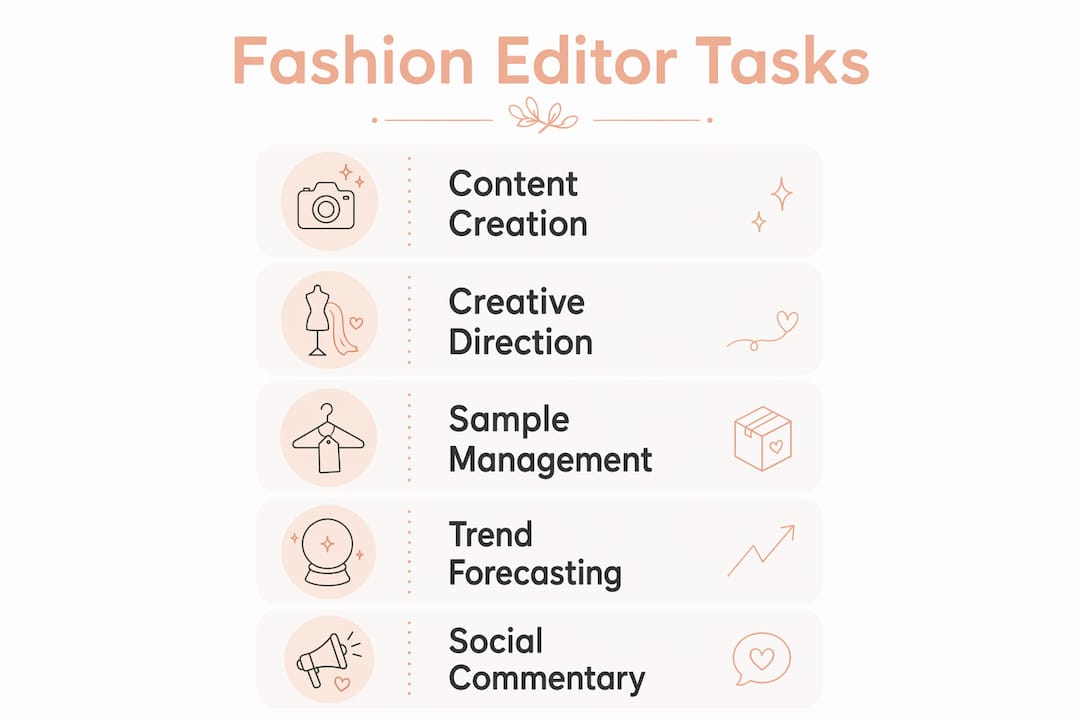
Overseeing photoshoots is one of the most visible parts of the job. Editors coordinate photographers, stylists, hair and makeup artists, and models to execute a visual concept that serves both the editorial calendar and the brand’s identity. Every detail, from lighting to prop selection, reflects the editor’s creative vision.
Sample management and archival work
Physical closet management, organizing and cataloging seasonal samples, is a vital but unglamorous part of the role. Accurate archives support shoot planning, feature writing, and trend research. Without this foundation, the creative work falls apart.
Here is a breakdown of core fashion editor responsibilities:
- Writing and editing multiple stories daily across digital and print formats
- Directing photoshoots from concept through final image selection
- Managing editorial assistants, interns, and freelance contributors
- Coordinating with SEO, PR, and merchandising teams
- Organizing and maintaining seasonal sample archives
- Attending trade shows, press previews, and runway presentations
- Building and presenting editorial calendars to senior leadership
Pro Tip: If you are building toward a fashion editorial career, start practicing sample organization and mood board creation now. These “behind the scenes” skills are what separate candidates who get hired from those who only know the glamorous side of the job.
How do fashion editors influence style trends?
Fashion editors influence trends through a combination of selection, framing, and repetition. When an editor consistently features a specific silhouette, color palette, or designer, that choice signals to retailers, stylists, and consumers that the look is worth paying attention to.
Building seasonal narratives
Editors act as architects of seasonal narratives, particularly during Fashion Week. Their coverage decisions shape which collections get amplified and which get ignored. A designer whose work earns a full editorial spread gains immediate credibility. One whose collection goes uncovered loses commercial momentum, regardless of the quality of the work.
Mood boards as cultural translation tools
Fashion editors build detailed mood boards that bridge runway concepts and audience lifestyles. This is cultural translation in practice. A mood board takes an abstract concept from a Paris atelier and turns it into a wearable idea for someone shopping in Chicago or Atlanta. The editor’s ability to make that connection is what gives editorial work its commercial value.
The retail ripple effect
Editorial choices reach far beyond magazine pages. Fashion editors influence which designers and collections small boutiques feature seasonally, shaping retail assortments and the options consumers actually encounter in stores. Buyers at independent retailers watch editorial coverage closely before placing orders. That is a direct line from an editor’s desk to a shop floor.
The steps through which editorial influence travels to retail are worth mapping:
- An editor selects a trend or designer for coverage during Fashion Week.
- The editorial spread publishes across print and digital platforms.
- Retailers and buyers read the coverage and adjust seasonal orders.
- Boutiques stock the featured styles, making them available to consumers.
- Consumers purchase, validating the trend and encouraging further editorial coverage.
This cycle repeats every season. Understanding it helps aspiring stylists see why editorial relationships matter so much in commercial fashion.
What makes modern fashion editors different in 2026?
The fashion editor of 2026 carries responsibilities that did not exist a decade ago. Digital platforms, social media, and shifting cultural expectations have fundamentally changed what the job requires.
Social commentary as editorial responsibility
Modern fashion editors increasingly act as cultural commentators addressing sustainability, inclusivity, and body positivity alongside trend coverage. This is not optional. Readers expect editorial platforms to engage with these issues, and editors who ignore them lose credibility with younger audiences. The fashion editor who only covers clothes without addressing the culture around them reads as out of touch.
The tension between depth and volume
A critical tension exists between long-form editorial integrity and the demand for high-volume, SEO-optimized digital content. Editors must produce fast without sacrificing accuracy or cultural insight. This is genuinely hard. The skills required for a 2,000-word cultural analysis and a 300-word product roundup are different, and editors must master both.
“Deep creativity and nurturing long-term talent are vital roles for fashion editors amid high-speed media demands. The contrarian approach, slowing down to go deeper, is what separates lasting editorial voices from content that disappears in 48 hours.” — Susannah Frankel, as cited in Hube Magazine
The return of print and long-form content
Digital burnout has driven renewed interest in analog media, with glossy print and long-form editorial gaining traction among readers seeking depth. This is a real shift, not nostalgia. Readers who spend all day scrolling short-form content are actively seeking out slower, richer editorial experiences. Editors who can produce that depth hold a competitive advantage.
Independent digital platforms have also raised concerns about editorial quality and journalism integrity. The barrier to publishing has dropped, but the barrier to doing it well has not. This makes trained, experienced fashion editors more valuable, not less.
How do fashion editors impact aspiring stylists?
Fashion editors set the standard that aspiring stylists measure themselves against. Their work functions as both inspiration and instruction.
What editors’ style choices teach stylists
Fashion editors demonstrate how to mix luxury and accessible fashion in ways that feel intentional rather than accidental. Their personal style choices, the way they dress for shows, shoots, and public appearances, are studied closely by people entering the industry. The typical fashion editor aesthetic favors considered layering, unexpected proportions, and a consistent personal signature rather than chasing every trend.
Pro Tip: Study the personal Instagram accounts of working fashion editors, not just the publications they work for. Their off-duty style choices reveal how they actually apply editorial thinking to everyday dressing, which is exactly what stylists need to learn.
Career pathways and skills for future editors
The skills that matter most for aspiring fashion editors are editorial judgment, visual literacy, and the ability to write clearly under deadline pressure. Understanding how fashion forecasters predict trends is also a core competency, since editors rely on forecasting data to plan seasonal content months in advance.
| Skill | Why it matters for editorial work |
|---|---|
| Visual storytelling | Editors direct shoots and select images that carry the story |
| Trend forecasting | Seasonal content planning depends on reading trends early |
| Writing under deadline | Daily content volume requires speed without sacrificing quality |
| Sample and archive management | Physical organization supports every creative project |
| Cultural awareness | Editors must connect fashion to broader social conversations |
Key Takeaways
Fashion editors shape style trends, retail assortments, and cultural narratives through editorial selection, visual storytelling, and cultural commentary.
| Point | Details |
|---|---|
| Editorial selection drives retail | Editors’ coverage choices directly influence which styles boutiques stock each season. |
| Mood boards bridge runway and real life | Editors translate abstract designer concepts into wearable ideas for specific audiences. |
| Modern editors address social issues | Sustainability, inclusivity, and body positivity are now core editorial responsibilities, not optional topics. |
| Volume and depth are both required | Today’s editors must produce high-frequency digital content without losing journalistic integrity. |
| Aspiring stylists should study editors closely | Personal style choices and editorial decisions by working editors are practical learning tools for career development. |
Why editorial depth still wins in a fast-moving industry
The most common mistake I see aspiring stylists make is treating fashion editors as trend reporters. They are not. Trend reporting is a fraction of what editors actually do. The real work is cultural interpretation: deciding what a trend means, who it is for, and why it matters right now. That interpretive layer is what separates editorial content that lasts from content that ages in a week.
The commercial pressure on editors has intensified significantly. Publishing multiple stories a day while maintaining a coherent editorial voice is genuinely difficult, and the editors who do it well are rare. What I find most interesting is that the editors with the strongest long-term influence are almost always the ones who resist the pressure to publish everything. They are selective. They say no more than they say yes. That selectivity is the actual skill, and it is the hardest one to teach.
For anyone building toward a career in fashion styling or editing, I would recommend spending less time consuming content and more time studying the decisions behind it. Ask why a particular image was chosen for a cover. Ask why a specific designer got three pages when another got none. The answers to those questions are where the real education lives.
— Patrick
Editor-approved style at Wildflowerwardrobe
The editorial aesthetics that fashion editors champion every season, considered layering, statement accessories, and pieces that balance trend with timelessness, are exactly what Wildflowerwardrobe curates for women who want to dress with intention.
Wildflowerwardrobe’s women’s casual wear collection reflects the kind of thoughtful curation that fashion editors apply to every shoot. The pieces work as everyday essentials and as building blocks for more editorial looks. For finishing touches that editors consistently reach for, the jewelry collection offers accessories that add the kind of considered detail that separates a good outfit from a great one. Browse both collections to find pieces that translate editorial thinking into your actual wardrobe.
FAQ
What is the primary role of a fashion editor?
A fashion editor selects, contextualizes, and communicates fashion trends to a specific audience through written and visual content. Their decisions during events like Fashion Week directly shape which aesthetics reach consumers and retailers each season.
How do fashion editors influence consumer choices?
Fashion editors influence consumer choices by amplifying specific trends through editorial coverage, which then shapes retail buying and the styles available in stores. Their mood boards and editorial spreads translate runway concepts into accessible looks for everyday shoppers.
What skills does a fashion editor need?
Fashion editors need strong visual literacy, writing ability, trend forecasting knowledge, and cultural awareness. Physical skills like sample management and archive organization are also part of the daily role.
How has the fashion editor’s role changed in 2026?
Modern fashion editors now address social issues like sustainability and inclusivity alongside trend coverage, while also managing high-volume digital content demands. The role has expanded from pure curation to cultural commentary, requiring both speed and editorial depth.
How can aspiring stylists learn from fashion editors?
Aspiring stylists can study working editors’ personal style choices and editorial decisions to understand how professional editorial thinking applies to real dressing. Following editors’ work across both print and digital platforms provides practical insight into trend selection and visual storytelling.
0 comments