

Effortless dressing is the practice of creating polished, confident outfits that look natural and require minimal daily decision-making, achieved through intentional outfit planning, proper fit, and purposeful simplicity. The industry term for this approach is intentional style, and it sits at the heart of what most women describe as “casual elegance” or “casual chic.” What does effortless dressing mean in real terms? It means your wardrobe works for you, not against you. You spend less time staring at a full closet feeling stuck, and more time walking out the door feeling put-together. This article breaks down the core components, clears up the biggest misconceptions, and gives you a practical path to get there.
What does effortless dressing mean at its core?
Effortless dressing is defined as achieving polished style through intentional choices rather than random outfit assembly or expensive purchases. The result looks natural, calm, and confident. It is not about wearing less or owning less. It is about owning the right things and knowing exactly how to combine them.
The concept rests on three pillars: fit, fabric quality, and repeatable outfit formulas. Each one does heavy lifting on its own. Together, they create a wardrobe that practically dresses you. Women who master this approach stop chasing trends and start building a personal style that holds up across seasons and occasions.
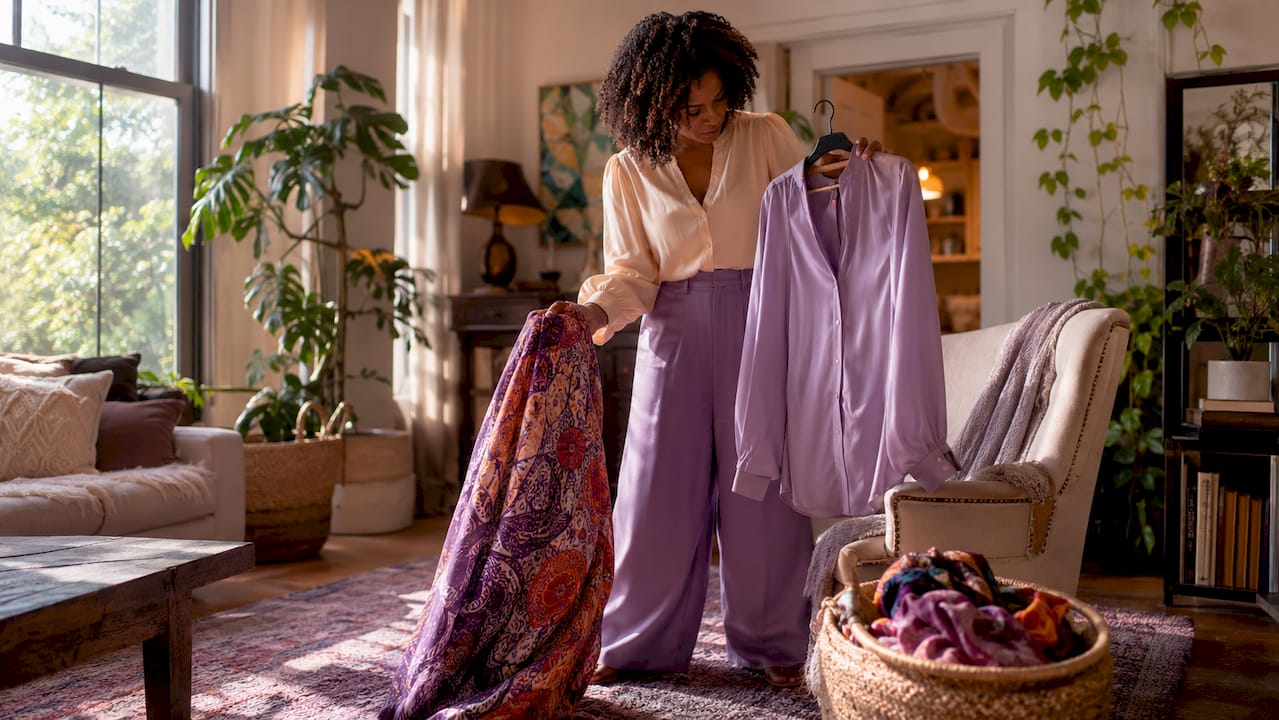
Effortless style is also deeply personal. It is not a single aesthetic like minimalism or bohemian. It is a method that works inside any aesthetic. A woman who loves bold prints can dress effortlessly. So can a woman who lives in neutrals. The method is the same; the wardrobe just looks different.
What are the essential components of effortless dressing?
The foundation of effortless style rests on four building blocks: the 80/20 wardrobe rule, fit, quality fabrics, and the third-piece layering technique.
- The 80/20 rule. 80% of your wardrobe should consist of repeatable outfit formulas, with 20% reserved for statement pieces that express personality. This ratio keeps your closet functional while leaving room for individuality. Without it, you end up with a closet full of “someday” pieces and nothing to wear on a Tuesday.
- Fit above everything. Even basic, affordable pieces look elegant when they fit perfectly. A $30 white tee that skims your frame correctly will always outperform a $200 blouse that pulls at the shoulders. Tailoring is not a luxury. It is the single fastest upgrade you can make.
- Fabric and comfort. Effortless style balances quality fabrics, clean lines, and comfort without sacrificing elegance. Linen, cotton, and ponte knit are workhorses. They drape well, hold their shape, and feel good all day.
- The third-piece technique. Adding a blazer, cardigan, or oversized shirt over a simple base outfit creates structure, visual depth, and an intentional finish. This is the insider trick that separates a “just threw this on” look from a genuinely polished one.
Pro Tip: Before you buy a new piece, ask whether it works with at least three items already in your closet. If it does not, it belongs in the 20% statement category, not the 80% formula zone.
How does effortless dressing simplify daily style choices?
Decision fatigue is real, and your wardrobe is one of its biggest sources. The average woman makes hundreds of micro-decisions before 9 a.m. Outfit choices are a significant chunk of that mental load. Effortless dressing solves this with a system.
Here is how to build that system in four steps:
- Create three outfit formulas. Three repeatable combinations of a top, bottom, and third piece let you get dressed in under 10 minutes on autopilot. Think: tailored trousers plus a fitted tee plus a blazer. Or straight-leg jeans plus a silk tank plus a denim jacket. These are your go-to combinations. You can learn more about building these in this guide on creating outfits for every occasion.
- Choose a color lane. A color lane is a palette of 4–6 colors that all work together. When everything in your closet shares a color language, mixing and matching becomes automatic. Neutrals like camel, white, navy, and black are the most forgiving starting point.
- Pick a style anchor. A style anchor is one defining element that runs through your wardrobe. It could be structured tailoring, relaxed linen, or feminine prints. Your anchor keeps your closet cohesive even as individual pieces change.
- Edit ruthlessly. Intentional style reduces decision fatigue by keeping only pieces that fit your formulas, color lane, and anchor. Fewer compatible pieces beat a closet packed with options that do not connect.
The payoff is consistency. You stop having “bad outfit days” because every combination in your closet already works.
Common misconceptions about effortless dressing
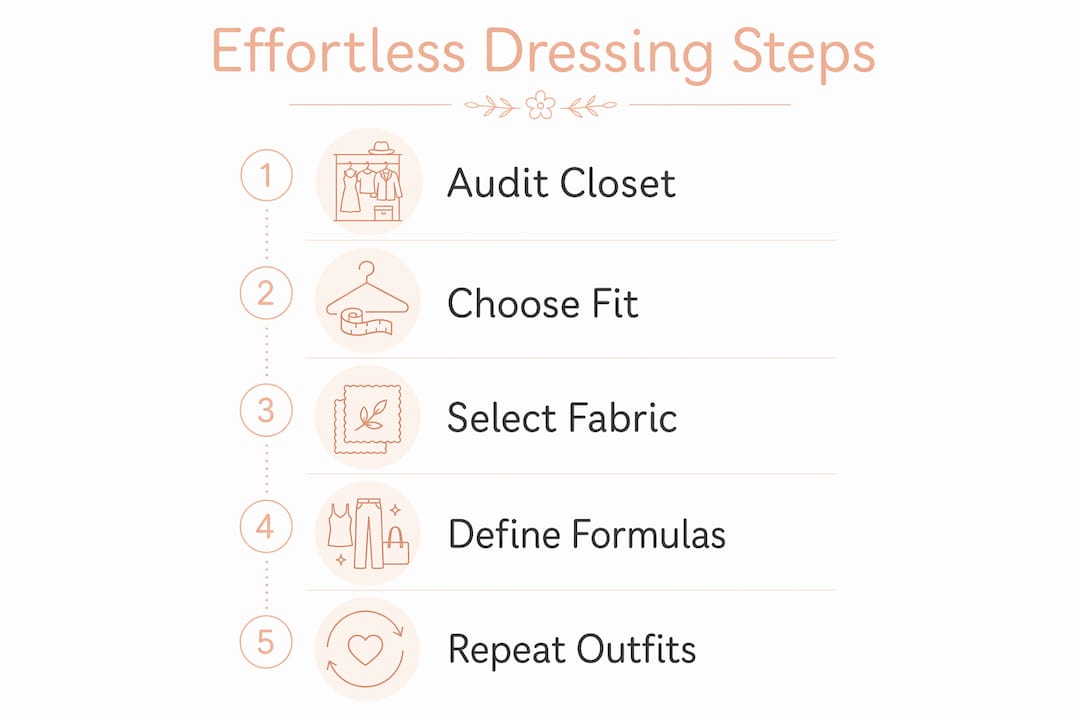
The biggest myth about effortless style is that it means not trying. It does not. Effortless style is not about ‘not trying’ but about trying efficiently. The effort happens upfront, in the planning and curation phase. The daily experience then feels easy because the work is already done.
Here are the most common misconceptions worth clearing up:
- “Effortless means casual or underdressed.” False. Effortless dressing is about hitting the right balance between underdressed and overdressed for any given context. A perfectly fitted midi dress with simple jewelry is effortless. So is a great pair of trousers with a tucked-in blouse.
- “It requires a minimalist wardrobe.” Not true. Effortless style is classic, contemporary, and personal rather than trend-driven minimalism. You do not need to own 30 items. You need the right items for your actual life.
- “Expensive clothes make it easier.” Price has nothing to do with it. Fit and intentionality are the real variables. A well-curated wardrobe from accessible brands will always outperform a closet full of expensive pieces that do not work together.
“The most polished women you admire are not wearing more. They are wearing better. Better fit, better combinations, and better alignment with who they actually are.”
The “fantasy wardrobe” trap is where most people go wrong. You buy pieces for the life you wish you had, not the life you actually live. A wardrobe full of cocktail dresses does not help you on a Wednesday morning school run. Authentic effortless style starts with honesty about your real daily activities.
Practical steps to start dressing effortlessly today
Building an effortless wardrobe is a process, not a single shopping trip. These steps give you a clear starting point.
- Audit your lifestyle first. Identify your wardrobe bottlenecks before buying anything new. Common bottlenecks include uncomfortable shoes that derail outfits, outer layers that do not match anything, or underwear that limits what you can wear. Fix the gaps before adding more.
- Define your style anchor and color lane. Write them down. Specificity matters. “I like classic pieces in warm neutrals with occasional earthy prints” is far more useful than “I like simple clothes.”
- Build your three outfit formulas. Pull from what you already own. Lay out three complete looks, including shoes and a third piece. Photograph them. These are your starting templates. Check out Wildflowerwardrobe’s guide on wardrobe essentials for versatility for help identifying your core pieces.
- Add finishing touches intentionally. A simple necklace, a structured bag, or a pair of clean white sneakers can complete an outfit without complicating it. A good jewelry styling guide can help you use accessories to add personality without overthinking it.
- Shop with a list, not a mood. Impulse buying is the enemy of an effortless wardrobe. Every new purchase should fill a specific gap or strengthen an existing formula.
Pro Tip: Photograph your three outfit formulas and save them in a phone album. On rushed mornings, open the album instead of opening your closet.
Here is a quick reference for building your formula wardrobe:
| Wardrobe element | What to look for | Why it matters |
|---|---|---|
| Base tops | Fitted tees, silk tanks, clean blouses | Versatile foundation for every formula |
| Bottoms | Straight-leg jeans, tailored trousers, midi skirts | Pairs with multiple tops and third pieces |
| Third pieces | Blazers, cardigans, denim jackets, linen shirts | Adds polish and completes the look |
| Shoes | Two to three pairs covering casual, smart casual, and dressy | Bottlenecks outfits when missing |
| Accessories | One bag, two to three jewelry pieces | Finishes the look without adding complexity |
For more guidance on building a wardrobe that lasts without overspending, Wildflowerwardrobe’s resource on updating your wardrobe affordably is worth bookmarking.
Key takeaways
Effortless dressing works because it replaces daily guesswork with a deliberate system built on fit, repeatable formulas, and honest lifestyle alignment.
| Point | Details |
|---|---|
| Define your method first | Effortless style is intentional, not accidental. Plan your formulas before shopping. |
| Fit is the real differentiator | Well-fitted basics always outperform expensive, ill-fitting pieces. |
| Use the 80/20 rule | Keep 80% repeatable formula pieces and 20% statement items for balance. |
| The third piece is your secret weapon | A blazer or cardigan instantly transforms a basic outfit into a polished look. |
| Audit before you add | Fix wardrobe bottlenecks like shoes and outer layers before buying anything new. |
Why I think most women already have what they need
I have spent years watching women overhaul their wardrobes in search of that elusive “effortless” feeling, only to end up with more clothes and the same frustration. The uncomfortable truth is that most women already own the pieces they need. The problem is not the wardrobe. It is the system.
When I started applying the outfit formula approach to my own closet, the shift was immediate. I stopped buying things because they were pretty and started buying things because they solved a specific gap. My closet got smaller. My confidence got bigger. Getting dressed stopped being a daily negotiation with myself.
The part most style advice skips is the lifestyle audit. You cannot build an effortless wardrobe around a fantasy version of your life. I learned this the hard way after accumulating beautiful silk blouses I never wore because my actual mornings involve coffee spills and school drop-offs. Once I aligned my wardrobe with my real life, everything clicked.
Comfort and style are not opposites. The best effortless outfits feel as good as they look. If you are tugging, adjusting, or second-guessing an outfit by 10 a.m., it is not effortless, regardless of how polished it looks in the mirror. Trust that signal. Your wardrobe should work with your body and your day, not against them.
Start small. Pick one formula. Wear it three times this week. Notice how much mental energy you get back. That is what effortless dressing actually feels like.
— Patrick
Build your effortless wardrobe with Wildflowerwardrobe
Wildflowerwardrobe curates pieces designed specifically for women who want style without the daily struggle. The women’s casual wear collection is built around versatile, formula-friendly pieces that move from morning to evening without a second thought. From clean-lined tops and relaxed-fit bottoms to finishing touches like the Fame Multi Belt Strap Accent Shoulder Bag, every piece is chosen to simplify your choices and sharpen your look. If you want to add polish with minimal effort, the jewelry collection offers simple, elegant options that complete any formula outfit.
Browse Wildflowerwardrobe and find the pieces that make your three outfit formulas work harder for you.
FAQ
What is the effortless style definition in simple terms?
Effortless style means creating polished, confident outfits through intentional planning rather than daily effort. It relies on fit, repeatable outfit formulas, and a cohesive color palette.
How do I start dressing effortlessly with a full closet?
Start by auditing your lifestyle and identifying what is blocking your outfits, such as shoes that do not match anything or outer layers that stand alone. Then build three repeatable outfit formulas from what you already own before buying anything new.
What is the difference between effortless dressing and minimalism?
Effortless dressing is about versatility and intentional combinations, not a strict item count. Minimalism limits quantity; effortless style limits incompatibility. You can own many pieces and still dress effortlessly if they all work together.
What makes an outfit look effortless?
Good fit is the single biggest factor. A well-fitted simple outfit always reads as more polished than an expensive, ill-fitting one. Adding a third piece like a blazer or cardigan also creates the structured, intentional finish that defines effortless style.
Does casual chic mean the same thing as effortless dressing?
Casual chic is one expression of effortless dressing, specifically the relaxed-but-polished aesthetic. Effortless dressing is the broader method; casual chic is one style outcome within it.
Recommended
- What Is Eclectic Dressing: Your Style Freedom Guide – Wildflower Wardrobe
- How to dress for fashion events with style and flair – Wildflower Wardrobe
- How to Dress Confidently on a Budget in 2026 – Wildflower Wardrobe
- Everyday wardrobe essentials women need for stylish versatility – Wildflower Wardrobe
0 comments