

Fashion trends are defined as recurring style patterns that gain widespread popularity within a specific cultural moment, driven by designers, social forces, technology, and collective behavior. Understanding how fashion trends emerge separates casual observers from people who can read the industry with real confidence. The process is never random. It flows from runways, street corners, algorithm feeds, and cultural flashpoints, all at once. Fashion students, bloggers, and enthusiasts who grasp these origins of fashion trends gain a sharper eye for what lasts and what fades fast.
How fashion trends emerge from the traditional industry
The top-down model of trend creation starts at the four major fashion weeks: Paris, Milan, New York, and London. Designers present silhouettes, color palettes, and fabric choices that set the creative direction for the entire industry. These runway moments are not just art. They are commercial signals that ripple outward to every price point.
Forecasting agencies sit at the center of this process. Organizations like the Pantone Color Institute publish color forecasts that influence product development across fashion, beauty, and home goods simultaneously. Trend forecasting agencies use AI-driven models to analyze vast datasets and predict style directions up to 24 months ahead. That lead time gives brands the runway, literally and figuratively, to plan collections before a trend reaches consumers.
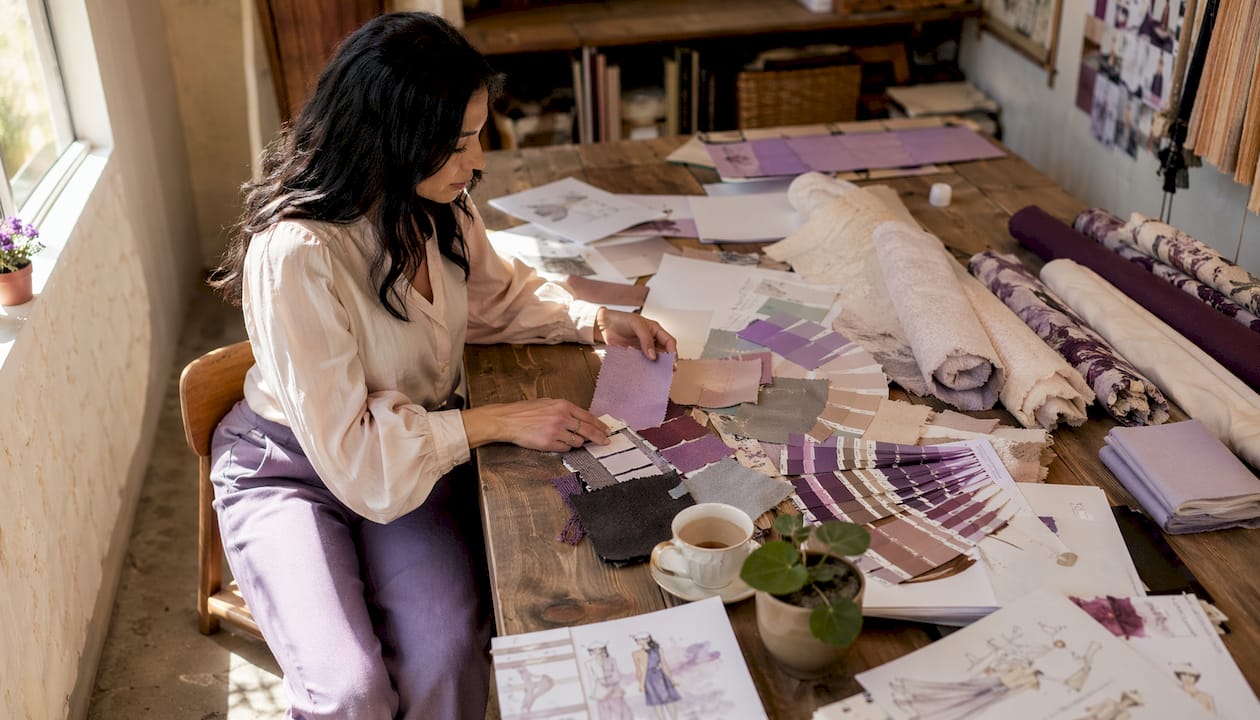
The gap between a runway debut and a retail purchase has historically been 6–18 months. Digital acceleration is compressing that window fast. Some fast fashion operations now move from design concept to store shelf in three to four weeks, collapsing what once took a full season.
Pro Tip: Follow the Pantone Color of the Year announcement each december. It signals the color direction that will show up in everything from runway collections to mass-market retail within the next 12 months.
The traditional pipeline works like this:
- Haute couture and ready-to-wear collections debut at fashion weeks
- Forecasting agencies and fashion editors interpret and amplify key looks
- Retailers and buyers place orders based on runway signals
- Mass-market brands adapt the looks for broader audiences
- Consumers encounter the trend in stores and online
Understanding this pipeline helps you spot a trend at its origin point, not just when it saturates your social feed. The Wildflowerwardrobe blog covers how fashion seasons work in detail if you want to map this timeline more precisely.
Where do grassroots trends actually start?
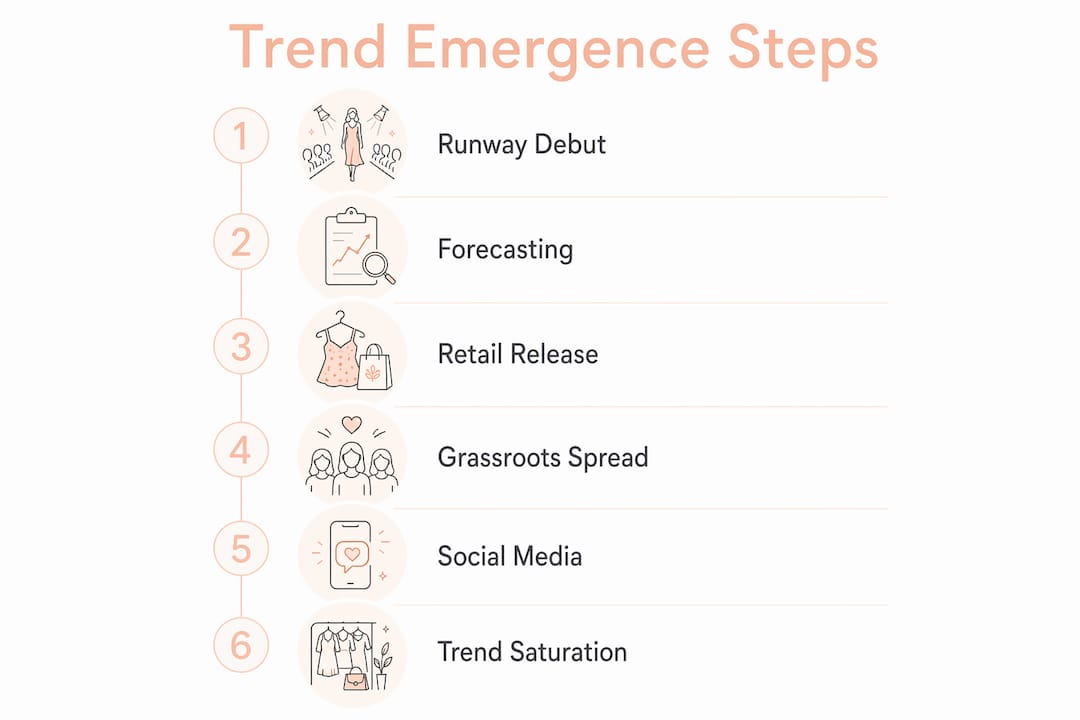
Not every trend flows from a Paris atelier. Many of the most durable styles in modern fashion began in subcultures that had nothing to do with luxury houses. Punk in 1970s London, hip-hop in 1980s New York, skate culture on the West Coast, and K-pop fandoms in Seoul all generated visual languages that eventually crossed into mainstream fashion.
The mechanism is consistent. A community uses clothing to express identity, resistance, or belonging. That visual code becomes recognizable. Photographers, journalists, and eventually designers notice it. The style gets recontextualized, often stripped of its original meaning, and sold to a mass audience.
“Independent, quirky labels often drive the most influential trends, counterbalancing the homogenizing effect of large luxury conglomerates. The most interesting style signals come from the edges, not the center.”
Digital platforms and micro-influencers now account for roughly 60% of trend amplification, moving niche aesthetics from subculture to mainstream far faster than any magazine ever could. That figure represents a fundamental shift in who holds influence. A creator with 50,000 followers in a specific niche can spark a trend that a brand with a $10 million ad budget cannot manufacture.
The growth of streetwear culture illustrates this perfectly. What began as functional workwear and athletic gear in urban communities became one of the most commercially powerful categories in fashion. The trend did not start on a runway. It started on a street corner and worked its way up.
How does social media accelerate trend cycles?
Social media platforms, specifically Instagram, TikTok, and Pinterest, function as real-time trend incubators. A single viral video can push a niche aesthetic into global awareness within 48 hours. That speed has no historical precedent in fashion.
The numbers confirm the shift. A 16% visibility surge in embroidery cowboy boots across European markets happened within less than a year, driven entirely by social media momentum. That kind of regional trend acceleration used to take multiple seasons. Now it takes weeks.
Here is how the social media trend cycle typically unfolds:
- A micro-influencer or niche creator posts content featuring a specific style or item
- The algorithm amplifies the post to users with similar interests
- Other creators replicate the look, generating more content around the same aesthetic
- Brands notice the pattern through social listening tools and move to capitalize
- Mass adoption follows, often signaling the trend has already peaked
Algorithm-driven ecosystems create feedback loops that accelerate both the rise and the decline of trends. The same mechanism that makes a trend visible to millions also saturates it faster than ever before. Brands that rely only on long-term forecasting get caught off guard when a viral moment forces an immediate pivot.
Pro Tip: Track Pinterest’s annual trend report alongside TikTok’s trending audio categories. When a sound and a visual aesthetic align on the same platform, a micro-trend is usually about to break into mainstream.
The shift from celebrity red-carpet influence to relatable creator influence matters here. A celebrity wearing a $4,000 dress at an awards show inspires aspiration. A creator wearing a $40 version of the same silhouette inspires purchase. The latter drives actual trend adoption at scale.
What is the difference between micro-trends and macro-trends?
Fashion trend cycles follow a five-stage structure: introduction, rise, peak, decline, and obsolescence. Every trend moves through these stages. The difference between a micro-trend and a macro-trend is how long each stage lasts.
Micro-trends are highly specific, short-lived styles that social media accelerates through their entire lifecycle in weeks or months. Brands that over-invest in micro-trend inventory face real financial risk when the cycle collapses faster than expected. Macro-trends, by contrast, operate over years or even decades and reflect deeper cultural shifts.
| Feature | Micro-trends | Macro-trends |
|---|---|---|
| Lifespan | Weeks to months | Years to decades |
| Driver | Social media virality | Cultural and economic shifts |
| Risk level | High inventory risk | Lower, more predictable |
| Examples | Embroidery cowboy boots, specific TikTok aesthetics | Athleisure, gender-neutral dressing |
| Best strategy | Observe, then decide | Invest with confidence |
Nostalgia plays a defining role in macro-trend revivals. Styles tend to revive on roughly a 20-year cycle because designers naturally draw from the fashion of their formative years. The early 2000s revival that dominated fashion in the early 2020s followed this pattern precisely. Low-rise jeans, velour tracksuits, and logomania all returned on schedule.
Understanding how fashion cycles repeat helps you make smarter choices about what to buy and what to skip. A macro-trend investment holds value. A micro-trend purchase often does not.
How to spot and engage with emerging trends
Recognizing a trend before it peaks requires watching the right signals in the right order. Cultural and social shifts almost always precede the fashion response. Economic anxiety produces minimalism. Cultural optimism produces maximalism. Watching the broader context tells you what aesthetic mood is coming.
Practical steps for tracking trend emergence:
- Follow micro-influencers in niche communities, not just major accounts with millions of followers
- Monitor street style coverage from fashion weeks, not just the runway looks
- Check resale platforms like Depop and Poshmark for rising search terms and sold-out categories
- Read fashion forecasting insights to understand the longer arc behind short-term viral moments
- Notice when multiple unrelated creators independently adopt the same aesthetic
Modern trend generation is multi-directional, with bottom-up and horizontal influences carrying as much weight as traditional top-down signals. That means no single source gives you the full picture. You need to watch the runway, the street, and the algorithm simultaneously.
Pro Tip: When you see the same silhouette or color appearing across three completely different aesthetic communities on social media, that is a macro-trend forming. One community adopting a look is a micro-trend. Three communities adopting it independently is a cultural shift.
Chasing every micro-trend is expensive and exhausting. The most stylish people build a personal aesthetic foundation and selectively incorporate trends that genuinely fit their existing wardrobe. That approach keeps your style coherent and your spending intentional.
Key Takeaways
Fashion trends emerge through a layered process of top-down runway influence, bottom-up subcultural energy, and digital amplification that compresses every stage of the trend lifecycle.
| Point | Details |
|---|---|
| Runway sets direction | Fashion weeks in Paris, Milan, New York, and London signal color, silhouette, and fabric trends 6–18 months ahead of retail. |
| Subcultures drive originality | Punk, hip-hop, skate, and K-pop communities have generated some of fashion’s most durable and influential style movements. |
| Digital platforms accelerate cycles | Micro-influencers and algorithm-driven platforms account for roughly 60% of trend amplification today. |
| Micro vs. macro matters | Micro-trends last weeks and carry inventory risk; macro-trends span years and reward confident investment. |
| Nostalgia is predictable | Styles revive on roughly a 20-year cycle, making historical fashion knowledge a practical forecasting tool. |
What I’ve learned from watching trends move faster than ever
The most counterintuitive thing about trend emergence is that speed has not made fashion more creative. It has made it more anxious. Brands, creators, and shoppers all feel pressure to respond to every viral moment, which produces a lot of noise and very little that actually lasts.
What I find genuinely useful is the tension that sociologist Georg Simmel identified back in 1904: fashion cycles as perpetual tension between conformity and individual distinction. That dynamic has not changed. The platforms have changed. The speed has changed. But people still want to belong and stand out at the same time, and fashion is still the primary tool for managing that tension.
The enthusiasts and bloggers I respect most are the ones who treat trend knowledge as context, not instruction. They understand why a trend is happening, what cultural moment it reflects, and whether it actually fits who they are. That curiosity produces better style choices and better content than simply chasing whatever is trending this week.
My honest advice: slow down your consumption of trend content and speed up your analysis of it. Ask why a trend is emerging, not just what it looks like. The answer to that question will tell you whether it is worth your attention, your wardrobe space, and your money.
— Patrick
Wildflowerwardrobe’s take on trend-forward style
Staying current does not mean buying everything that trends. It means knowing which pieces carry a trend’s energy without locking you into a look that expires in three months.
Wildflowerwardrobe curates women’s casual wear that reflects the styles gaining momentum right now, without sacrificing the wearability that makes a piece worth keeping. From statement accessories to everyday essentials, the collection is built for women who want to dress with intention. Whether you are drawn to the current jewelry trends or looking for pieces that anchor a fresh seasonal wardrobe, Wildflowerwardrobe brings together fashion-forward and timeless options in one place.
FAQ
How do fashion trends emerge from subcultures?
Subcultures develop visual identities through clothing as a form of expression or resistance. Designers and digital creators then adopt and adapt these aesthetics, moving them into mainstream fashion.
What role do forecasting agencies play in trend development?
Forecasting agencies analyze cultural data, social signals, and historical patterns to predict style directions up to 24 months ahead. Their reports guide brand planning and product development across the industry.
How long does a micro-trend typically last?
Micro-trends driven by social media virality typically last weeks to a few months. Brands that over-invest in micro-trend inventory face significant financial risk when the cycle collapses quickly.
Why do fashion trends revive every 20 years?
Designers tend to draw inspiration from the fashion of their formative years, creating a roughly 20-year revival cycle. Nostalgia-targeting algorithms reinforce this by surfacing retro content to audiences who respond to it emotionally.
What is the fastest way to identify an emerging trend?
Watch for the same silhouette, color, or styling detail appearing independently across multiple unrelated niche communities on social media. That cross-community adoption signals a macro-trend forming, not just a fleeting viral moment.
0 comments