

Fashion empowers confidence by directly reshaping self-perception, body language, and mental well-being through intentional clothing choices. Psychologists call this mechanism “enclothed cognition,” the measurable shift in mood, posture, and identity that happens the moment you put on something that feels right. Research shows that wardrobe satisfaction accounts for about 19% of variance in overall well-being scores among women. That number is not trivial. It means the clothes hanging in your closet have a real, documented effect on how you feel and how you show up. Wildflowerwardrobe was built on exactly this premise: that fashion is a tool for self-expression, not a luxury.
How fashion empowers confidence through psychology
Clothing does not just cover your body. It communicates to your brain who you are and how you should feel. The concept of enclothed cognition, first studied in formal psychological research, explains that clothing impacts posture, mood, and identity expression in measurable ways. Dressing intentionally improves eye contact, energy levels, and composure almost immediately. That is a physiological response, not a placebo.
The link between fashion and self-esteem runs even deeper in social settings. A study of 215 adolescents found that the relationship between fashion preferences and social anxiety is mediated by self-esteem. Clothing choices do not directly reduce anxiety. They build self-worth first, and that self-worth then reduces social fear. The chain matters because it tells you where to focus: on clothes that make you feel like yourself, not just clothes that look good to others.
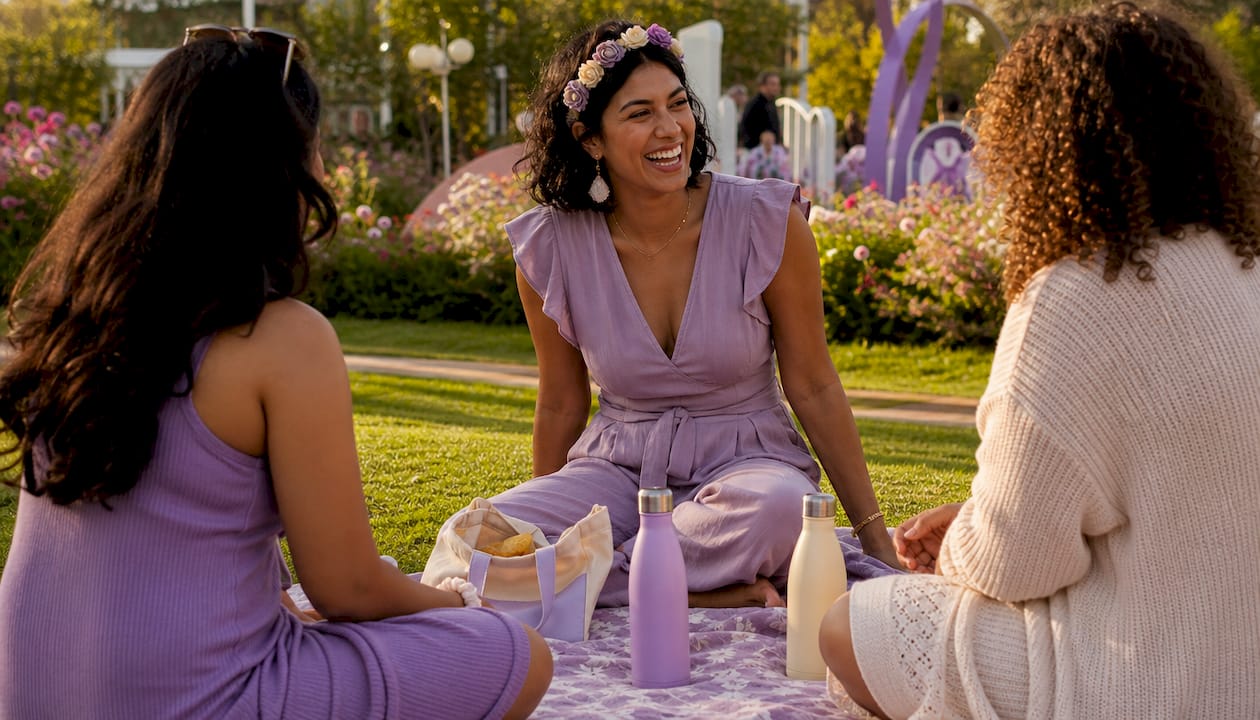
A survey of 252 women found that higher fashion satisfaction correlates with greater optimism and reduced social avoidance. Clothing satisfaction directly predicts well-being and social participation, independent of aging attitudes. That independence is the key finding. Your confidence from clothing does not depend on how you feel about getting older. It operates on its own track.
| Fashion satisfaction outcome | Effect observed |
|---|---|
| Higher wardrobe satisfaction | Greater optimism and positive mood |
| Well-fitting, appropriate clothing | Reduced social withdrawal |
| Intentional dressing | Improved posture and eye contact |
| Low clothing satisfaction | Increased social avoidance |
Pro Tip: Start your morning by choosing one item you genuinely love wearing. That single choice activates enclothed cognition before your day begins.
The practical takeaway is clear. Investing attention in your wardrobe is not vanity. Fashion is a necessary tool for belonging and self-expression that helps maintain social connection across every life stage. Psychologists now treat wardrobe satisfaction as a legitimate mental health variable, not a superficial concern.
Why authentic style builds more confidence than trends
Copying someone else’s style formula is the fastest way to feel like you are wearing a costume. Style experts are direct on this point: fashion empowers women more authentically when clothing reflects personal identity rather than external trends. The costume effect is real. When your outfit does not match your internal sense of self, your brain registers the mismatch, and your confidence drops instead of rising.
Authentic personal style is built through self-knowledge, not shopping. You need to know what colors make you feel alive, what silhouettes match your body and your personality, and what pieces you reach for instinctively. That internal alignment is what reduces external validation needs and creates lasting confidence. Trend-chasing does the opposite. It keeps you dependent on outside approval.
The benefits of building your own signature style are concrete:
- You spend less time deciding what to wear each morning.
- You feel consistent across different social settings.
- You stop buying pieces that never get worn.
- You project a clear, readable identity to others.
- You feel at home in your clothes, not performed by them.
Pro Tip: Identify one recurring element in your favorite outfits, whether it is a specific neckline, a color family, or a fabric texture. Build outward from that anchor instead of starting fresh each season.
Building personal style prevents the costume effect and promotes authentic confidence by minimizing reliance on trends. This is the difference between dressing for self-confidence and dressing for approval. One is sustainable. The other is exhausting.
Practical wardrobe strategies that boost daily confidence
A curated wardrobe outperforms a large one every time. Decluttering your wardrobe reduces decision fatigue and increases mental clarity, which directly improves your daily confidence. When every item in your closet fits well and reflects your style, getting dressed becomes a ritual of self-affirmation rather than a source of stress. A closet audit is one of the most underrated confidence tools available.
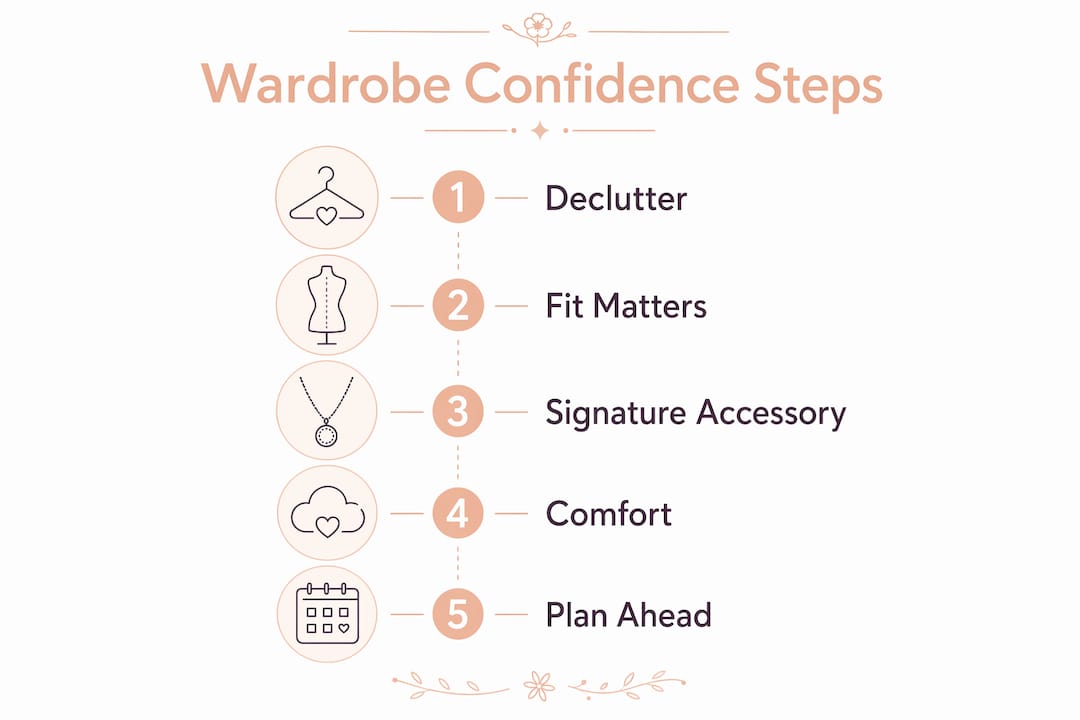
Fit is non-negotiable. Clothes that require constant physical adjustment pull your attention away from the moment and onto your body. Clothes that do not require adjustment during wear allow you to inhabit them fully, increasing composure and presence. This is why a well-tailored piece at a moderate price point beats an expensive item that does not sit right.
The impact of clothing comfort on daily well-being is well documented in wellness research. Comfort and style are not opposites. The most confidence-building outfits combine both. When you feel physically at ease, your posture opens up, your voice steadies, and your attention stays on the conversation rather than on your waistband.
Here are four daily dressing habits that consistently build confidence:
- Lay out your outfit the night before. This removes morning pressure and lets you make choices when your mind is calm.
- Include one item you love in every outfit. A favorite necklace, a well-cut blazer, or a color that energizes you anchors the whole look.
- Remove anything that does not fit today. Clothes sized for a different version of you create friction every morning.
- Dress for how you want to feel, not just where you are going. Intentional dressing shapes your mindset before the day shapes you.
Pro Tip: A signature accessory works as a daily mental ritual. Putting it on signals to your brain that you are ready. Practitioners call this a confidence anchor, and it works even on low-energy days.
What is the social and professional impact of dressing with confidence?
Clothing satisfaction reduces social avoidance and increases engagement with others. The 252-woman study links clothing fit and style appropriateness directly to mood and reduced social withdrawal. Women who feel good in their clothes attend more social events, hold eye contact longer, and initiate conversations more readily. These are not small behavioral shifts. They compound over time into stronger relationships and broader networks.
In professional settings, first impressions form within seconds, and clothing is the most visible signal you send before you speak. Dressing with intention does not mean dressing formally. It means dressing in a way that matches the identity and authority you want to project. A woman who feels confident in her clothes carries herself differently, and that difference registers with everyone in the room.
| Behavior | Without clothing confidence | With clothing confidence |
|---|---|---|
| Social engagement | Avoidance, withdrawal | Active participation |
| Body language | Closed posture, fidgeting | Open posture, steady eye contact |
| Professional presence | Hesitation, self-consciousness | Clarity, composure |
| First impression | Uncertain, forgettable | Defined, memorable |
Pro Tip: Before a high-stakes meeting or event, wear something you have already worn successfully. Familiarity with an outfit removes one layer of self-consciousness and lets your full attention go to the room.
You can read more about building outfits for any occasion with confidence on the Wildflowerwardrobe blog.
Key Takeaways
Clothing choices directly shape confidence by influencing self-esteem, posture, social behavior, and mental well-being through the documented mechanism of enclothed cognition.
| Point | Details |
|---|---|
| Enclothed cognition is real | Intentional dressing immediately improves posture, eye contact, and energy levels. |
| Wardrobe satisfaction predicts well-being | Fashion satisfaction accounts for about 19% of variance in women’s overall well-being scores. |
| Authentic style outlasts trends | Clothing that reflects personal identity builds lasting confidence; copying others creates a costume effect. |
| Fit matters more than price | Clothes that require no adjustment during wear increase composure and social presence. |
| Curation beats volume | A smaller, well-chosen wardrobe reduces decision fatigue and makes daily dressing a confidence ritual. |
Fashion is not vanity. Here is what I have actually seen.
The most persistent misconception I encounter is that caring about clothes is shallow. Women apologize for it constantly. They preface style conversations with “I know it sounds silly, but…” It does not sound silly. It is backed by peer-reviewed research, and dismissing it costs women real confidence.
What I have observed over years of watching women engage with style is this: the women who dress with the most confidence are not the ones with the largest wardrobes or the biggest budgets. They are the ones who know exactly what they like and have stopped apologizing for it. They own three blazers that fit perfectly instead of twelve that sort of work. They wear the same earrings to every important meeting because those earrings make them feel ready.
The mistake most women make is treating fashion as a problem to solve with more purchases. The actual work is subtraction and self-knowledge. Remove what does not fit your body or your life. Identify what makes you feel like the best version of yourself. Then wear that, consistently, without waiting for a special occasion. Confidence through clothing is not a reward for getting your life together. It is a tool you use while you are getting there.
If you want to go deeper on this, the Wildflowerwardrobe piece on fashion as empowerment is worth your time. It covers the internal alignment piece in more detail than most style content does.
— Patrick
Wildflowerwardrobe: curated fashion for real confidence
Wildflowerwardrobe carries clothing, accessories, jewelry, and lingerie selected specifically for women who want style that works in real life, not just on a runway. Every piece in the collection is chosen to support the kind of confidence that comes from feeling genuinely at home in what you wear.
The women’s casual wear collection covers everyday essentials that combine comfort with a clear point of view. The jewelry section includes pieces designed to serve as exactly the kind of confidence anchor described in this article, from a linked ring pendant necklace to statement earrings that make getting dressed feel intentional. If you are building a wardrobe that reflects who you actually are, Wildflowerwardrobe is a good place to start.
FAQ
What is enclothed cognition?
Enclothed cognition is the psychological process by which clothing directly influences the wearer’s mood, posture, and self-perception. Research shows that dressing intentionally produces immediate improvements in eye contact, energy, and composure.
How does fashion affect self-esteem?
Fashion choices build self-esteem by creating internal alignment between how you look and how you want to feel. A study of 215 adolescents confirmed that clothing preferences influence social anxiety through self-esteem as the mediating factor.
Does wardrobe size affect confidence?
A larger wardrobe does not produce more confidence. Style experts consistently find that a curated, well-fitting wardrobe reduces decision fatigue and creates stronger daily confidence than a large collection of poorly chosen pieces.
How do I start dressing for self-confidence?
Start by removing clothes that do not fit your current body or lifestyle, then identify one item or accessory that consistently makes you feel good. Build your wardrobe outward from that anchor rather than adding pieces at random.
Can fashion choices improve professional outcomes?
Dressing with intention signals authority and composure before you speak. Women who feel confident in their clothing show more open body language and stronger social engagement, both of which directly affect professional first impressions.
Recommended
- Fashion as Empowerment: How Style Builds Confidence from the Inside Ou – Wildflower Wardrobe
- Fashion Confidence: How Wildflower Wardrobe Boosts Women Empowerment
- How closet audits boost your style and confidence – Wildflower Wardrobe
- How to Dress Confidently on a Budget in 2026 – Wildflower Wardrobe
0 comments