

Linen is defined as a natural textile woven from flax plant fibers, and it stands as the most breathable, durable, and stylish fabric a woman can own. Understanding why linen is a wardrobe staple means looking past its reputation as a beach-vacation fabric and recognizing what makes it genuinely superior: a hollow fiber structure that regulates body temperature year-round, tear resistance that actually increases when wet, and a texture that fashion editors now call the defining mark of quiet luxury in 2026. Wildflowerwardrobe has built its curation around exactly this kind of timeless, confident dressing. Linen delivers comfort, sustainability, and style in a single fabric, and no other natural textile matches that combination.
Why linen is a wardrobe staple: the core benefits
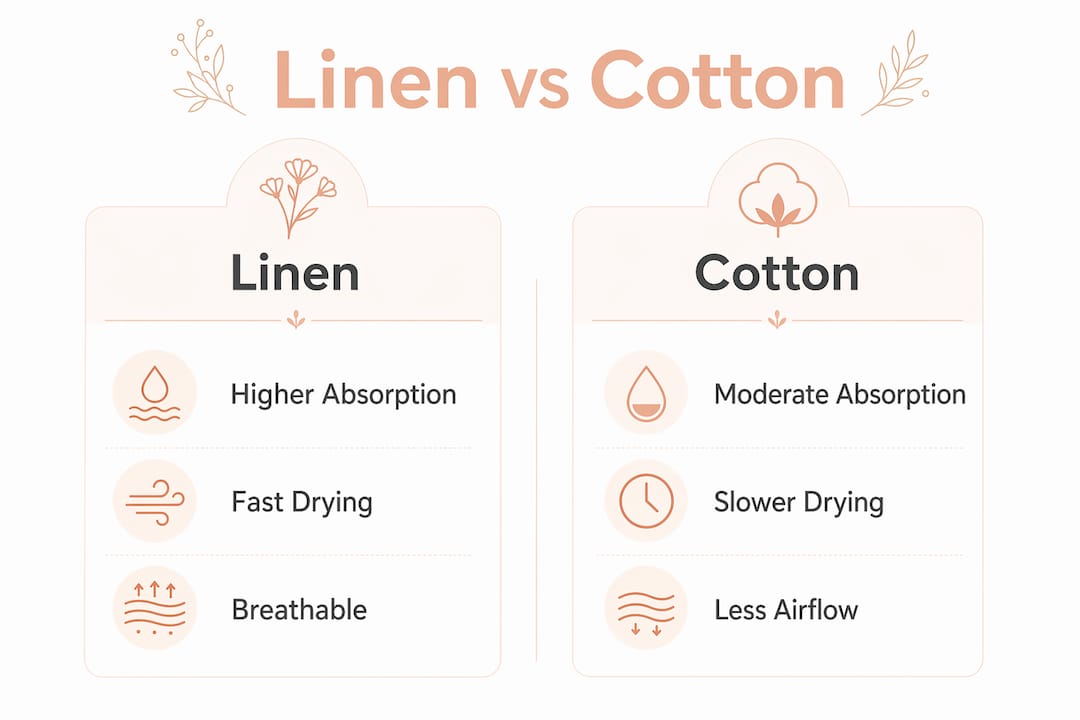
Linen’s physical properties are what separate it from every other fabric in your closet. Its moisture absorption capacity is up to twice that of cotton, meaning it pulls sweat away from your skin and dries faster than any cotton alternative. That difference is felt immediately on a warm afternoon or during a long day of back-to-back meetings.
Breathability and temperature control
Linen’s hollow fiber structure insulates in cold weather and cools through moisture wicking in heat, making it genuinely comfortable across all four seasons. This is not a marketing claim. It is a structural property of the flax fiber itself. Cotton cannot replicate this because its fibers are solid, not hollow, and they trap heat rather than circulate air.
Durability that improves with age
Linen’s tear resistance increases by 20 to 30% when wet, which is the opposite of cotton’s behavior. Cotton weakens with moisture and repeated washing. Linen strengthens. A well-made linen blazer or trouser will outlast three seasons of cotton equivalents without losing its structure. Linen also softens with each wash rather than degrading, developing what textile specialists call a patina. That patina is the reason vintage linen pieces feel so luxurious.
Linen vs. cotton for summer wear
| Feature | Linen | Cotton |
|---|---|---|
| Moisture absorption | Up to 2x higher | Moderate |
| Drying speed | Faster | Slower |
| Strength when wet | Increases 20-30% | Decreases |
| Breathability | Superior (hollow fiber) | Good (solid fiber) |
| Texture over time | Softens, develops patina | Can pill or thin |
The table makes the case plainly. For summer wear specifically, linen wins on every functional measure. Cotton remains a good fabric, but linen is the better fabric for women who want comfort and longevity from the same garment.
Pro Tip: Buy linen pieces one size up if you prefer a relaxed fit. Linen softens and relaxes slightly with washing, and a slightly oversized cut reads as intentional and polished rather than ill-fitting.
How linen became a year-round fashion staple
Linen spent decades typecast as a resort fabric, something you packed for Santorini and left in the suitcase the rest of the year. That perception has shifted completely. Fashion coverage in 2026 highlights linen’s move into tailored blazers, structured trousers, and city-appropriate dresses that embrace texture and natural creases as deliberate style features rather than flaws.
The quiet luxury trend is the engine behind this shift. Quiet luxury is not about logos or obvious expense. It is about fabric quality, understated tailoring, and the kind of confidence that comes from wearing something that simply feels right. Linen fits this aesthetic perfectly because its texture signals craft and intentionality without trying too hard.
New construction techniques have made linen far more versatile than its previous iterations. Tailors now cut linen with enough structure to hold a sharp shoulder line while keeping the fabric’s natural drape intact. The result is a blazer that works over a silk camisole for a dinner reservation or over a fitted tee for a Saturday market visit.
Here is how to style linen across seasons:
- Spring and summer: Flowy linen dresses in ecru, white, or sage paired with leather sandals and minimal gold jewelry
- Fall: A linen blazer layered over a fine-knit turtleneck in camel or chocolate brown
- Winter: Linen trousers in a heavier weight fabric worn with a wool coat and ankle boots
- Year-round: A linen button-down tucked into tailored trousers or worn open over a bodysuit
Pro Tip: Pair linen’s natural creases with one structured, clean-lined piece in your outfit. A crisp leather belt or a sharp-shouldered bag creates contrast that makes the linen look intentional rather than rumpled.
Why linen is the most sustainable fabric choice
Linen’s environmental credentials are not a trend. They are built into the biology of the flax plant. Flax cultivation uses significantly less water and far fewer agrochemicals than cotton, and the entire plant is utilized in production, contributing to near-zero waste. Cotton, by contrast, is one of the most water-intensive and pesticide-heavy crops in global agriculture.
| Environmental factor | Linen (flax) | Conventional cotton |
|---|---|---|
| Water use | Very low | Very high |
| Pesticide dependency | Minimal | Heavy |
| Whole-plant utilization | Yes (near-zero waste) | Partial |
| Biodegradability | Fully biodegradable | Biodegradable but slower |
| Microplastic pollution | None | None (natural fiber) |
Linen is also fully biodegradable at end of life, which means a linen dress does not sit in a landfill for decades the way synthetic fabrics do. For women building a conscious wardrobe, linen is the clearest path to reducing fashion’s environmental footprint without sacrificing style.
“Linen’s role in the circular bioeconomy is significant. The flax plant requires no irrigation in most European growing regions and leaves the soil in better condition than it found it.” — Nelson Institute research on flax cultivation
Synthetic fabrics like polyester shed microplastics with every wash, entering waterways and food chains. Linen sheds nothing harmful. Choosing linen over a polyester blouse is not a small decision. It is a direct reduction in microplastic load across the life of the garment.
How to care for linen to maximize its lifespan
Linen care is simpler than most women expect, and the fabric rewards low-intervention maintenance. The key is understanding that linen is not cotton and should not be treated like it.
- Wash in cool or lukewarm water. Hot water can cause linen to shrink and stiffen. A gentle machine cycle at 30°C (86°F) or a cool hand wash preserves the fiber’s structure and accelerates the softening process.
- Air dry flat or on a hanger. Tumble drying on high heat stresses linen fibers unnecessarily. Air drying maintains the garment’s shape and allows the fabric to relax naturally.
- Skip the iron most of the time. Linen’s natural creases are a style feature, not a problem to solve. Stylists pair linen’s wrinkles with tailored clean lines to maintain a polished yet relaxed look. If you do iron, use a steam iron on a damp garment for the smoothest result.
- Store folded, not crammed. Linen breathes and needs space. Folding linen pieces loosely in a drawer or on a shelf prevents deep creasing and keeps the fabric fresh between wears.
- Choose the right fabric weight for the occasion. Different weaves and processing dramatically change linen’s softness, drape, and durability. Lighter weights work for summer dresses and tops. Heavier weights suit blazers, trousers, and transitional layering pieces.
Pro Tip: Add a tablespoon of white vinegar to your linen wash cycle. It acts as a natural fabric softener and helps break down any residual stiffness without the chemical buildup that commercial softeners leave behind.
What are the must-have linen pieces for a versatile wardrobe?
Building a linen wardrobe does not require a full closet overhaul. A handful of well-chosen pieces covers almost every occasion and season. These are the items worth investing in first:
- A tailored linen blazer in a neutral tone like oatmeal, stone, or navy. This single piece transitions from office to dinner to weekend without effort.
- Wide-leg or straight-cut linen trousers in white or ecru. Pair with a fitted top for summer or layer under a knit for fall.
- A flowy linen midi dress that works with flat sandals in July and ankle boots in October. The Umgee linen contrast trim dress is a strong example of a piece that balances comfort with tailored detail.
- A linen button-down shirt in white or a muted stripe. This is the most versatile piece in the category. Wear it tucked, untucked, open as a layer, or knotted at the waist.
- Linen accessories: a structured linen tote or a woven linen hat extends the fabric’s aesthetic into your accessories without requiring a full outfit commitment.
The common thread across all these pieces is that they work as part of a stylish essentials wardrobe, not as seasonal novelties. Each piece earns its place by serving multiple functions across multiple contexts.
Key takeaways
Linen is the only natural fabric that combines superior breathability, increasing durability with age, near-zero-waste production, and a texture that fashion editors now recognize as the defining mark of quiet luxury.
| Point | Details |
|---|---|
| Breathability advantage | Linen’s hollow fiber structure outperforms cotton for temperature regulation in all seasons. |
| Durability over time | Linen strengthens when wet and softens with washing, outlasting most cotton equivalents. |
| Sustainability credentials | Flax uses minimal water and chemicals, and the whole plant is utilized with near-zero waste. |
| Styling versatility | Tailored linen pieces now work from office to weekend, not just vacation dressing. |
| Low-maintenance care | Cool washing, air drying, and embracing natural creases keeps linen looking its best. |
Linen and the quiet luxury shift I keep coming back to
I have spent years watching fabric trends cycle in and out of fashion editorial coverage, and linen is the one that keeps returning with more authority each time. What strikes me most is that linen’s current moment is not driven by novelty. It is driven by women getting tired of fabrics that look good in photos but feel uncomfortable by noon.
The quiet luxury framing is accurate, but it undersells what linen actually does for your daily experience. A well-cut linen blazer does not just signal taste. It keeps you physically comfortable through a full day in a way that a polyester blend simply cannot. That combination of aesthetic and function is rare, and it is why linen belongs in every wardrobe regardless of budget or style preference.
My one piece of advice for anyone new to linen: resist the urge to iron everything flat. The texture is the point. A slightly relaxed linen trouser paired with a sharp leather loafer reads as intentional and confident. Over-pressed linen looks like you are fighting the fabric instead of working with it. Let the fabric do what it does naturally, and your outfits will look better for it.
— Patrick
Build your linen wardrobe with Wildflowerwardrobe
Wildflowerwardrobe curates linen pieces that balance everyday comfort with genuine style, from relaxed summer dresses to tailored blazers built for city wear. Every piece is selected with the same standard: it has to work across multiple occasions without requiring a complete outfit rethink.

If you are ready to add linen staples that actually earn their closet space, the women’s casual wear collection at Wildflowerwardrobe is the right place to start. You will find pieces that reflect the quiet luxury aesthetic this article describes, at price points that make building a real linen wardrobe practical rather than aspirational. Explore the full range at Wildflowerwardrobe and find the pieces that fit your life.
FAQ
What makes linen better than cotton for summer?
Linen absorbs up to twice as much moisture as cotton and dries faster, keeping you cooler and more comfortable in heat. Its hollow fiber structure also allows better airflow than cotton’s solid fiber construction.
Does linen wrinkle too much to wear to work?
Linen does wrinkle, but fashion editors now treat those creases as a texture feature rather than a flaw. Pairing a linen piece with one structured item, like a leather belt or tailored shoe, keeps the overall look polished and intentional.
How do I soften stiff new linen?
Wash linen in cool water with a small amount of white vinegar and air dry. Linen softens naturally with each wash cycle, developing a silkier feel over time without losing its structural integrity.
Is linen actually sustainable?
Flax cultivation requires far less water and fewer pesticides than cotton, and the entire flax plant is used in production, creating near-zero waste. Linen is also fully biodegradable and produces no microplastic pollution.
What linen pieces should I buy first?
Start with a tailored linen blazer and a pair of wide-leg linen trousers in a neutral tone. These two pieces cover the widest range of occasions and serve as the foundation for building a versatile linen wardrobe across all seasons.
Recommended
- Why your seasonal wardrobe refresh matters more than you think – Wildflower Wardrobe
- Everyday wardrobe essentials women need for stylish versatility – Wildflower Wardrobe
- Top 4 Top Seasonal Wardrobe Essentials 2026 Alternatives – Wildflower Wardrobe
- Build a trend-proof wardrobe with the right checklist – Wildflower Wardrobe
0 comments