

Transitional season dressing is defined as the practice of building adaptable outfits through strategic layering and curated mix-and-match pieces that perform across shifting temperatures. The best transitional season outfit ideas for women rely on a small set of versatile bases, not a packed closet. Trench coats, cardigans, wide-leg trousers, and loafers are the workhorses of this approach. Style systems like Anna Newton’s five-base capsule formula and the Daily Clothing layering method prove that fewer, better pieces create more outfit options. The goal is simple: look polished at 8 a.m. when it’s 52°F and still feel comfortable by 3 p.m. when it hits 72°F.
1. the best layering strategy for transitional seasons
The most effective layering system uses five categories: base layer, mid-layer, top layer, bottoms, and versatile shoes. Each category serves a specific function in managing temperature changes throughout the day.
Here is how each layer works in practice:
- Base layer: A fitted tee, tank, or ribbed long-sleeve shirt. This sits closest to your body and sets the outfit’s foundation.
- Mid-layer: A cardigan, crewneck sweater, or lightweight knit vest. This is the layer you add or remove most often.
- Top layer: A trench coat, blazer, or denim jacket. This anchors the outfit’s silhouette and provides the most warmth.
- Bottoms: Straight-leg jeans, wide-leg trousers, or a midi skirt. These should coordinate with at least three top combinations.
- Shoes: Loafers, white sneakers, or ankle boots. Footwear shifts the outfit’s tone from casual to polished instantly.
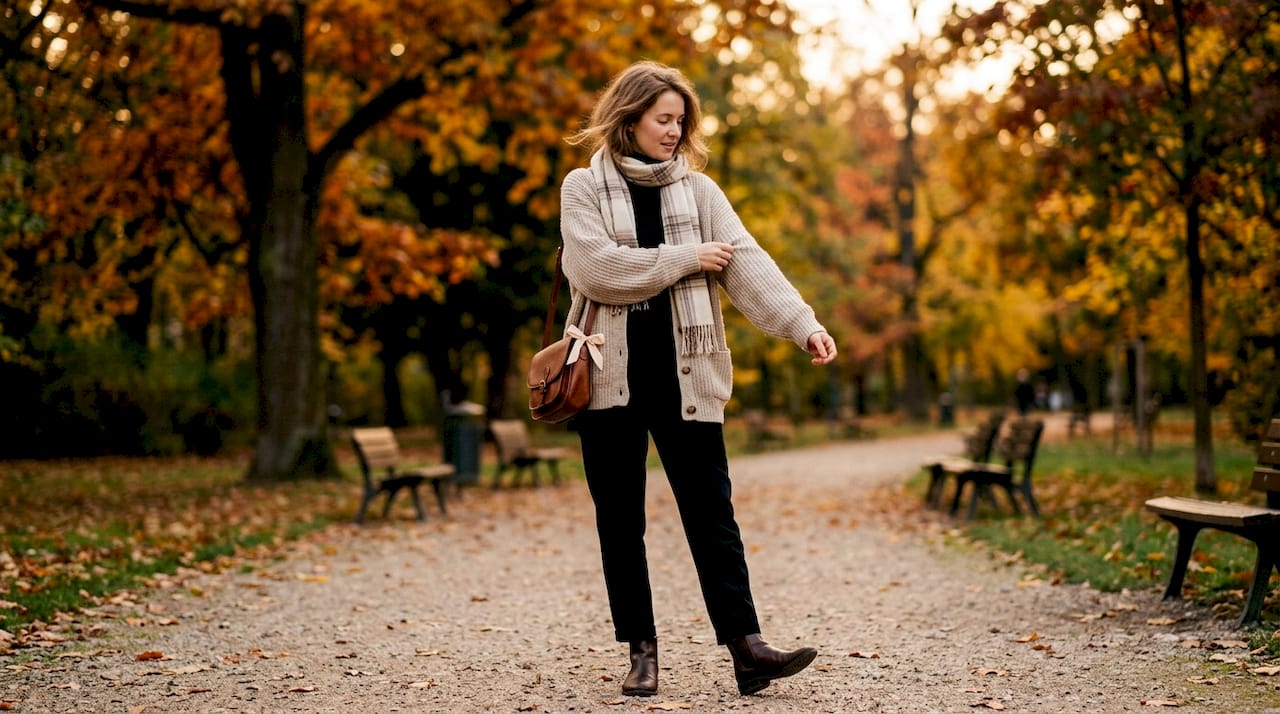
Early fall outfits built around this formula, centering on jeans, loafers, lightweight jackets, and tees or cardigans, handle temperature swings without sacrificing style. The system works because you are not starting over each time the weather changes. You are simply removing or adding one layer.
Pro Tip: Use texture contrast between layers to add visual depth. Pair a smooth silk base with a chunky knit mid-layer and a structured wool blazer. The contrast reads as intentional and styled, not thrown together.
| Layer | Example Pieces | Warmth Level | Versatility |
|---|---|---|---|
| Base | Fitted tee, ribbed tank | Low | High |
| Mid-layer | Cardigan, knit vest | Medium | High |
| Top layer | Trench coat, blazer | High | High |
| Bottoms | Straight jeans, midi skirt | Low | High |
| Shoes | Loafers, ankle boots | Low | High |
2. versatile outfit combinations that work all season
The capsule wardrobe principle is the most practical framework for creating versatile outfit combinations. Limiting your palette to 4–5 neutral shades like cream, navy, sand, and chocolate allows 12 items to generate 30 or more distinct outfits without repetition. That is not a styling trick. It is math applied to your closet.
Anna Newton’s five-base system, detailed in her Substack, demonstrates that rotating five uniform bases with small styling tweaks produces 25 distinct looks in a single week. The key is that each base fits and flatters well enough to carry the outfit on its own. Accessories and shoes do the rest.
Here are the top versatile combinations for transitional dressing:
- White tee + straight-leg jeans + trench coat: Add loafers for casual days, swap to ankle boots and a structured bag for work.
- Knit dress + oversized cardigan: Layer with tights and boots as temperatures drop. Wear with sandals for warmer afternoons.
- Blazer + wide-leg trousers + fitted tank: Works for the office, weekend brunch, and evening outings with a footwear swap.
- Midi skirt + ribbed long-sleeve + denim jacket: A spring outfit inspiration staple that transitions into early fall with a swap to a heavier jacket.
- Chore jacket + slim trousers + loafers: One of the strongest casual transitional looks for weekend outfit ideas.
Mastering interchangeability means every top in your closet works with at least two bottoms. That single rule eliminates most outfit decision fatigue.
Pro Tip: Accessories are your fastest outfit refresher. A suede shoulder bag or a layered necklace shifts a basic combination into something that looks considered. Keep two or three go-to accessories in rotation rather than buying new clothes.
3. 2026 color palettes and fabrics for transitional style
The 2026 “Modern Heritage” aesthetic replaces classic black basics with rich neutral colors like dark chocolate brown and camel. This shift creates a warmer, more sophisticated palette that photographs well and coordinates across seasons. Cream, navy, and sand round out the core color story.
Fabric choices matter as much as color. Knits, quilted jackets, suede, and light wool are the textures defining this season’s transitional wardrobe. A camel wool blazer over a cream ribbed turtleneck with chocolate brown wide-leg trousers is a complete outfit in three pieces, all from the same tonal family.
Heavier textures layered on top with lighter bottom fabrics regulate body temperature and keep the silhouette balanced. A quilted jacket over a linen shirt with straight-leg jeans is the practical version of this principle. The quilted layer handles the cold morning. The linen breathes through the warm afternoon.
| Color | Fabric Pairing | Styling Impact |
|---|---|---|
| Dark chocolate brown | Suede, light wool | Grounded, sophisticated |
| Camel | Knit, cashmere blend | Warm, polished |
| Cream | Ribbed cotton, silk | Clean, versatile base |
| Navy | Denim, structured cotton | Classic, easy to mix |
| Sand | Linen, light twill | Relaxed, season-spanning |
Check Wildflowerwardrobe’s 2026 classic clothing guide for specific pieces that align with this palette shift.
4. how to balance summer and fall pieces effectively
The contrast proportion formula is the most practical tool for mixing seasonal elements. Structured long-sleeve outerwear paired with summer-friendly bottoms like open-toe sandals and midi skirts creates weather balance without looking like you grabbed the wrong outfit. Harper’s Bazaar identifies this as the defining formula for spring and early fall transitional dressing in 2026.
The logic is straightforward. Heavy on top, light on the bottom keeps you warm without overheating. It also creates a visual contrast that reads as intentional styling rather than seasonal confusion.
Here are the strongest transitional pairings using this formula:
- Chore jacket + capri pants + open-toe sandals: The jacket handles the morning chill. The sandals signal that summer is not fully gone.
- Oversized bomber + midi skirt + mules: A relaxed silhouette that works for weekend errands and casual dinners.
- Blazer + flowy linen trousers + block-heel sandals: One of the best spring outfit inspiration combinations that carries into early fall.
- Denim jacket + slip dress + ankle boots: Pairing denim jackets with slip skirts creates a breathable, comfortable outfit that adapts to weather changes throughout the day.
- Knit cardigan + floral midi skirt + loafers: The cardigan adds warmth while the skirt keeps the look light and season-spanning.
The most common mistake women make with this formula is choosing bottoms that are too casual for the top layer. A structured blazer over athletic shorts does not follow the contrast proportion principle. The bottom should be polished enough to match the top’s structure. A seasonal clothing checklist helps you audit what you already own before buying anything new.
5. fit and tailoring as the real style multiplier
Wide-leg trousers and structured blazers serve as outfit anchors that upgrade simpler pieces instantly. This is the most underused principle in transitional dressing. A well-cut blazer over a plain white tee and jeans looks intentional and polished. The same tee with a poorly fitting cardigan looks like an afterthought.
Fit and tailoring remain the strongest style signals regardless of brand or price point. A $40 blazer that fits your shoulders correctly outperforms a $200 one that does not. This is the principle that separates women who look consistently put-together from those who feel like their outfits never quite land.
For transitional layering outfits, prioritize fit in your top layer first. The trench coat, blazer, or structured jacket is the piece people see most. It sets the tone for the entire outfit. Everything underneath can be simpler and less expensive as long as the top layer fits well.
Pro Tip: If you own pieces that almost fit, take them to a tailor. Shortening a trouser hem or taking in a blazer at the waist costs less than buying a new piece and delivers a bigger style return.
Key takeaways
Transitional season dressing works best when you build around five layering categories, a 4–5 color neutral palette, and well-fitted anchor pieces that carry every outfit.
| Point | Details |
|---|---|
| Use five layering categories | Base, mid, top, bottoms, and shoes give you full temperature control throughout the day. |
| Limit your palette to 4–5 neutrals | Cream, navy, sand, chocolate, and camel coordinate across all pieces for 30+ outfit combinations. |
| Apply the contrast proportion formula | Pair structured outerwear with lighter bottoms to balance warmth and seasonal freshness. |
| Prioritize fit over quantity | A well-cut blazer or wide-leg trouser anchors any outfit better than ten poorly fitting pieces. |
| Accessories refresh outfits instantly | Swapping a bag or necklace changes an outfit’s tone without buying anything new. |
The shift i keep seeing in how women actually dress
The most significant change in women’s seasonal fashion right now is not about trends. It is about restraint. Women who dress well in 2026 are not buying more. They are buying less and wearing it better.
I have watched this shift happen gradually. The women who look most consistently stylish own fewer pieces than you would expect. They have identified their five bases, as Anna Newton describes, and they rotate them with small tweaks. A belt here. A different shoe there. A layered necklace that shifts a simple outfit into something that looks considered.
The mental ease that comes from a curated wardrobe is real. When every piece in your closet coordinates with at least two others, getting dressed stops being a problem to solve. It becomes a quick, low-effort process that still produces good results.
My honest advice: do a closet audit before the next season change. Pull out your five best-fitting pieces. Build from those. Ignore everything else until you have worn those five pieces in at least three different combinations. You will find that you need far less than you thought. The wardrobe versatility principles that actually work are not complicated. They just require you to stop buying and start styling what you already have.
— Patrick
Build your transitional wardrobe with Wildflowerwardrobe
Wildflowerwardrobe has done the curation work for you. The women’s casual wear collection includes layering staples, versatile bottoms, and transitional outerwear pieces that align directly with the five-layer formula and the Modern Heritage palette. Every piece is selected to work across multiple outfit combinations, not just one.

If you are building your transitional wardrobe from scratch or refreshing what you already own, start with the casual wear collection for your base and mid-layer pieces. Add a statement accessory like the Fame Multi Belt Strap Shoulder Bag to complete the look. Wildflowerwardrobe carries the pieces that make the layering formulas in this article work in real life, not just on a mood board.
FAQ
What are the best pieces for transitional season outfits?
Trench coats, cardigans, wide-leg trousers, fitted tees, and loafers are the core pieces for transitional dressing. These five items cover all five layering categories and coordinate across dozens of outfit combinations.
How do i layer outfits without looking bulky?
Use the contrast proportion rule: heavier textures on top with lighter fabrics on the bottom. A quilted jacket over a linen shirt with straight-leg jeans creates warmth without adding visual bulk.
What colors work best for a transitional wardrobe?
The 2026 Modern Heritage palette favors dark chocolate brown, camel, cream, navy, and sand over classic black. Limiting your wardrobe to 4–5 of these neutrals allows every piece to coordinate naturally.
How many pieces do i need for a transitional capsule wardrobe?
Twelve well-chosen pieces in a coordinated neutral palette can generate 30 or more distinct outfits. The five-base system, where each base works with multiple tops and layers, is the most efficient starting point.
Can i mix summer and fall pieces in the same outfit?
Yes. The contrast proportion formula pairs structured long-sleeve outerwear like blazers or chore jackets with summer-friendly bottoms like midi skirts or capri pants. This combination handles temperature shifts while keeping the outfit seasonally fresh.
Recommended
- Top 4 Top Seasonal Wardrobe Essentials 2026 Alternatives – Wildflower Wardrobe
- Classic Clothing Pieces 2026 Update: Your Style Guide – Wildflower Wardrobe
- Seasonal Clothing Checklist for Women: Season-by-Season Guide – Wildflower Wardrobe
- Why your seasonal wardrobe refresh matters more than you think – Wildflower Wardrobe
0 comments